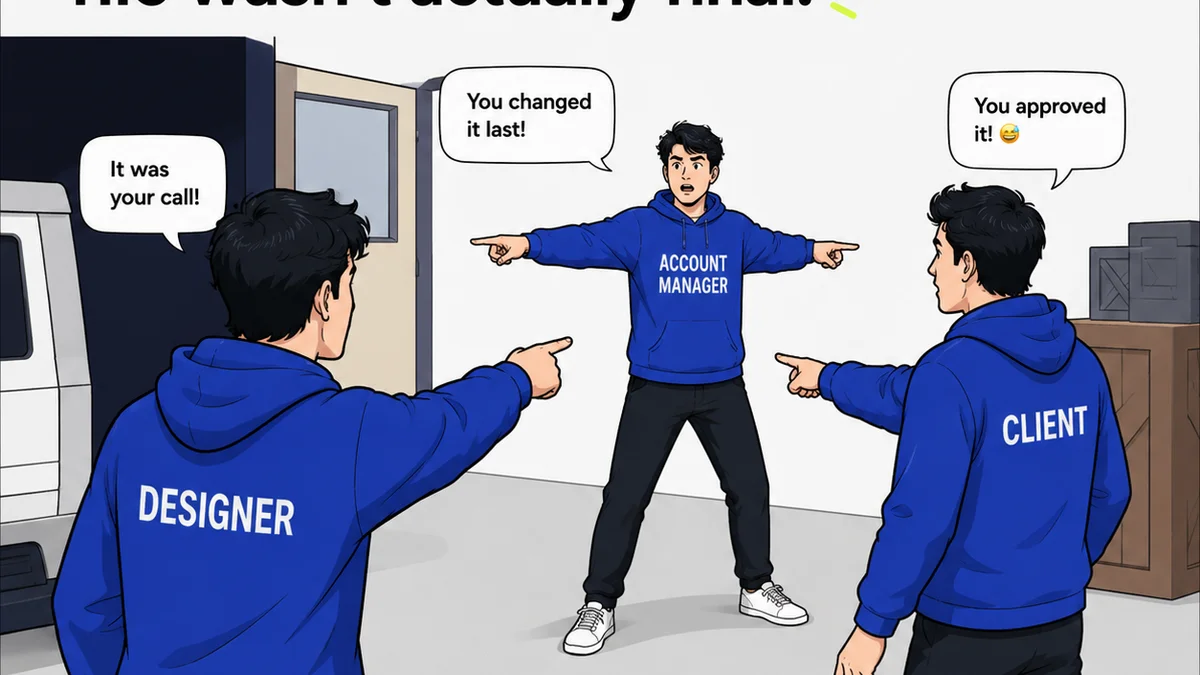
Growing agencies often assume their biggest bottleneck is client communication. They think if clients just gave better briefs, everything would flow smoother. And sure, a bad brief can be a pain. But it’s rarely the root cause of your project delays.
The real truth? The biggest drain on your agency’s capacity isn’t external. It’s internal. It’s how you’re handling creative requests *before* they even hit the designer’s desk.
This isn't about pointing fingers. It’s about acknowledging the operational blind spots that trip up even the most talented teams. Let’s break down the common mistakes and how to fix them.
1. The "Just Get It Done" Culture
Ever hear this? A client calls, asks for a quick banner ad, maybe a social post. It seems simple. So, someone on the account team jots down a few notes and forwards them to design. No process. No checks. Just a quick handoff.
This is the enemy of scalability.
It breeds inconsistency. It leads to scope creep disguised as
Frequently asked questions
What's the most common mistake agencies make with creative requests?
The most common mistake is a lack of a standardized intake process. Agencies often treat each request differently, leading to confusion, missed details, and duplicated effort.
How can I get better creative briefs from clients?
While client briefs are important, focus on your internal intake first. Implement a structured request form that forces clients (or your account managers) to provide essential information before design begins. This educates clients on what you need.
How does centralized feedback help with request management?
Centralized feedback tools ensure all comments and approvals are in one place, reducing miscommunication and lost revisions. This clarity makes it easier to track the history of a request and understand the final scope.
What's the role of a project manager in handling creative requests?
A project manager acts as the gatekeeper. They ensure every request is complete, properly scoped, and assigned before it reaches creative. They manage the timeline and communication, preventing bottlenecks.