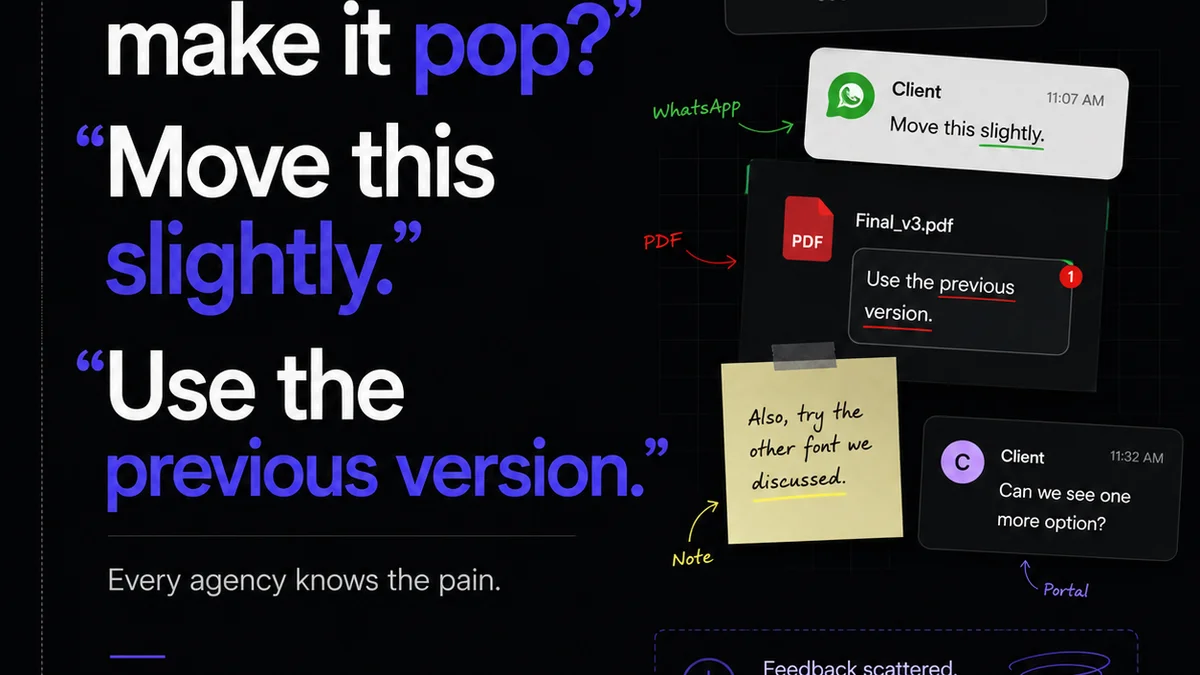
Everyone knows a good brief is crucial. You’ve probably heard it a thousand times: “Garbage in, garbage out.”
None of that is wrong. But it’s incomplete.
The hard truth is, even with a ‘good’ brief, creative requests often fall apart. They get lost in email chains, misinterpreted, or become walking, talking definition of scope creep. The real problem isn’t just the brief itself. It’s the entire process surrounding the request.
Let’s fix that.
1. The Brief is Just the Start
A brilliant brief is the foundation. But a foundation without walls is useless. The request process is the entire build.
This means defining:
- Who is responsible for initiating and approving requests?
- What information is *non-negotiable* for a request to be considered?
- How do you handle requests that are vague, incomplete, or outside the scope of the project?
- What’s the escalation path when things go sideways?
These aren't details you figure out on the fly. They need to be documented, communicated, and enforced.
2. Define Your Intake Workflow
Email is the enemy of organized creative requests. So is Slack. So is a shared drive full of Word docs.
Why? Because they’re unstructured. They’re asynchronous. They’re easy to ignore.
A defined intake workflow means:
- A Single Source of Truth: All requests go through one channel. Period. This could be a dedicated form, a project management tool, or specialized software.
- Mandatory Fields: Your system should force requesters to provide essential information upfront. Think: clear objectives, target audience, key deliverables, deadlines, budget (if applicable), and any existing assets.
- Clear Ownership: Who receives the request? Who reviews it for completeness? Who assigns it to a creative? This must be unambiguous.
Without this, you’re setting yourself up for endless back-and-forth, missed details, and frustrated teams.
The Cost of Vague Requests
Vague requests don’t just waste time; they actively damage creative output. They force creatives to guess. Guessing leads to:
- Multiple rounds of revisions that miss the mark.
- Work that doesn’t align with business goals.
- Burnout from chasing an undefined target.
- Clients who feel their needs aren’t being met.
It’s a vicious cycle. And it starts with a broken intake process.
3. Establish Clear Revision and Approval Protocols
This is where most creative workflows collapse. The brief is done, the work is delivered, and then… chaos.
What does chaos look like?
- Feedback arrives piecemeal, via different channels.
- There’s no record of who approved what, or when.
- Scope creep sneaks in, disguised as “minor tweaks.”
- The final deliverable is a Frankenstein’s monster of conflicting opinions.
You need a system. This system should outline:
Who Gives Feedback?
Not everyone needs to weigh in. Identify key stakeholders for each project. Empower them to provide consolidated, actionable feedback.
How is Feedback Given?
Comments on PDFs are fine. Redlines on images are okay. But without context, they’re just noise.
Feedback needs to be tied to specific elements, explain the ‘why’ behind the change, and be constructive.
What Constitutes Approval?
Is it an email reply? A click in a tool? A signed document? Define it. Make it clear.
What’s the Revision Limit?
This should be in the original brief and reinforced in the workflow. Unchecked revisions are the fastest way to kill profitability and team morale.
4. Scope Management: The Unspoken Killer
Scope creep isn’t an accident. It’s a symptom of weak processes.
It happens when:
- Initial requests are poorly defined.
- There’s no clear way to track changes against the original brief.
- There’s no formal process for approving additions or changes outside the original scope.
Every change request, no matter how small, needs to be evaluated.
Does it align with the original objectives?
Does it require additional time or resources?
If yes, it needs a formal change order. This means:
- Documenting the proposed change.
- Assessing the impact on timeline and budget.
- Getting explicit client sign-off on the change and any associated costs.
This isn’t about being difficult; it’s about protecting your team, your profitability, and the integrity of the project.
5. Integrate Quality Control Checks
Deliverables should be reviewed not just for creative merit, but for technical accuracy and adherence to brand guidelines.
This means building in checkpoints:
- Internal Creative Review: Before it goes to the client, a peer or lead reviews for quality and adherence to the brief.
- Technical Review: For digital assets, this means checking code, responsiveness, and functionality. For print, it’s pre-press checks.
- Brand Compliance Check: Does it look and sound like the client’s brand?
These aren’t optional extras. They are essential steps to prevent embarrassing errors and ensure client satisfaction.
Where Revue Fits In
Managing creative requests, feedback, and approvals manually is a recipe for disaster. It’s inefficient, error-prone, and impossible to scale.
Revue is built to solve these exact problems.
It provides a centralized platform for submitting, tracking, and managing creative requests. No more hunting through emails or Slack channels.
Revue streamlines feedback by allowing stakeholders to comment directly on creative assets, with clear version control and a consolidated view of all input.
Approvals become unambiguous. You know exactly who signed off, when, and on what version.
This visibility helps enforce scope, track revisions, and ensure the final deliverable meets all requirements, preventing costly errors and rework.
Final Thought
The quality of your creative output is directly tied to the quality of your request and feedback process. Are you treating it as an afterthought, or as a strategic imperative?
Frequently asked questions
What's the most common mistake agencies make with creative requests?
Treating the brief as the end of the process, rather than the beginning. Agencies often neglect to build clear workflows for intake, feedback, revisions, and approvals, leading to chaos even with a good initial brief.
How can I prevent scope creep from vague requests?
Enforce a structured intake process with mandatory fields. Clearly define project objectives, deliverables, and deadlines upfront. Implement a formal change order process for any requests outside the original scope, including client sign-off on impacts to time and budget.
What are the key elements of an effective feedback process?
Identify key stakeholders, define how feedback should be given (specific, contextual, constructive), and establish clear approval protocols. Centralizing feedback prevents conflicting comments and ensures a unified direction.
Why is a defined intake workflow so important?
A defined intake workflow ensures all necessary information is gathered upfront, reducing back-and-forth. It establishes clear ownership and a single source of truth, preventing requests from getting lost or misinterpreted in disorganized communication channels like email or chat.