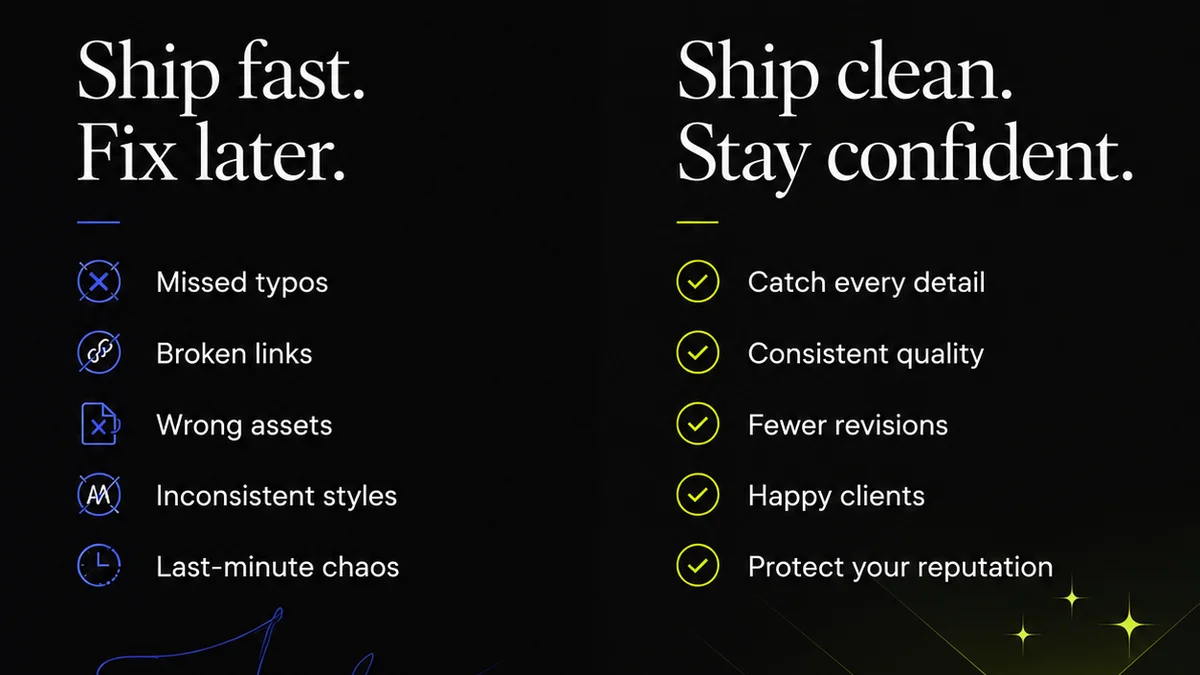
Many assume legal marketing creative requests are just like any other: brief, clear, and focused on the end goal. That’s not entirely wrong. But it’s incomplete.
The hard truth is that legal marketing creative workflows are fundamentally different. They’re shaped by regulatory complexity, compliance hurdles, and a deep-seated need for accuracy. This isn't about slowing down; it’s about building a more resilient, effective process.
1. The Compliance Gauntlet: Beyond Pretty Pictures
Legal marketing isn’t just about aesthetics or catchy taglines. Every piece of creative collateral must pass through a rigorous compliance review. This means internal legal counsel, external regulatory bodies, and a constant back-and-forth to ensure accuracy and adherence to ever-changing rules.
This isn't a minor roadblock. It’s the core of the process. Missteps here can lead to serious penalties, reputational damage, and wasted effort.
The Real Bottleneck
The assumption is that creative teams don’t understand legal constraints. The reality? Legal teams often struggle to articulate compliance requirements in a way that’s actionable for creatives. Vague directives like "make it compliant" are useless. What does that mean for font choices? Color palettes? Imagery selection?
This disconnect creates:
- Endless revision cycles.
- Frustration on both sides.
- Delayed campaign launches.
- Missed market opportunities.
Effective legal marketing creative requests must integrate compliance from the start, not as an afterthought.
2. Defining "Done": Accuracy Over Aesthetics
In most marketing, "done" means the campaign is live and performing. For legal marketing, "done" means it’s live, performing, and 100% legally sound. This dual definition changes everything.
A visually stunning ad that contains a single, unverified claim or an outdated disclaimer is a failure. The focus shifts from subjective "good design" to objective "correctness." This requires a different kind of brief.
The Briefing Imperative
A standard creative brief might cover target audience, campaign goals, and brand voice. A legal marketing brief needs more:
- Specific Disclaimers: What exact text is required? Where must it appear? What’s the minimum font size?
- Claim Substantiation: What evidence supports any claims made? (This needs to be easily accessible for legal review.)
- Regulatory Context: Which specific regulations (e.g., FDA, SEC, FTC guidelines) apply to this piece?
- Target Jurisdiction: Are there regional legal nuances to consider?
- Mandatory Elements: Are there specific logos, partner affiliations, or legal notices that must be included?
Without this detail, creatives are essentially guessing. And in legal marketing, guessing is a costly mistake.
3. The Revision Tango: Navigating Legal Feedback
Creative revisions are normal. But legal revisions have a unique rhythm. They’re often granular, focusing on precise wording, data points, or compliance checkboxes.
This isn't about a client disliking a shade of blue. It's about a lawyer flagging a potentially misleading implication in a headline or a statistic that needs updating based on the latest filing.
Streamlining Legal Feedback
The challenge is turning subjective interpretation into objective, actionable feedback. Instead of "This feels wrong," legal feedback should be:
“The phrase ‘best outcomes’ could be interpreted as a guarantee, which is not permissible under [Regulation X]. Please revise to ‘positive outcomes’ or provide substantiation for ‘best’.”
This requires tools and processes that:
- Allow for clear, contextualized comments directly on the creative asset.
- Track who provided feedback and when.
- Manage multiple rounds of revisions efficiently.
- Ensure no feedback is missed or misinterpreted.
The goal is clarity and traceability, not just faster turnaround.
4. Quality Control: The Final Checkpoint
Quality control in legal marketing is less about brand consistency and more about risk mitigation. Every final asset needs a thorough audit before it goes live.
This involves:
- Cross-referencing the final creative against the approved brief.
- Verifying all disclaimers and mandatory text are present and correct.
- Ensuring all claims are substantiated and compliant.
- Confirming adherence to any specific formatting or placement rules dictated by legal.
This final check is non-negotiable. It’s the last line of defense.
Where Revue Fits In
Managing these complex creative requests for legal marketing teams demands a robust system. That’s where Revue comes in.
Revue centralizes client feedback, making it easier for legal teams to provide specific, contextualized comments directly on creative assets. This eliminates the ambiguity often found in email chains or scattered documents.
Our platform provides visibility into the entire revision and approval process. You can track every change, see who signed off on what, and ensure that all compliance requirements are met before launch. This structured workflow helps mitigate risk and ensures creative assets are both impactful and legally sound.
Final Thought
The creative process in legal marketing isn’t a bug; it’s a feature. It's built to protect the organization. The question isn't whether legal marketing creative requests are complex, but how effectively your team is equipped to handle that complexity. Are you building resilience, or just adding friction?
Frequently asked questions
What makes legal marketing creative requests different from other industries?
Legal marketing creative requests are distinct due to stringent regulatory requirements, the need for absolute accuracy in all claims and disclaimers, and a mandatory, often granular, compliance review process involving legal counsel. This emphasis on risk mitigation and factual correctness shapes the entire workflow, from briefing to final approval.
How can creative teams better understand legal compliance needs?
Creative teams should actively seek detailed input from legal and compliance departments early in the process. This includes understanding specific regulations, required disclaimers, and the substantiation needed for any claims. Requesting clear, actionable feedback and involving legal in the briefing stage, rather than just at the review stage, is crucial.
What are the key elements of a legal marketing creative brief?
A legal marketing creative brief must go beyond standard marketing elements. It should include specific details on mandatory disclaimers (text, placement, size), claims substantiation, applicable regulations, target jurisdictions, and any other legally required inclusions. Clarity on these points from the outset prevents costly revisions later.
How can revision cycles be streamlined for legal marketing creative assets?
Streamlining involves moving from vague feedback to precise, actionable comments. Utilizing tools that allow for contextualized feedback directly on assets, tracking revision history, and clearly defining what constitutes "approved" language or imagery can significantly improve efficiency and reduce back-and-forth.