You’ve probably heard it a million times. Creative operations leaders need to optimize workflows, reduce revision cycles, and get work approved faster. That’s the standard playbook.
None of that is wrong. But it’s incomplete.
The hard truth is that the most significant drag on creative operations doesn’t happen during the design phase, or even during client feedback. It starts long before the first pixel is placed.
It starts with the brief. Or, more accurately, the *lack* of a proper request.
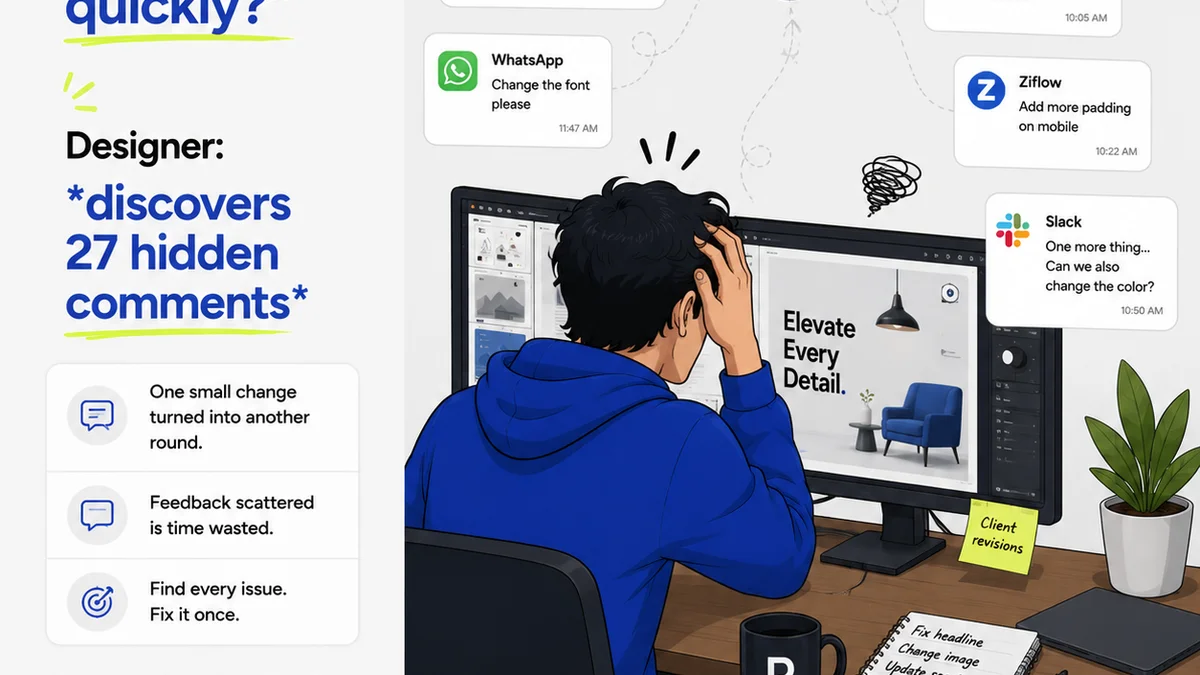
We’re talking about the nebulous, often chaotic, process of how work gets initiated. The email chain that says “Can you make a banner?” or the Slack message that’s essentially a wish list. This is the Wild West of creative work, and it’s killing your efficiency.
1. The Anatomy of a Bad Creative Request
What does a broken request process look like in the wild? It’s a common scene in agencies and in-house teams alike.
It starts with a vague ask. No context. No clear objective. Just a desire for *something* creative.
This isn't just an inconvenience; it's a fundamental flaw that ripples through your entire operation.
The Symptoms Are Obvious
- Endless clarification emails and calls.
- Designs that miss the mark, repeatedly.
- Scope creep disguised as “minor tweaks.”
- Frustrated creatives and unhappy clients.
- Wasted hours trying to decipher the initial need.
You can implement the slickest project management software, the most streamlined feedback tools, but if the input is garbage, the output will be too. And your team will be stuck in a reactive loop, constantly trying to fix what was never clearly defined.
2. The Real Cost of Ambiguity
Most leaders focus on the visible costs: the hours spent on revisions, the time spent in meetings. But the true cost of poor request management is hidden, and it’s far greater.
It’s the opportunity cost. The work that *could* have been done if your team wasn’t busy chasing ghosts.
The Hidden Drains
- Unnecessary Rework: Creatives build something based on assumptions, only to find out it wasn’t what the stakeholder envisioned.
- Delayed Timelines: Every clarification, every wrong turn, pushes back deadlines.
- Resource Misallocation: Assigning the wrong people or the wrong amount of time to a project that was poorly scoped from the start.
- Erosion of Trust: Repeatedly missing the mark damages client relationships and internal team morale.
- Missed Strategic Goals: When creative work isn’t tied to clear business objectives from the outset, it rarely moves the needle.
Think about it: How much time does your team spend *guessing* what a client or stakeholder actually needs?
That guessing game is costing you.
3. Defining the “Perfect” Creative Request
So, what does a *good* creative request look like? It’s not about bureaucracy; it’s about clarity. It’s about ensuring alignment before any creative work begins.
A robust request process treats the brief not as an afterthought, but as the foundational document it is.
Key Components of a Strong Request:
- Clear Objective: What business problem is this creative solving? What is the desired outcome?
- Target Audience: Who are we trying to reach? What do we know about them?
- Key Message(s): What is the single most important thing the audience should take away?
- Deliverables: What exactly needs to be produced? (e.g., social media graphic, landing page copy, video script). Specify dimensions, formats, and quantities.
- Mandatories & Constraints: Brand guidelines, legal disclaimers, specific calls to action, budget limitations, hard deadlines.
- Tone of Voice: How should this piece of creative feel? (e.g., urgent, playful, authoritative).
- Examples/Inspiration: What does success look like? Provide visual or copy references if possible.
This isn’t about asking for a novel upfront. It’s about capturing essential information that sets the project up for success from day one.
4. Building a Request Workflow That Works
Establishing a standardized request process isn’t about adding more steps; it’s about making the *initial* steps more effective. This often means moving away from informal channels.
Email and Slack are terrible for detailed requests. They’re easily lost, lack structure, and make it hard to track information.
Steps to a Better Process:
- Standardize Intake: Implement a dedicated form or system for all new creative requests. This ensures all necessary information is captured upfront.
- Mandatory Fields: Make key fields required in your intake form. If it’s not there, the request can’t be submitted.
- Requestor Education: Clearly communicate the process and the *why* behind it to internal stakeholders and clients. Explain how a good brief benefits them.
- Review & Briefing: Have a designated person or team review incoming requests. This is where clarification happens, and a formal brief is finalized before assigning to creative.
- Centralized Hub: All requests, briefs, and related communications should live in one accessible place.
This structured approach prevents assumptions and ensures everyone is working from the same playbook.
5. Where Revue Fits In
You might be thinking, “This sounds like a lot of process. How do I manage it without adding more tools or complexity?”
This is precisely where a centralized platform like Revue becomes critical. While many think of Revue solely for feedback and approvals, its power extends much earlier in the lifecycle.
Revue Streamlines the Foundation:
- Centralized Request Capture: Use Revue’s project structure to define the initial request parameters. While not a form builder itself, it acts as the central repository where the *output* of your request process lives. The detailed brief, once finalized, is attached and visible.
- Visibility and Tracking: Every request, once defined, gets a clear home within a project. Stakeholders can see the status and understand what’s needed, reducing ad-hoc inquiries.
- Version Control for Briefs: As clarifications happen, the brief can be updated and versioned within the project, ensuring everyone refers to the latest requirements.
- Connecting Request to Execution: By linking the initial request details directly to the creative assets being worked on, you maintain context throughout the entire workflow. This prevents the “what was this for again?” syndrome.
- Informed Feedback Loop: When feedback is given, it’s contextualized against the original request and brief, making it more actionable and less subjective.
Revue doesn’t just manage the *doing*; it helps manage the *defining*. By bringing order to the initial stages, you set your team up for success before they even open their design software.
6. Final Thought
We often get so caught up in optimizing the visible parts of the creative process – the revisions, the approvals, the final delivery – that we neglect the bedrock upon which everything else is built.
The humble creative request. The initial brief.
If your agency or in-house team is struggling with bottlenecks, endless revisions, or projects that consistently miss the mark, look upstream. Look at how work is initiated.
Is your process for capturing creative needs as robust as your process for delivering the final asset?
Because if it’s not, you’re not just optimizing; you’re rearranging deck chairs on a sinking ship.
Frequently asked questions
What is a creative request?
A creative request is the initial formal documentation or communication that outlines a need for creative work. It details the project's objective, target audience, key messages, deliverables, and any constraints or mandatories.
Why is the creative request process so important?
A strong creative request process ensures clarity and alignment from the start. It prevents misunderstandings, reduces unnecessary revisions, saves time and resources, and ultimately leads to creative work that better meets business objectives.
How can I improve my creative request process?
Improve your process by implementing standardized intake forms, making key information fields mandatory, educating stakeholders on brief requirements, and centralizing all request-related communication and documentation.
What are the essential components of a good creative brief?
A good creative brief includes the clear objective, target audience, key messages, specific deliverables, mandatory elements, desired tone of voice, and any inspirational examples or references.
How does a tool like Revue help with creative requests?
Revue provides a central hub to store and manage finalized briefs, ensuring all project stakeholders have visibility. It connects the initial request context to the ongoing creative work, feedback, and approvals, maintaining consistency.