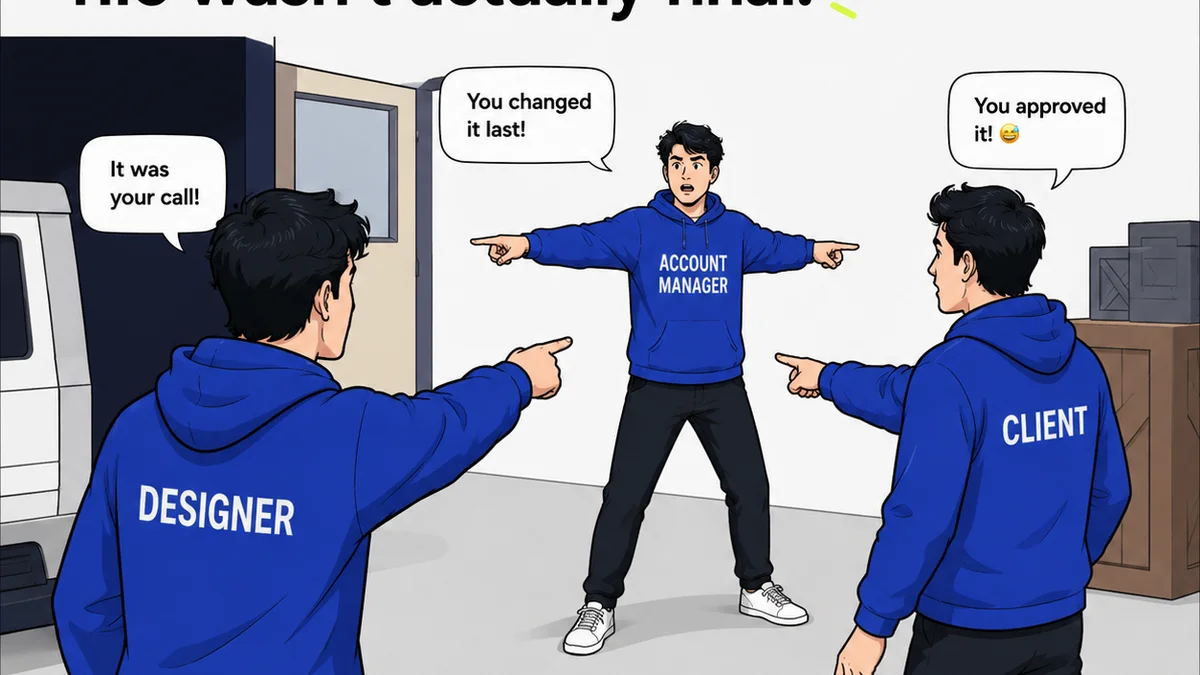
Everyone agrees creative reviews can be a pain. They’re slow, chaotic, and often feel like a black hole where good ideas go to die. The common advice? Just be faster. Get more organized. Streamline the process.
None of that is wrong. But it’s incomplete.
The real, hard truth is that speed and organization are symptoms, not cures. The deeper problem isn't *how* you review, but *what* you're reviewing against. Without clear, agreed-upon standards, every review becomes a subjective guessing game. And that’s a game no one wins.
This isn't about rigid rules stifling creativity. It's about providing guardrails so creativity can thrive. It’s about ensuring that feedback is actionable, revisions are purposeful, and the final output actually meets the objectives.
1. The Myth of the 'Subjective' Creative Review
Ask any creative director or agency owner about client feedback, and you'll hear it: “It’s just subjective.” Or, “Clients don’t know what they want until they see it.”
This thinking absolves everyone of responsibility.
It implies that good creative is a matter of luck, or solely the taste of the person with the biggest budget. It suggests there’s no objective measure of success for creative work.
But that’s a cop-out. Great creative work isn't born in a vacuum. It’s built on a foundation of strategy, objectives, and a deep understanding of the target audience.
The Strategic Foundation
Every project should start with clear goals. What is this creative supposed to achieve? Increase brand awareness? Drive sales? Generate leads? Improve customer engagement?
Without these benchmarks, how can anyone possibly judge if the creative is successful?
It becomes about whether the client *likes* the color blue. Not whether blue is the right color to connect with the target demographic or align with brand equity.
Audience-Centricity
Who are we trying to reach? What resonates with them? What are their pain points? What motivates them?
Creative that doesn’t speak to its intended audience is fundamentally flawed, regardless of how aesthetically pleasing it is.
Brand Alignment
Does the work feel like it comes from the brand? Does it reinforce brand values and personality? Or does it feel like a generic piece of marketing slapped onto a logo?
These aren't subjective whims. These are strategic imperatives.
2. Defining Your Review Standards: The 'What' and 'Why'
Setting review standards means establishing clear criteria for what constitutes successful creative work. This isn't a one-size-fits-all manual. It's a framework tailored to each project, but guided by overarching principles.
Think of it as a quality control checklist, but for strategic alignment and effectiveness.
The Project Brief as the North Star
This sounds obvious, but it’s where most teams falter. The brief isn’t just a document to check off. It’s the foundational agreement.
A strong brief defines:
- Clear, measurable objectives (KPIs).
- Target audience demographics and psychographics.
- Key message(s) to be communicated.
- Brand guidelines and tone of voice.
- Mandatories (legal, regulatory, specific product features).
- Deliverables and technical specifications.
- Success metrics for the creative itself.
When standards are clear, feedback refers back to the brief. “This doesn’t align with the objective of driving conversions” is a standard-based critique. “I don’t like it” is not.
Establishing Creative Evaluation Criteria
Beyond the brief, you can establish general evaluation criteria. These might include:
- Clarity of Message: Is the main point easily understood?
- Audience Resonance: Does it speak to the target audience?
- Brand Consistency: Does it align with brand identity and tone?
- Call to Action Effectiveness: Is it clear what the audience should do next?
- Originality and Impact: Does it stand out? Is it memorable?
- Technical Execution: Is it well-produced and free of errors?
These criteria become the language of your reviews. They move the conversation from taste to performance.
The Role of Stakeholder Alignment
Before creative even begins, ensure all key stakeholders (client-side and agency-side) agree on the brief and the success metrics. This upfront alignment is critical.
If the client’s marketing VP and brand manager have different ideas about the objective, the review process will be a battlefield. Clear standards, agreed upon early, prevent this.
3. The Cost of Ambiguity: Wasted Time and Talent
When review standards are fuzzy, the consequences are predictable and costly.
Scope Creep by Default: Without clear objectives, clients can keep asking for “just one more thing,” each addition diluting the original intent and extending timelines indefinitely.
Endless Revisions: Feedback becomes a loop of subjective opinions. “Make it pop more.” “Make it feel more premium.” Each revision pushes the work further from its original strategic intent.
Demotivated Teams: Creatives feel like they’re chasing a moving target. Their best work is often rejected for reasons that have nothing to do with effectiveness. This erodes confidence and stifles innovation.
Client Frustration: Clients feel their feedback isn’t being heard, or that the agency doesn’t understand their business. This damages the relationship and can lead to lost accounts.
Missed Opportunities: The time spent in endless, aimless reviews could have been spent on strategic thinking, proactive client work, or developing new business.
This isn't just about efficiency. It's about respecting everyone's time and talent.
4. Implementing Standards: A Practical Guide
Shifting to a standards-based review process requires intention and clear communication.
Start with the Brief, End with the Brief
Make the brief the central document for all discussions. Reference it constantly.
During presentations, don’t just show the creative. Show how it meets the brief’s objectives. Frame the discussion around the strategic goals.
Formalize Feedback Protocols
Establish clear channels and formats for feedback. Avoid ad-hoc emails or hallway conversations for significant critique.
Use a system that allows for structured comments tied to specific elements of the creative.
This system should also capture:
- Who is providing the feedback.
- When the feedback was given.
- How the feedback relates to the brief or established standards.
This creates an audit trail and ensures accountability.
Train Your Teams
Both internal teams and clients need to understand the review standards. For clients, this means educating them on *why* these standards exist and how they ensure better outcomes.
For internal teams, it means ensuring everyone understands how to evaluate creative against objectives, not just personal preference.
Use a Decision Matrix
For complex projects, a simple decision matrix can be invaluable. List the key criteria (from the brief and evaluation criteria) and score each creative option against them. This provides a more objective basis for selection.
Empower Your Project Managers
Your project managers are the gatekeepers. They need to be empowered to push back on subjective feedback that deviates from the brief. They are the guardians of the process.
Where Revue Fits In
Implementing clear review standards is an operational challenge. And that’s precisely where Revue shines.
Revue helps by providing a centralized platform where project briefs, creative assets, and all feedback live. This eliminates the chaos of scattered communication.
Critiques are logged against specific versions of the creative, making it easy to track revisions and see how feedback has been addressed.
The visibility Revue provides ensures that discussions always reference the agreed-upon brief and objectives. It turns subjective arguments into objective evaluations of progress against goals.
This isn’t just about managing feedback; it’s about managing the *quality* of that feedback and ensuring it serves the project’s strategic purpose.
Final Thought
Are your creative reviews focused on subjective taste, or objective performance? The shift from the former to the latter isn't just an operational tweak; it's a fundamental change in how you define and deliver creative success. What standards are you setting today?
Frequently asked questions
What are creative review standards?
Creative review standards are agreed-upon criteria used to evaluate creative work. They go beyond subjective preferences and focus on how well the creative meets strategic objectives, brand guidelines, audience needs, and specific project goals outlined in the brief.
Why are clear review standards important for creative teams?
Clear standards ensure feedback is objective and actionable, reducing endless revisions and subjective debates. They help teams deliver work that meets strategic goals, improve client relationships, boost team morale, and prevent wasted time and resources.
How can I implement review standards effectively?
Start by ensuring a detailed, agreed-upon project brief. Formalize feedback protocols, train your team and clients on the standards, use decision matrices for complex evaluations, and empower project managers to uphold the process.
Does Revue help with setting and managing creative review standards?
Yes, Revue provides a centralized platform for briefs, assets, and feedback, making it easier to reference objectives and track progress against agreed-upon standards. It promotes clear communication and accountability throughout the review process.