Everyone talks about creative ROI. They’ll point to engagement rates, website traffic, or social media shares. They’ll say, “Our new campaign boosted clicks by 15%!”
None of that is wrong. But it’s incomplete. It’s like measuring the success of a restaurant by how many people walk in the door, without checking if they actually ordered food, or if they liked it.
The hard truth? Most companies fail at measuring creative ROI because they’re measuring the wrong things. They focus on vanity metrics instead of business impact. They track activity, not outcomes.
Let’s dig into why this happens and what you can do about it.
1. The Vanity Metric Trap
The most common mistake is mistaking activity for achievement. Social media likes, open rates, even conversion rates on a specific landing page – these are all indicators, not the ultimate goal.
Your goal isn't just to get clicks; it's to acquire valuable customers. Your goal isn't just to get views; it's to build brand authority or drive product adoption. Your goal isn't just to get shares; it's to foster a community that advocates for your brand.
Why do we fall into this trap?
- It’s easy to track.
- It feels good to see numbers go up.
- It’s what most tools are built to report.
But easy doesn't mean effective. And a good feeling doesn't mean good business.
2. Disconnected Creative and Business Objectives
Creative teams are often set apart from the core business strategy. They’re given a brief, they execute, and then the results are measured in a vacuum.
The brief might say, “Increase brand awareness.” But what does that *mean* for the business? Does it mean more leads? Higher customer lifetime value? A stronger position against competitors?
Without a clear line from creative output to tangible business outcomes, any
Frequently asked questions
What are vanity metrics in creative ROI?
Vanity metrics are performance indicators that look good but don't necessarily contribute to business goals. Examples include social media likes, follower counts, page views, or email open rates, as opposed to metrics like customer acquisition cost, lifetime value, or market share.
How can I better align creative with business objectives?
Start by ensuring creative briefs clearly link desired creative outcomes to specific, measurable business goals. Involve stakeholders from sales, product, and finance in the creative review process to ensure alignment from the outset. Regularly report on how creative initiatives are impacting key business KPIs, not just engagement metrics.
What's the difference between creative activity and creative outcomes?
Creative activity refers to the tasks and outputs of the creative process – designing a graphic, writing copy, shooting a video. Creative outcomes are the business results that stem from that activity – increased sales, improved brand perception, higher customer retention, or reduced operational costs.
How can centralized feedback improve creative ROI?
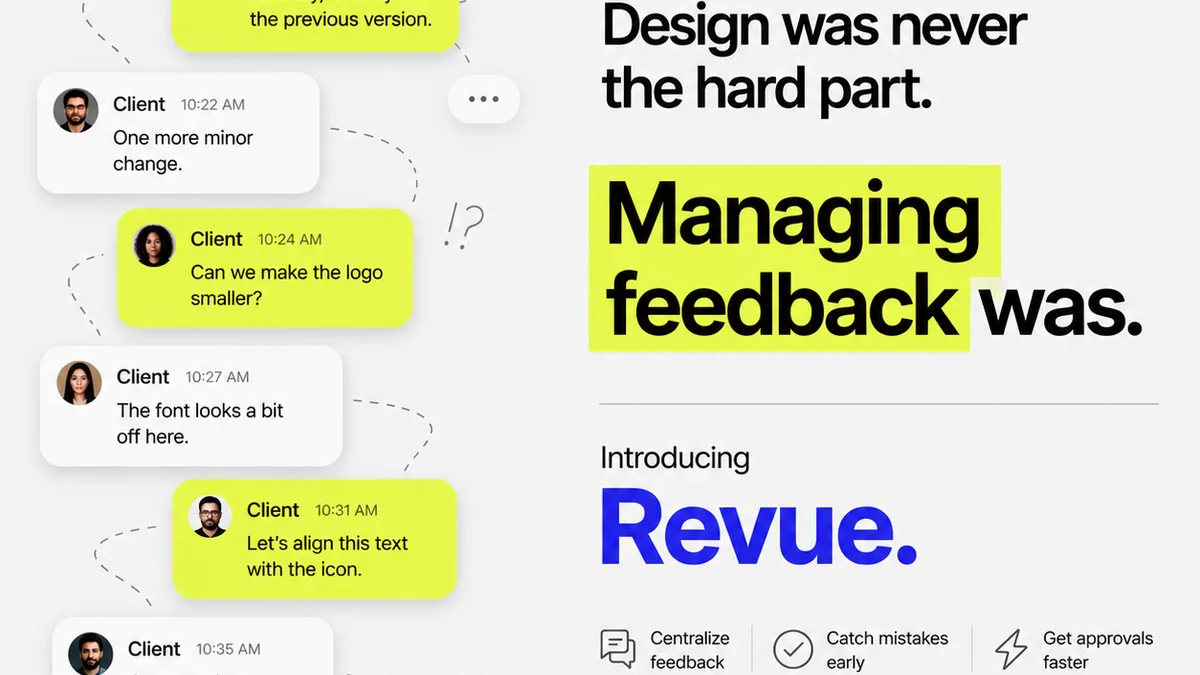
Centralizing feedback, as Revue facilitates, ensures all stakeholders provide input in one place. This reduces miscommunication, minimizes unnecessary revisions, and speeds up the approval process. Faster time-to-market and fewer wasted creative hours directly contribute to a better ROI by reducing costs and accelerating revenue generation.