Everyone wants to talk about Return on Investment (ROI) for creative work. Agencies pitch it. Clients demand it. You nod along, armed with reports on engagement rates, click-throughs, and brand mentions.
None of that is wrong. But it’s incomplete. It’s like measuring the success of a restaurant solely by how many people walk in the door, ignoring whether they actually ate, enjoyed their meal, or paid the bill.
The hard truth? Most agencies and in-house teams are measuring the wrong things. They’re focused on activity, not impact. They’re tracking proxies for success, not success itself. True creative ROI isn’t about vanity metrics; it’s about tangible business outcomes tied directly to the creative output.
1. Beyond the Click: Measuring Real Business Impact
The common wisdom is that digital metrics like clicks, impressions, and social shares are the new proxies for creative success. They’re easy to track, readily available, and look good on a dashboard. But they rarely tell the full story of how creative work actually moves the needle for a client’s business.
Think about a beautifully designed landing page. High traffic is great. High bounce rate? Not so much. A campaign that generates a million social shares but zero leads or sales is a failure, no matter how viral it went.
The Real Drivers: Conversions and Revenue
Let’s get down to brass tacks. What actually matters to a business?:
- Sales
- Leads
- Customer Acquisition Cost (CAC)
- Customer Lifetime Value (CLV)
- Market Share
- Profitability
These are the numbers that keep CEOs and CFOs up at night. Your creative work, when aligned with business goals, directly influences these metrics. The challenge is linking the creative effort to these outcomes.
For example, a rebranding effort isn't just about a new logo. It’s about whether that new brand perception leads to increased customer loyalty (CLV), attracts higher-value clients (impacting CAC and revenue), and ultimately shifts market perception and share.
2. The Quality vs. Quantity Conundrum
Many creative teams operate under the assumption that more output equals more value. More concepts, more revisions, more assets – the sheer volume of work is seen as a sign of productivity. This is a dangerous fallacy.
The real value isn't in the number of iterations, but in the effectiveness of the final piece. A single, perfectly executed campaign that hits all the right notes and drives significant business results is infinitely more valuable than ten mediocre campaigns that barely move the needle.
The Cost of Endless Revisions
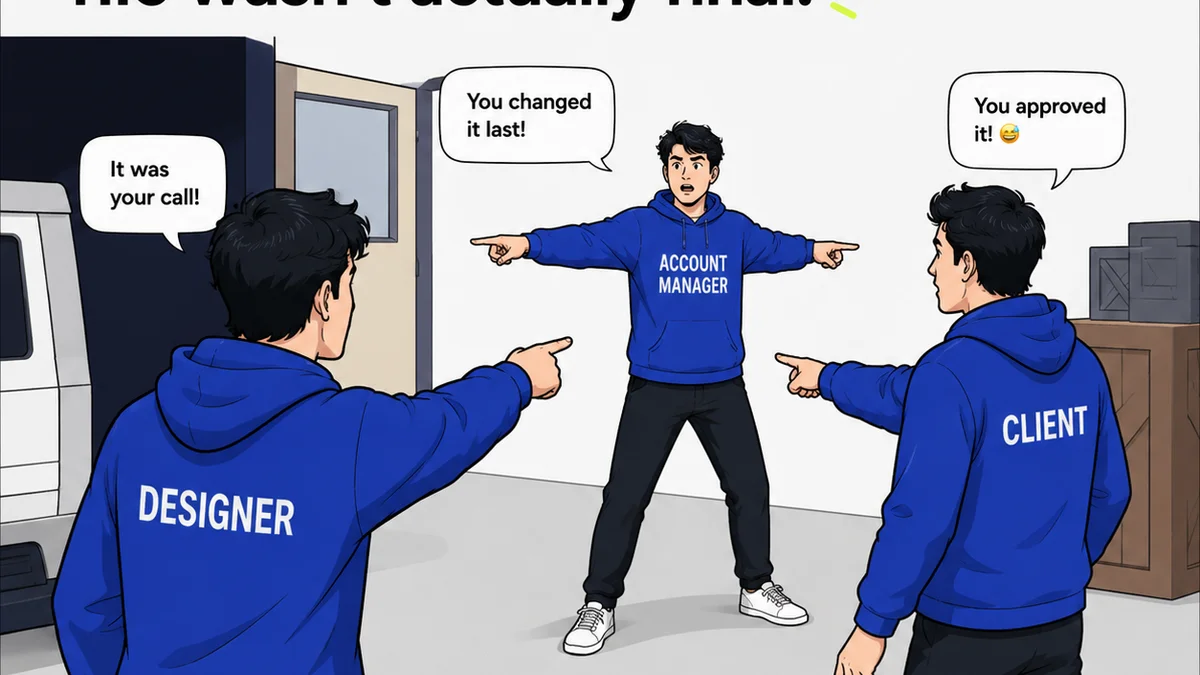
Uncontrolled feedback loops and endless revision cycles are a massive drain on resources. They inflate project costs and delay time-to-market, directly impacting ROI. Every hour spent tweaking a design that’s already “good enough” is an hour not spent on strategic thinking or developing the *next* impactful campaign.
This is where clarity in brief and defined approval stages become critical. When a client can’t articulate clear feedback or when approvals are a black box, you’re entering the realm of speculative work, not strategic creative development.
Focusing on the Right Deliverables
Instead of tracking the number of assets produced, focus on the impact of the key deliverables:
- Did the hero video drive sign-ups?
- Did the website redesign improve conversion rates?
- Did the ad campaign reduce cost per acquisition?
- Did the packaging design increase shelf appeal and sales?
These are the questions that truly matter. They shift the conversation from
Frequently asked questions
What are vanity metrics in creative ROI?
Vanity metrics are those that look good on paper but don't directly contribute to business goals. Examples include raw website traffic, social media likes or shares without corresponding conversions, or the sheer volume of creative assets produced without proven impact.
How can I better link creative work to business outcomes?
Start with a clear understanding of the client's primary business objectives. Ensure creative briefs are tightly aligned with these goals. Implement tracking mechanisms that directly measure conversion events, lead generation, sales impact, or changes in customer value attributable to the creative campaign.
What's the difference between output and outcome in creative work?
Output refers to the tangible deliverables produced (e.g., number of ad variations, design concepts). Outcome refers to the actual business results achieved because of that output (e.g., increased sales, reduced customer acquisition cost, improved brand perception).
How does client feedback affect creative ROI?
Unclear, subjective, or excessive feedback cycles can significantly inflate project costs and delay time-to-market, thereby reducing ROI. Structured feedback processes and clear approval stages are crucial for maintaining efficiency and focusing on impactful creative solutions.