Everyone talks about creative ROI. They point to flashy software, AI-powered magic wands, and complex analytics dashboards. The assumption is that if you just buy the right tools, your creative output will magically become more profitable.
None of that is wrong. But it’s incomplete.
The hard truth is, tools are only as good as the processes they support. Without a solid workflow, even the most advanced software becomes expensive clutter.
1. Understanding Creative ROI Beyond Vanity Metrics
What does creative ROI even mean for an agency? It’s not just about billable hours or the number of projects completed. It’s about the profitability of that work, the efficiency of your team, and the client satisfaction that leads to repeat business.
Vanity metrics like:
- Total project value
- Number of assets delivered
- Client likes/shares on social
Don’t tell the whole story. They don’t account for the time and resources spent, the revisions made, or the actual impact on the client’s business goals.
True creative ROI is about maximizing value for both your agency and your client. It’s a balance of speed, quality, and profitability.
The Real Drivers of Profitability
- Efficiency: How quickly can your team move from brief to final delivery?
- Quality: Are you consistently delivering work that meets client objectives and reduces costly revisions?
- Client Satisfaction: Are clients happy with the process and the outcome, leading to retention and referrals?
- Team Morale: Is your team empowered and not bogged down by administrative or technical friction?
These are the areas where the right tools make a difference. Not by automating creativity, but by streamlining the operational aspects around it.
2. The Hidden Costs of Disconnected Workflows
Think about your current creative process. Where does time actually get wasted?
It’s rarely in the big, creative moments. It’s in the friction points.
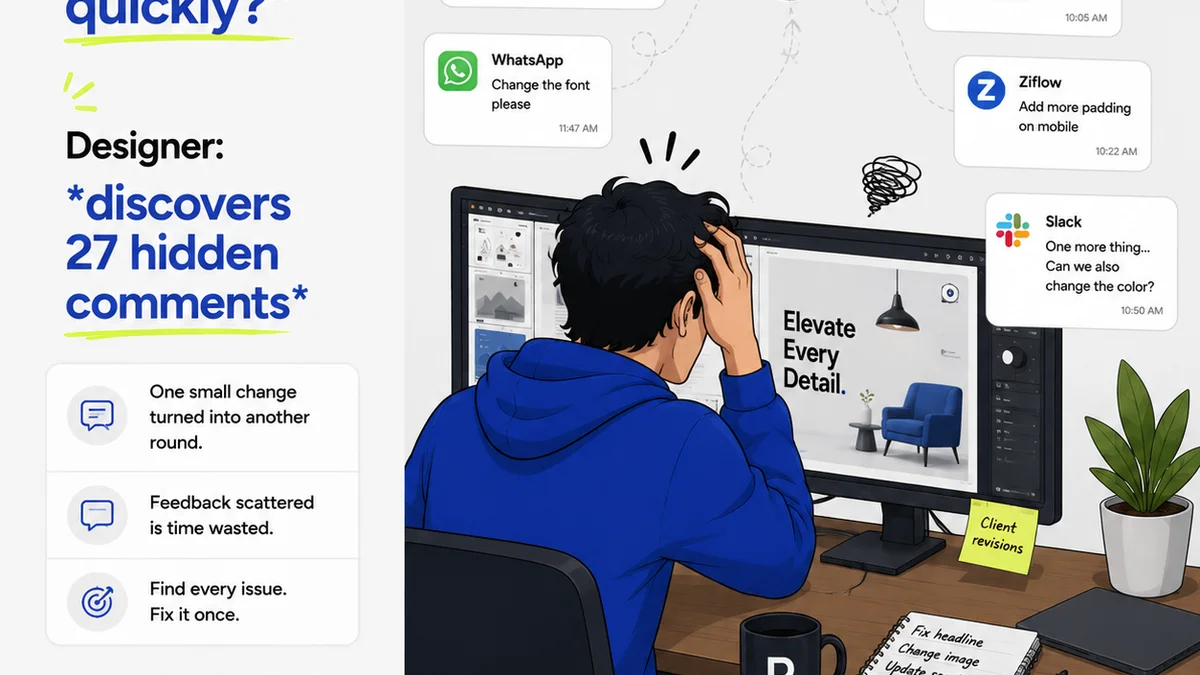
- Endless email chains trying to track down feedback.
- Manually consolidating feedback from multiple stakeholders.
- Uncertainty about which version is the latest or approved.
- Time spent searching for assets or project files.
- Miscommunication leading to rework.
- Lack of clear visibility into project status for clients and internal teams.
These aren’t minor annoyances. They are black holes for billable hours and client goodwill. They directly erode your creative ROI.
Each of these issues points to a lack of centralized communication and a clear, unified workflow. Tools that try to solve one problem in isolation often create new ones elsewhere.
The Ripple Effect of Poor Process
A single missed feedback point can:
- Cause a significant delay.
- Require extensive rework.
- Lead to client frustration.
- Damage team morale.
- Eat into profit margins.
This isn't about blaming individuals. It’s about recognizing that without the right system, even the best talent will struggle to be efficient and profitable.
3. Evaluating Tools: Beyond the Feature List
When looking for new software, it’s easy to get seduced by a long list of features. AI integrations, fancy dashboards, endless customization options. But features are only valuable if they solve a specific problem in your workflow.
Ask yourself:
- Does this tool genuinely address a bottleneck in our current process?
- Will it reduce miscommunication or rework?
- Does it improve visibility for our team and our clients?
- How much time will it *actually* save us, and is that saving worth the cost and implementation effort?
- How does it integrate with our existing toolset?
The most effective tools are often the ones that integrate seamlessly and provide clarity, not complexity.
The Integration Imperative
A standalone tool, no matter how powerful, is rarely the answer. Your creative process involves multiple stages and often multiple software applications. The real ROI comes when your tools talk to each other.
Consider:
- How does this tool fit into the end-to-end creative workflow?
- Does it require manual data transfer or complex workarounds?
- Can it connect with your project management, design, or communication platforms?
Tools that create data silos or require constant manual input are a drag on efficiency. They add work, rather than removing it.
4. Where Revue Fits In
The core challenge in creative agencies is managing the flow of feedback, revisions, and approvals. It’s the messy middle where projects get bogged down and profitability suffers.
Revue is built to solve this specific problem. It’s not a design tool, a project management tool, or a chat app. It’s the central hub for client feedback and creative asset management.
By centralizing feedback, Revue eliminates the endless email threads and scattered comments. Stakeholders can review assets directly, add contextual comments, and mark their decisions.
This provides:
- Clear Revision Trails: Every comment, every change, every approval is logged. No more
Frequently asked questions
What is the difference between creative ROI and vanity metrics?
Creative ROI focuses on the profitability and efficiency of creative work, considering factors like time, resources, and client satisfaction. Vanity metrics, like total project value or number of assets, don't account for the costs or the true business impact.
How can agencies improve their creative ROI?
Agencies can improve creative ROI by optimizing their workflows, centralizing client feedback, reducing miscommunication and rework, and implementing tools that enhance team efficiency and client satisfaction. Focusing on process improvement is key.
What are the biggest workflow bottlenecks in creative agencies?
Common bottlenecks include managing scattered client feedback, tracking revisions across multiple versions, ensuring clear communication, and a lack of visibility into project status. These often stem from disconnected tools and processes.
How important is tool integration for creative ROI?
Tool integration is crucial. When tools work together seamlessly, they reduce manual data entry, prevent information silos, and create a more efficient end-to-end workflow, directly impacting profitability and team productivity.