Everyone wants to scale. It’s the siren song of agency growth: more clients, bigger projects, higher revenue. The common wisdom says scaling creative means hiring more designers, copywriters, and account managers. Build the team, build the capacity. Simple, right?
None of that is wrong. But it’s incomplete. It’s like saying a chef scales their restaurant by buying more stoves. You still need the recipes, the workflow, the kitchen management. Without it, you just have a lot of burnt food and angry customers.
The real challenge of scaling creative isn't headcount. It’s operational friction. It’s the bottlenecks, the miscommunication, the endless revision cycles that drain time and profit. The best agencies don’t just add people; they refine the engine.
1. The Myth of the 'Hero' Creative
We often lionize the star designer or the genius copywriter. The ones who can pull a rabbit out of a hat. And yes, talent matters. But building a scalable agency on a few heroes is a recipe for disaster. It creates dependency. It makes your business fragile.
What happens when your star designer gets sick? Or goes on vacation? Or, worse, gets an offer from a competitor?
The operational truth is that scaling requires a system that can absorb variability. It needs processes so robust that any competent team member can step in and deliver quality work. It’s about democratizing excellence, not hoarding it.
The System Over the Star
- Document Everything: Clear briefs, style guides, process docs. Make knowledge accessible.
- Standardize Workflows: From brief intake to final delivery, map out each step.
- Cross-Train Talent: Build T-shaped individuals who can flex across disciplines.
- Invest in Tools: The right software reduces manual effort and ensures consistency.
This isn't about stifling creativity. It's about creating a stable platform *for* creativity to thrive, reliably and predictably, across more projects and clients.
2. The Feedback Loop is Your Bottleneck
Client feedback. It’s the lifeblood of agency work. It’s also the single biggest source of wasted time and frustration when not managed properly.
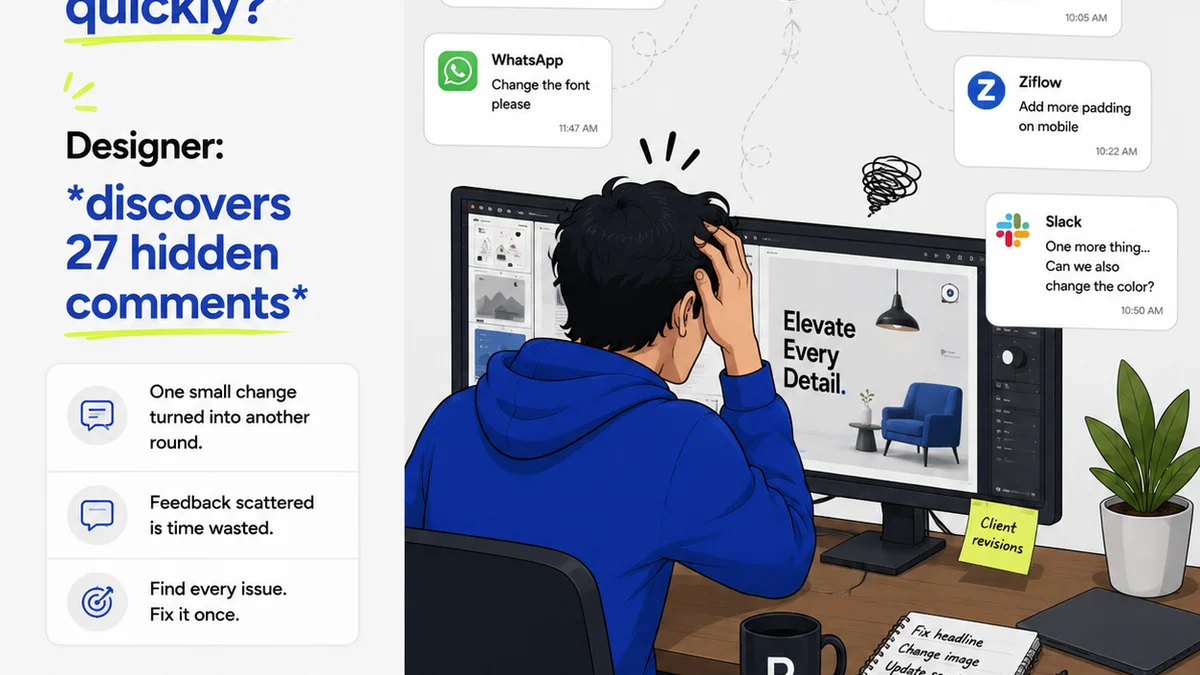
Agencies often treat feedback like a black box. A client sends an email, the account manager forwards it, the creative team makes changes, clients request more changes. Repeat until everyone is exhausted or the deadline is missed.
This is not a system. It’s chaos.
The hard truth? Unstructured, ambiguous, and endless feedback cycles kill your profitability and your team’s morale. They are the primary drag on scaling.
Taming the Feedback Beast
- Centralize Communication: All feedback must live in one place, tied directly to the creative asset. No more digging through emails or Slack threads.
- Define Feedback Stages: Clearly outline when and how feedback will be given and reviewed.
- Structure Feedback: Use annotation tools that allow for specific, actionable comments directly on the design or copy.
- Consolidate Revisions: Batch feedback into defined rounds. Resist the urge to implement every tiny tweak immediately.
- Educate Clients: Set expectations about the feedback process and its impact on timelines and budget.
When feedback is clear, contextual, and managed, it becomes a tool for improvement, not a roadblock.
3. Revision Management: The Profit Killer
Every agency owner has felt the sting. A project that should have taken two weeks stretches into six. The scope didn’t change, but the number of revision rounds ballooned. Suddenly, you’re doing hours of extra work for free.
This isn't bad luck. It's a failure of process.
The assumption is that clients just want perfection. The reality is that clients often don't know what they want until they see it, and they expect you to guide them without penalizing them for exploration.
But you can’t absorb unlimited exploration. Your margins depend on predictable effort.
Reigning in Scope Creep
- Clear SOWs: Define deliverables and, crucially, the number of revision rounds included.
- Version Control: Track every iteration. Make it easy to see what changed, when, and why.
- Approval Workflows: Formalize the sign-off process. Require clear, documented approval at key stages.
- Scope Change Process: Have a clear procedure for handling requests outside the original scope, including updated quotes and timelines.
When revisions are tracked, approved, and managed within defined parameters, you protect your profitability and maintain client relationships.
4. Quality Control: The Unsung Hero of Scaling
Think about the last time a piece of work went out the door with a typo, a broken link, or a design flaw. Embarrassing, right? Worse, it erodes client trust.
Many agencies treat Quality Assurance (QA) as an afterthought. A quick glance before sending. A junior person’s task.
This is a critical mistake when scaling.
As volume increases, the chances of errors multiply. Without a rigorous QA process, your brand reputation will suffer. Scaling with poor quality is like building a skyscraper on sand.
Building a Bulletproof QA Process
- Checklists are Non-Negotiable: Create detailed checklists for different types of deliverables (websites, social posts, print collateral).
- Dedicated QA Time: Build specific time slots for QA into your project schedule. Don't let it be squeezed out.
- Multi-Stage Review: Implement at least two levels of review: the creator and a separate QA reviewer.
- Automate Where Possible: Use tools for grammar checks, broken link scanning, and basic code validation.
A strong QA process isn't about catching mistakes; it's about preventing them. It ensures consistency and protects your agency’s reputation as you grow.
5. The Right Tools: Your Scaling Multiplier
You can’t scale a modern creative agency with spreadsheets and email alone. It’s like trying to build a spaceship with hand tools.
The assumption is that buying software is expensive and complicated. And sometimes it is.
But the cost of *not* having the right tools is far higher. It’s measured in wasted hours, missed deadlines, frustrated clients, and lost revenue.
Investing in technology that streamlines workflows, centralizes communication, and automates tasks is not a luxury; it’s a necessity for scalable growth.
Key Technology Areas for Scaling
- Project Management: To track tasks, deadlines, and resource allocation.
- Client Feedback & Approval: To centralize comments, manage revisions, and get clear sign-offs.
- Time Tracking: For accurate project costing and profitability analysis.
- Asset Management: To organize and easily retrieve creative files.
- Communication Hub: To reduce reliance on scattered emails and chats.
The goal is to reduce manual overhead and increase visibility across all projects.
Where Revue Fits In
Scaling creative output means taming the chaos. It means building predictable, repeatable processes that allow your team to focus on great work, not on managing administrative overhead.
Revue is built for this reality. It tackles the core operational friction points that prevent agencies from scaling effectively.
- Centralized Client Feedback: All comments, annotations, and discussions live in one place, directly on the creative asset. No more chasing emails or deciphering Slack messages.
- Clear Revision & Approval Tracking: Every version, every change, every approval is logged. You have a clear audit trail, protecting you from scope creep and disputes.
- Streamlined Quality Checks: By having a single source of truth for feedback and approvals, your QA process becomes more efficient and effective. You know exactly what the final approved version should be.
Revue helps you reduce the time spent managing feedback and revisions, freeing up your team to do what they do best: create. It turns those chaotic feedback loops into controlled, productive conversations.
Final Thought
Scaling isn't about getting bigger; it's about getting better, faster, and more reliable. It’s about building an agency that can handle more without breaking.
Are you building a scalable engine, or just hiring more drivers for a car with a faulty transmission?
Frequently asked questions
What's the biggest mistake agencies make when trying to scale?
The most common mistake is focusing solely on hiring more people without improving the underlying processes. This leads to increased operational friction, miscommunication, and inefficiency, ultimately hindering true scalability.
How does client feedback impact an agency's ability to scale?
Unmanaged client feedback is a major bottleneck. Ambiguous, endless, or scattered feedback leads to wasted time, scope creep, and decreased profitability. Centralizing and structuring feedback is crucial for scaling.
What role does technology play in scaling a creative agency?
Technology is a critical multiplier. Tools for project management, client feedback, version control, and communication streamline workflows, reduce manual effort, and increase visibility, making it possible to handle more volume efficiently.
How can agencies ensure quality doesn't drop as they scale?
Implementing robust Quality Assurance (QA) processes is essential. This includes using detailed checklists, dedicating time for review, having multi-stage checks, and automating where possible to prevent errors before they reach the client.