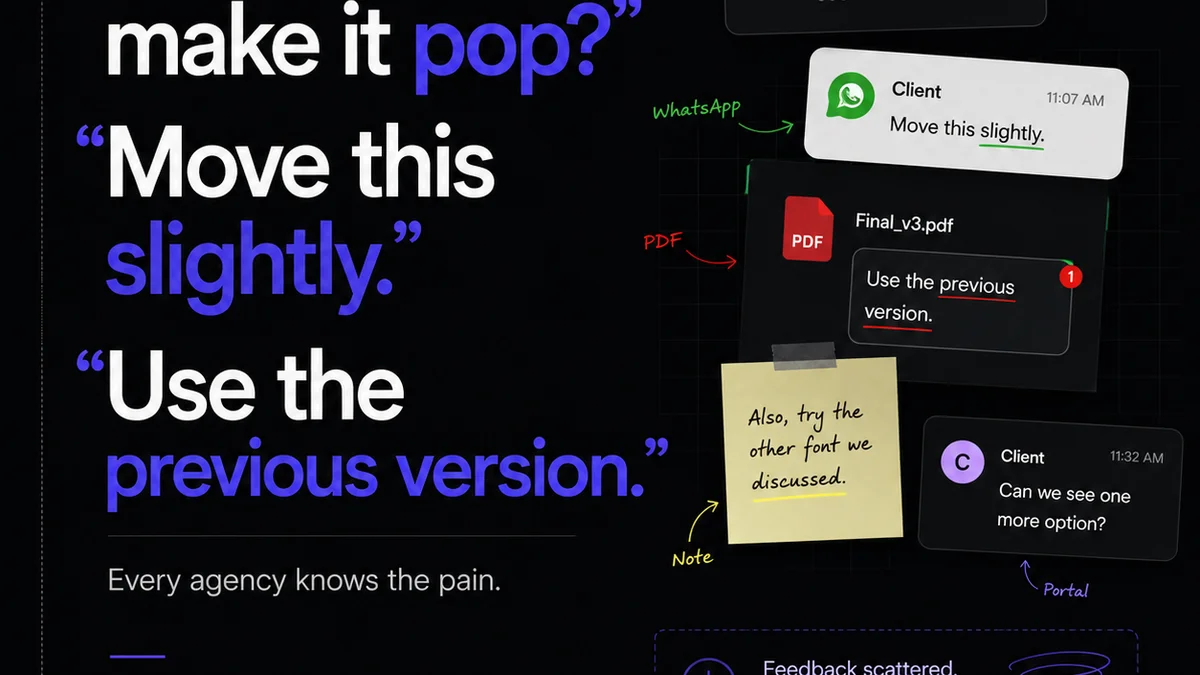
Everyone talks about capacity planning. They pull up Gantt charts, estimate hours, and block out calendars. It’s all about projecting workload versus available time. None of that is wrong. But it’s incomplete.
The hard truth is that most creative teams forecast capacity based on an idealized workflow, ignoring the messy reality of client feedback loops, shifting priorities, and internal bottlenecks. This leads to burnout, missed deadlines, and unhappy clients.
1. The Illusion of Billable Hours
The most common mistake is equating capacity with billable hours. Agencies often calculate capacity by taking the total number of hours available in a week and subtracting non-billable time like meetings, training, and admin. Then, they project how many billable hours worth of work can fit into that remaining time.
This model assumes every hour is equally productive and that work flows linearly. It’s a nice theory.
The Reality: Variable Productivity
Creative work isn’t a factory assembly line. Some tasks require deep focus, others are quick edits. A designer hitting a creative block isn’t just ‘unavailable’; they’re stuck. A copywriter wrestling with a tricky concept isn’t ‘on track’ just because their calendar says ‘writing.’
- Deep work sessions get interrupted.
- Creative blocks halt progress unexpectedly.
- Urgent, unplanned client requests derail schedules.
- Internal reviews and approvals can take longer than anticipated.
Forecasting based solely on billable hours ignores these productivity variables. You end up overbooking because you assume consistent output, when in reality, output ebbs and flows.
2. Underestimating the 'Non-Billable' Time Sinks
Even when agencies account for non-billable time, they often underestimate its true cost and impact on capacity. This isn’t just about meetings; it’s about the hidden time drains that cripple a team’s ability to deliver.
The Feedback Loop Black Hole
Client feedback is essential. But it’s also a major capacity killer if not managed properly. Chasing down feedback, deciphering vague comments, and managing endless revision rounds eats up enormous amounts of time that isn't always tracked or accurately estimated.
- Waiting for client feedback is downtime that isn't productive.
- Vague feedback requires extra communication, eating into billable time.
- Multiple revision rounds multiply the effort exponentially.
- Internal handoffs between strategy, creative, and account management create delays.
This waiting and clarifying time directly reduces the actual hours available for creative production, even if the calendar looks clear.
Internal Friction and Handoffs
Capacity isn't just about individual output; it's about the team's collective ability to move projects forward. Internal processes, communication breakdowns, and inefficient handoffs between team members or departments create drag.
If a designer waits two days for a copy deck, or a developer waits three days for final design assets, that’s lost capacity. It’s not a skill gap; it’s an operational gap.
3. The Client Factor: Unpredictable Demand
Agencies are service businesses. Client needs are, by definition, external and often unpredictable. Accurate capacity forecasting requires acknowledging that client behavior is a primary variable, not an afterthought.
Scope Creep and Shifting Goals
Clients rarely stick to the script. What starts as a small project can balloon. Priorities can shift mid-project based on market changes or internal client politics. Trying to forecast capacity without building in flexibility for these shifts is a recipe for disaster.
You need to forecast not just for the work you *have*, but for the work you *will likely get* or the work that will *change*.
Communication and Approval Delays
This links back to the feedback loop, but it’s worth highlighting from the client’s perspective. How quickly does your client respond? How many stakeholders need to sign off? Do they understand the impact of their delays on your timeline and budget?
A client who takes a week to approve a wireframe is an inherent constraint on your team’s capacity, regardless of how much time your team has free.
4. Beyond the Calendar: Measuring Workflow Health
True capacity forecasting isn't just about looking at a calendar. It's about understanding the health of your entire creative workflow. This means measuring things beyond just hours.
Cycle Time and Lead Time
How long does it *actually* take for a project to move from start to finish (cycle time)? How long does it take from the initial client request to the start of work (lead time)? Measuring these metrics reveals bottlenecks that static hour-based forecasts miss.
A long cycle time indicates internal inefficiencies or external dependencies. A long lead time suggests issues with sales-to-delivery handoff or resource allocation upfront.
Bottleneck Identification
Where do projects consistently get stuck? Is it waiting for legal review? Is it waiting for client approval on initial concepts? Is it the final QA pass?
Identifying these bottlenecks allows you to forecast more realistically. You can’t just say ‘we have 400 hours of capacity this week.’ You need to say, ‘we have 400 hours of capacity, but our legal review process adds an average of 3 days per project, so we can only realistically complete X projects that require legal review this week.’
5. Building a Realistic Capacity Model
So, how do you move from wishful thinking to actual, actionable capacity forecasting?
1. Track Everything, Realistically
Log actual time spent on tasks, including revisions, feedback clarification, and internal reviews. Don’t just log billable hours. Use this data to understand the true effort involved in different project types.
2. Segment Your Work
Not all projects are created equal. Differentiate between project types (e.g., website design, social media campaign, brand identity). Different project types have different typical workflows, feedback cycles, and risks.
3. Factor in Known Variables
Build buffers for common delays. Add a percentage for unexpected client feedback or scope adjustments. Account for planned time off and holidays.
4. Monitor Team Velocity
How much *actual* output does your team consistently deliver over a given period? This is more valuable than theoretical hours. This ‘velocity’ should inform your capacity planning.
5. Communicate with Clients About Process
Educate clients on your workflow, feedback timelines, and the impact of delays. Setting expectations upfront is crucial for managing capacity and preventing scope creep.
Where Revue Fits In
Accurate capacity forecasting isn't just about internal metrics; it's deeply tied to how efficiently you manage client collaboration and project progression. This is where a tool like Revue becomes indispensable.
Revue centralizes client feedback, making it visible and actionable. Instead of chasing scattered emails or Slack messages, all feedback resides in one place, tied directly to the creative asset. This drastically reduces the time spent clarifying comments and managing the back-and-forth.
Furthermore, Revue streamlines revision and approval workflows. You can clearly see which assets are awaiting client review, which are approved, and which require revisions. This visibility helps you identify where projects are getting stuck – revealing potential bottlenecks in your client-facing process that directly impact your team’s capacity.
By providing a single source of truth for feedback and approvals, Revue helps you reclaim time lost to miscommunication and delays. This directly translates to more accurate capacity forecasting, as you’re working with real-time data on project status and client responsiveness, rather than relying on assumptions.
Final Thought
Is your capacity forecast a reflection of your team's potential, or a confession of your workflow's limitations? The real work of forecasting isn't in the software you use, but in the honest assessment of how work actually gets done – and undone – in your agency.
Frequently asked questions
What's the biggest mistake agencies make when forecasting capacity?
The biggest mistake is assuming linear productivity and equating capacity solely with billable hours. This ignores crucial factors like creative blocks, unpredictable client feedback, internal bottlenecks, and the variable nature of deep work, leading to overbooking and burnout.
How does client feedback affect capacity planning?
Client feedback loops can be major capacity killers. Waiting for feedback, deciphering vague comments, and managing multiple revision rounds consume significant time that isn't always accounted for. Unmanaged feedback delays directly reduce the actual hours available for creative production.
What are 'cycle time' and 'lead time' in relation to capacity?
Cycle time is the total duration of a project from start to finish. Lead time is the duration from initial request to the start of work. Measuring these metrics reveals workflow bottlenecks and inefficiencies that static hour-based forecasts often miss, providing a more realistic view of capacity.
How can I make my capacity forecasts more realistic?
Track actual time spent on all tasks, segment your work by project type, factor in known variables like holidays and expected client delays, monitor your team's actual output (velocity), and communicate your workflow process clearly with clients to set expectations.