Everyone talks about KPIs for creative teams. They usually mean billable hours, utilization rates, and project profitability. None of that is wrong. But it’s incomplete.
The hard truth is that focusing solely on time-and-money metrics misses the forest for the trees. It ignores the actual creative output, the quality of the work, and the client’s perception of value. Your team’s success, and your agency’s reputation, hinges on more than just clocking in and out.
1. The Misleading Simplicity of Billable Hours
Billable hours are the traditional bedrock of agency finance. They’re easy to track and directly tie to revenue. This is why they become the default KPI.
But they can be a blunt instrument. High billable hours don't always mean high productivity or high quality. They can indicate:
- Inefficiency: Tasks taking longer than they should.
- Scope creep: Projects expanding without clear approval or pricing.
- Poor planning: Rework and delays due to unclear briefs or approvals.
- Over-servicing: Giving clients more than they paid for, often out of habit.
If your team is constantly chasing billable hours, they might be incentivized to slow down, not speed up. Or worse, to cut corners on creative thinking to get tasks done faster.
The Real Goal: Value, Not Just Time
Clients don’t pay for your team’s time. They pay for solutions, for compelling creative, for results. Measuring your team by hours logged is like measuring a chef by the time spent chopping vegetables, not by the taste of the final dish.
2. Measuring Creative Quality and Output
This is where things get more nuanced, but far more important. How do you quantify the intangible?
Client Satisfaction Scores (CSAT)
Direct feedback is gold. Go beyond the final project sign-off. Implement regular, targeted surveys after key milestones or project completions. Ask specific questions about the creative work, the process, and the communication.
First-Time Approval Rates
What percentage of creative work gets approved on the first round of feedback? A low rate signals issues with understanding the brief, creative execution, or the feedback process itself. This is a direct indicator of wasted time and potential client frustration.
Rework Percentage
This is closely related to first-time approval. Track the amount of time or effort spent on revisions versus the initial creation. High rework is a sign of inefficiency, miscommunication, or a flawed creative strategy.
Internal Quality Reviews
Establish a clear, objective internal review process before work ever reaches the client. This could involve peer reviews, creative director sign-offs against the brief, or even automated checks for brand consistency.
Project Success Metrics
What were the client’s original goals for the project? Did the creative work contribute to achieving them? This might be increased engagement, higher conversion rates, improved brand recall, or whatever success looks like for that specific client and campaign.
3. Efficiency and Workflow KPIs
Beyond billable hours, how efficiently is your team actually working? This is about process, not just time.
Cycle Time
This measures the total time it takes to complete a specific task or project from start to finish. Breaking this down by phase (briefing, concepting, design, revision, finalization) can reveal bottlenecks.
On-Time Delivery Rate
Are projects consistently delivered by the agreed-upon deadlines? This speaks to project management, resource allocation, and realistic scoping. Missed deadlines erode client trust faster than almost anything.
Feedback Turnaround Time
How quickly does your team respond to and action client feedback? Conversely, how quickly do clients provide feedback? Long delays on either end cripple workflow.
Resource Utilization (Smartly Applied)
Instead of just utilization, consider *effective* utilization. Is your senior designer spending too much time on tasks a junior could handle? Are your strategists bogged down in administrative work?
Number of Revisions Per Project
A simple, but powerful metric. A consistently high number of revisions points to fundamental issues with briefs, communication, or the creative concept itself.
4. Team Health and Morale
Happy, motivated teams produce better work. Don't ignore the human element.
Employee Satisfaction/Engagement
Regular, anonymous surveys can gauge team morale. High turnover or widespread disengagement is a clear warning sign. It’s expensive and impacts output.
Professional Development Hours
Are you investing in your team’s growth? Tracking time spent on training, workshops, and skill development shows commitment and builds long-term capability.
Burnout Indicators
While hard to quantify, watch for patterns: increased sick days, higher error rates, decreased enthusiasm, or staff departures. Proactive management can prevent burnout.
Where Revue Fits In
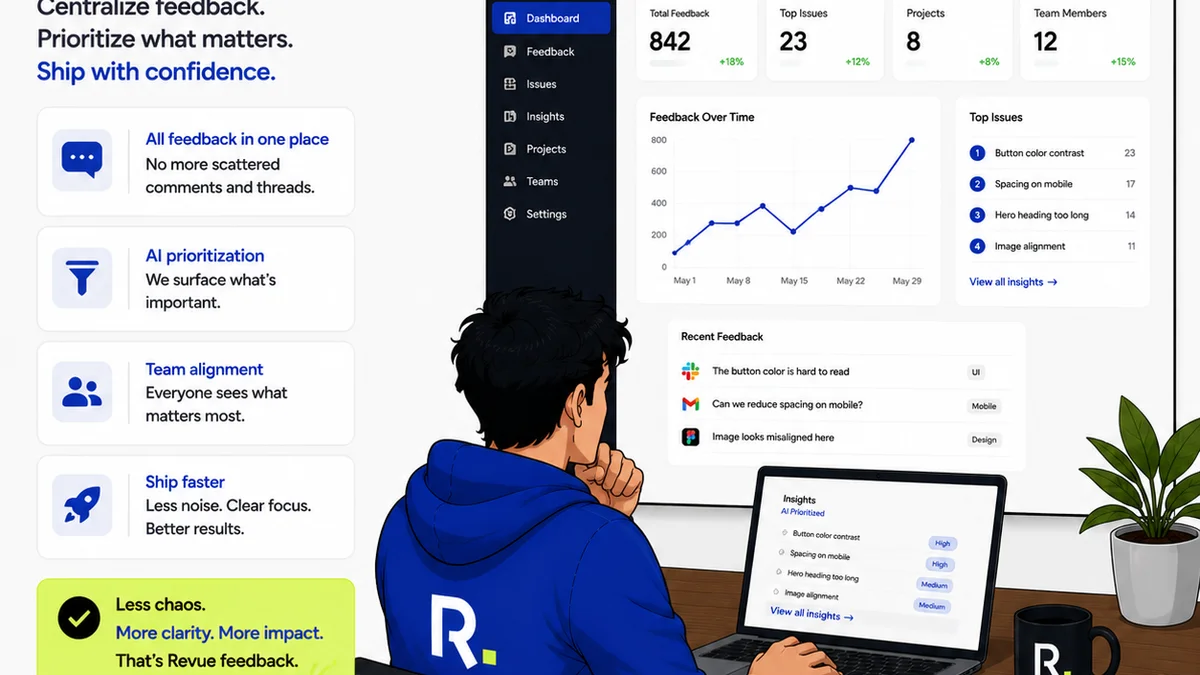
Managing these diverse KPIs requires visibility. That’s where a centralized platform like Revue becomes essential.
Revue helps streamline the entire creative process, providing the data and control needed to track these crucial metrics.
- Centralized Feedback: No more hunting through emails or Slack messages. All client feedback is in one place, linked to specific versions of the creative asset. This directly impacts First-Time Approval Rates and reduces Rework Percentage.
- Revision Visibility: Track the number of revision rounds and the time spent on each. This provides clear data for your Rework Percentage and Cycle Time KPIs.
- Approval Tracking: Formalize the approval process. This ensures clear sign-offs, reducing ambiguity and contributing to on-time delivery.
- Version Control: Easily manage and compare different versions of creative work. This helps in internal quality reviews and can reduce the need for extensive rework.
- Project Overview: Gain a clear picture of project status, upcoming deadlines, and potential bottlenecks, aiding in managing On-Time Delivery Rate and overall Resource Utilization.
By consolidating feedback and managing revisions systematically, Revue provides the operational backbone to measure what truly matters – the quality and efficiency of your creative output, not just the hours spent.
Final Thought
Are your current KPIs helping you build a better creative business, or are they just reinforcing old habits? It’s time to look beyond the timesheet and measure the impact of your team’s creativity. What metrics will you start tracking today?
Frequently asked questions
Why are billable hours a poor KPI for creative teams?
Billable hours incentivize time spent rather than value delivered. High hours can indicate inefficiency, scope creep, or rework, rather than productive, high-quality output. They don't measure creative effectiveness or client satisfaction.
What are some good metrics for creative quality?
Key metrics for creative quality include First-Time Approval Rates, Rework Percentage, Client Satisfaction Scores (CSAT), and alignment with Project Success Metrics (e.g., campaign goals).
How can efficiency be measured beyond billable hours?
Measure efficiency using Cycle Time (total task completion time), On-Time Delivery Rate, Feedback Turnaround Time, and effective Resource Utilization. Tracking the Number of Revisions per Project also highlights workflow issues.
Why is team health important for KPIs?
Team health directly impacts creative output. Metrics like Employee Satisfaction, Engagement, and tracking Burnout Indicators are crucial because a motivated, healthy team produces better, more innovative work and has lower turnover.
How does a tool like Revue help track these KPIs?
Revue centralizes feedback, tracks revisions and approvals, and provides version control. This visibility allows for accurate measurement of First-Time Approval Rates, Rework Percentage, Cycle Time, and On-Time Delivery, directly supporting data-driven performance management.