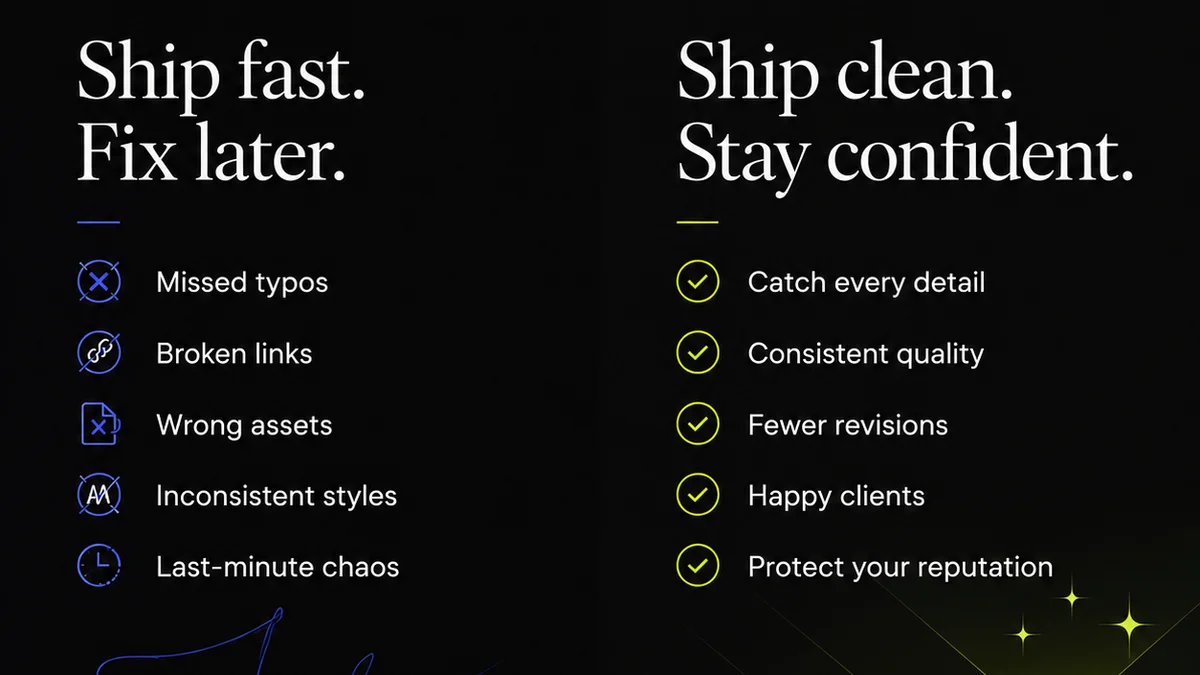
Everyone thinks faster design reviews mean more aggressive deadlines. That you just need to push harder. Shave a few hours here, a few there.
None of that is wrong. But it’s incomplete.
The real bottleneck isn’t time. It’s the process itself. It’s the chaos. The miscommunication. The endless back-and-forth that feels like wading through mud.
The hard truth? You can’t just *will* faster reviews into existence. You have to engineer them.
1. The Illusion of Synchronous Feedback
Most teams *think* they’re on the same page during a review. They hop on a call, stare at the screen, and someone scribbles notes.
What’s really happening?
- One person is talking, but three others are muted, checking email.
- The loudest voice dominates, drowning out quieter but valid points.
- Notes are taken on scraps of paper, in Slack DMs, in emails – a digital paper trail that vanishes.
- Crucial context from a previous version is lost.
- Decisions are made based on gut feel, not objective criteria.
This isn't a review. It’s a performance.
The Cost of the "Quick Chat"
This approach breeds a specific kind of inefficiency. It looks like speed, but it’s a mirage.
You lose hours, sometimes days, to clarifying feedback. To redoing work because the initial input was misunderstood. To chasing down decisions.
And the client? They feel it too. The drag. The uncertainty. The lack of clear progress.
2. Defining "Done" Before You Start
What’s the most common reason design reviews drag on? Unclear objectives.
Everyone has an idea of what the final output should look like, but nobody’s written it down. Or if they have, it’s buried in a 50-page brief that no one’s read.
You need to define success criteria upfront.
The Power of a Clear Brief
A good brief is more than just a document. It’s a shared understanding.
It should clearly state:
- The core problem you’re solving.
- The target audience for this design.
- The primary goal of this specific deliverable.
- Key performance indicators (KPIs) if applicable.
- Any mandatory elements or constraints.
This isn't about stifling creativity. It’s about giving creativity a target to hit.
Setting Review Criteria
Beyond the brief, what makes a design *good*? This needs to be agreed upon *before* the review.
Does it meet the brief? Is it on-brand? Is it technically feasible? Does it align with user testing insights?
When these questions are answered *during* the review, you’re already behind.
3. Asynchronous Review: The Unsung Hero
The holy grail of efficient reviews isn’t a frantic, real-time meeting. It’s structured, asynchronous feedback.
Why? Because it allows for thoughtful, considered input.
People can review when they’re focused. When they have the necessary context. When they’re not worried about interrupting someone else.
The Asynchronous Advantage
With asynchronous reviews, you get:
- More detailed, considered feedback.
- Less groupthink and dominance by vocal individuals.
- A clear, documented record of comments and decisions.
- The ability for reviewers to provide input on their own schedule.
- Reduced need for lengthy, often unproductive, real-time meetings.
Think about it: when do you do your best thinking? Usually, not when you’re put on the spot in a meeting.
Structured Feedback Channels
This requires a system. A place where feedback can be logged, tagged, and responded to systematically.
Imagine a platform where:
- Stakeholders can leave comments directly on the design.
- These comments are visible to everyone.
- Designers can respond directly to comments, asking for clarification or explaining their choices.
- Feedback can be categorized (e.g.,
Frequently asked questions
What is the main reason design reviews take too long?
The primary reason design reviews often take too long is a lack of clear objectives and undefined success criteria before the review begins. This leads to subjective debates, scope creep, and endless rounds of revisions.
How can asynchronous feedback improve design reviews?
Asynchronous feedback allows reviewers to provide thoughtful, considered input on their own schedule, rather than being rushed in a real-time meeting. This leads to more detailed, actionable comments and a clearer record of decisions, reducing miscommunication and rework.
What are the key elements of a good design brief?
A good design brief clearly states the problem being solved, the target audience, the primary goal of the deliverable, any key performance indicators, and any mandatory elements or constraints. It serves as a shared understanding for the entire team.
How can creative teams ensure feedback is actionable?
Creative teams can ensure feedback is actionable by establishing clear review criteria beforehand, using structured feedback channels (like a dedicated platform), and encouraging reviewers to be specific, objective, and constructive in their comments, rather than vague or purely subjective.