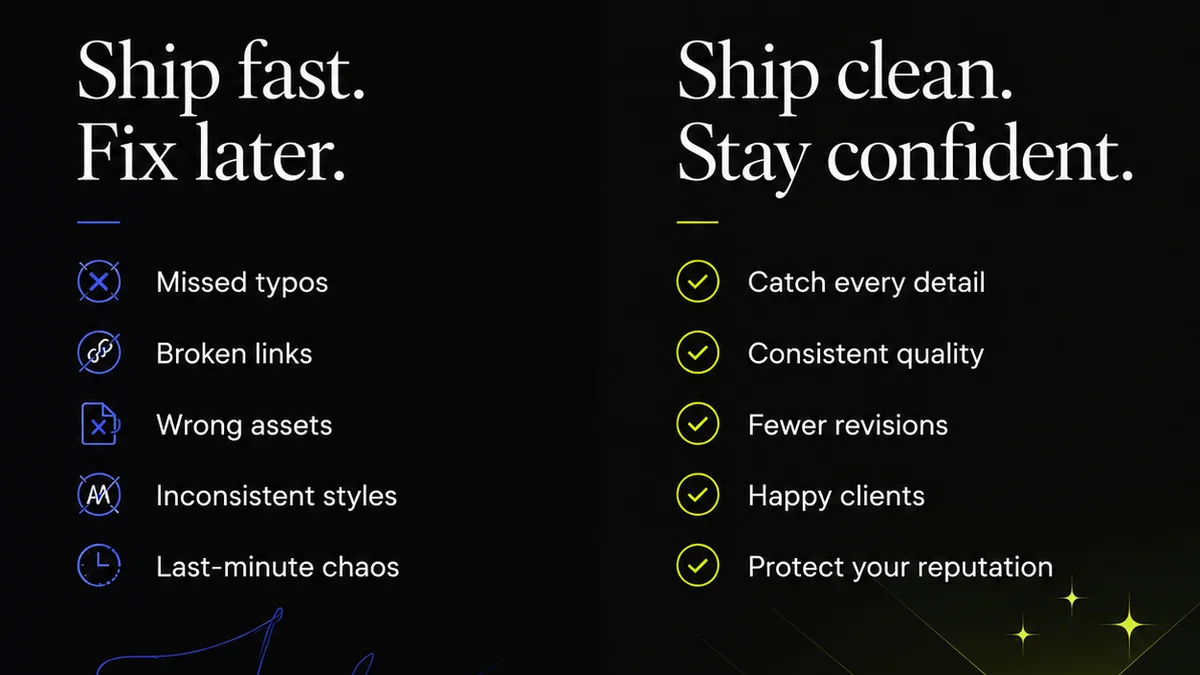
Everyone talks about creative workflow. They’ll tell you it’s about project management software, Gantt charts, and clear briefs. None of that is wrong.
But it’s incomplete.
The hard truth? Most agencies treat workflow as a series of *tasks*. They focus on what needs to be done, by whom, and when. They’re building a to-do list, not a system for predictable excellence.
True creative workflow is about orchestrating *outcomes*. It’s about anticipating friction, eliminating ambiguity, and consistently delivering high-quality creative work that delights clients and fuels your team.
This isn’t about more tools. It’s about a deeper understanding of the creative process itself, and how to engineer it for scale and sanity.
1. Beyond the Brief: Setting the Stage for Success
We all know a good brief is essential. But a great workflow starts *before* the brief is even written.
It starts with client qualification and expectation management.
The Pre-Brief Audit
Not every project is right for your agency. Not every client is a good fit for your process.
- Are their goals clearly defined?
- Do they understand the scope of creative work?
- What is their capacity for feedback and revision?
- What does
Frequently asked questions
What's the difference between task management and outcome orchestration?
Task management focuses on 'what needs to be done, by whom, and when.' Outcome orchestration focuses on building a system that consistently delivers desired results by anticipating friction, clarifying ambiguity, and ensuring quality at every stage.
How can I improve client feedback loops?
Centralize feedback in one platform, define clear feedback windows and roles, and use tools that allow for visual annotation and contextual comments. This reduces misinterpretation and speeds up revisions.
Is investing in workflow software worth it for a small agency?
Yes, especially if you struggle with version control, scattered feedback, or missed deadlines. Even a simple, dedicated tool can prevent costly errors and save significant time, allowing you to focus on creative work rather than administrative overhead.
How do I ensure creative quality at scale?
Implement structured review stages, use checklists for quality assurance (QA), and ensure clear sign-off points. Centralizing feedback and revisions also helps maintain consistency and prevent scope creep that can degrade quality.