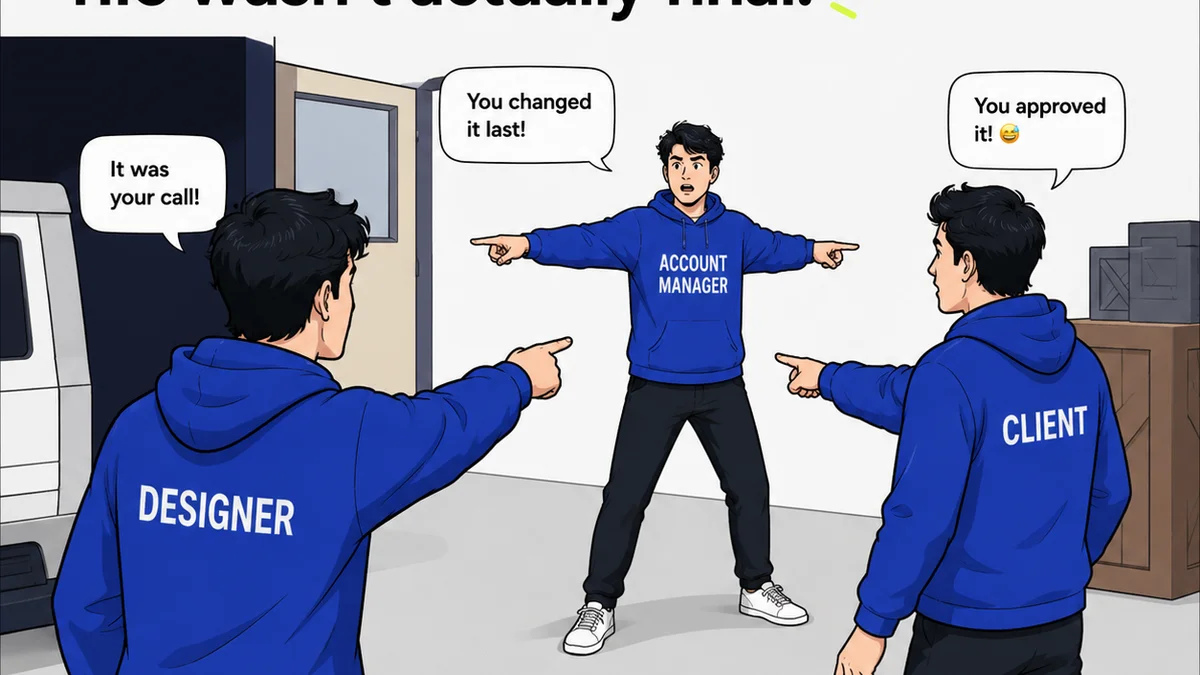
Everyone talks about creative workflow. They talk about tools, about agile sprints, about cross-functional teams. They talk about fostering collaboration and eliminating silos.
None of that is wrong. But it’s incomplete.
The real, hard truth is that world-class creative agencies don't just *talk* about workflow. They obsess over the operational mechanics of how creative gets made, reviewed, and approved. They understand that efficiency isn't a byproduct of good ideas; it’s a prerequisite.
This isn't about sacrificing creativity for speed. It's about building a system that allows creativity to flourish without getting bogged down in the mundane.
1. The Myth of the "Creative Genius" Working in Isolation
The romanticized image of the lone genius having a lightning bolt of inspiration is a myth. Or, at least, it’s a vastly oversimplified one.
Great creative work rarely happens in a vacuum. It’s the result of a process. A process that involves input, iteration, and refinement. It requires collaboration, even if that collaboration is simply with a client who needs to provide feedback.
The Feedback Loop is Everything
Top agencies understand that feedback isn't a hurdle to overcome; it's the fuel. But not just any feedback. They engineer their processes to ensure feedback is:
- Timely: Not weeks later when the context is lost.
- Specific: Actionable, not vague pronouncements.
- Centralized: Not buried in email threads or Slack DMs.
- Actionable: Clearly understood by the creative team.
Without a structured way to handle feedback, even the most brilliant ideas can get lost, misunderstood, or watered down.
The Cost of Delayed Feedback
Think about the last time a client took too long to respond. What happened?
- Creative teams likely moved on to other projects.
- Context and momentum were lost.
- Rescheduling and re-briefing became necessary.
- Frustration mounted on both sides.
These aren't minor inconveniences. They are direct drains on profitability and team morale. World-class agencies build systems to prevent this.
2. Revision Cycles Are Not a Sign of Failure, But a Measure of Clarity
Many agencies view multiple revision cycles as a sign of a weak brief, a difficult client, or a creative team that missed the mark. They see it as a failure.
The best agencies see it differently. They see revision cycles as a natural, iterative part of the creative process. The key is managing them effectively.
The Difference Between Iteration and Indecision
Iteration is when you're refining an idea based on specific, constructive input. Indecision is when the client (or internal team) doesn't know what they want, or keeps changing their mind without clear direction.
World-class agencies have strategies for both:
- For Iteration: They have clear processes for capturing feedback, assigning tasks, and tracking changes. They use tools that make it easy to see what's changed and why.
- For Indecision: They have strong project management and client management skills. This includes setting clear expectations upfront, defining scope, and having mechanisms to address scope creep or fundamental shifts in direction.
Defining the "Done" State
A critical element of managing revisions is defining what
Frequently asked questions
What's the biggest misconception about creative workflow?
The biggest misconception is that a great creative workflow is solely about having the latest tools or using agile methodologies. While those are important, world-class agencies focus on the gritty operational mechanics of how creative gets made, reviewed, and approved, understanding that efficiency is a prerequisite for creativity, not its enemy.
How do top agencies handle client feedback effectively?
Top agencies treat feedback as essential fuel for the creative process, not a hurdle. They ensure feedback is timely, specific, centralized, and actionable. This involves structured processes and tools that prevent feedback from getting lost in scattered communications.
Is it bad if a project has multiple revision cycles?
Not necessarily. World-class agencies view revision cycles as a natural part of iteration rather than a failure. The key is managing them effectively through clear processes, defined scope, and robust tracking mechanisms to distinguish between constructive iteration and indecision.
How can a creative agency improve its workflow efficiency?
Improving workflow efficiency involves moving beyond basic project management. It requires a deep dive into operational mechanics: streamlining feedback, automating approvals, ensuring clear communication, and using technology to centralize information and track progress meticulously. It's about building a system that supports creative output.