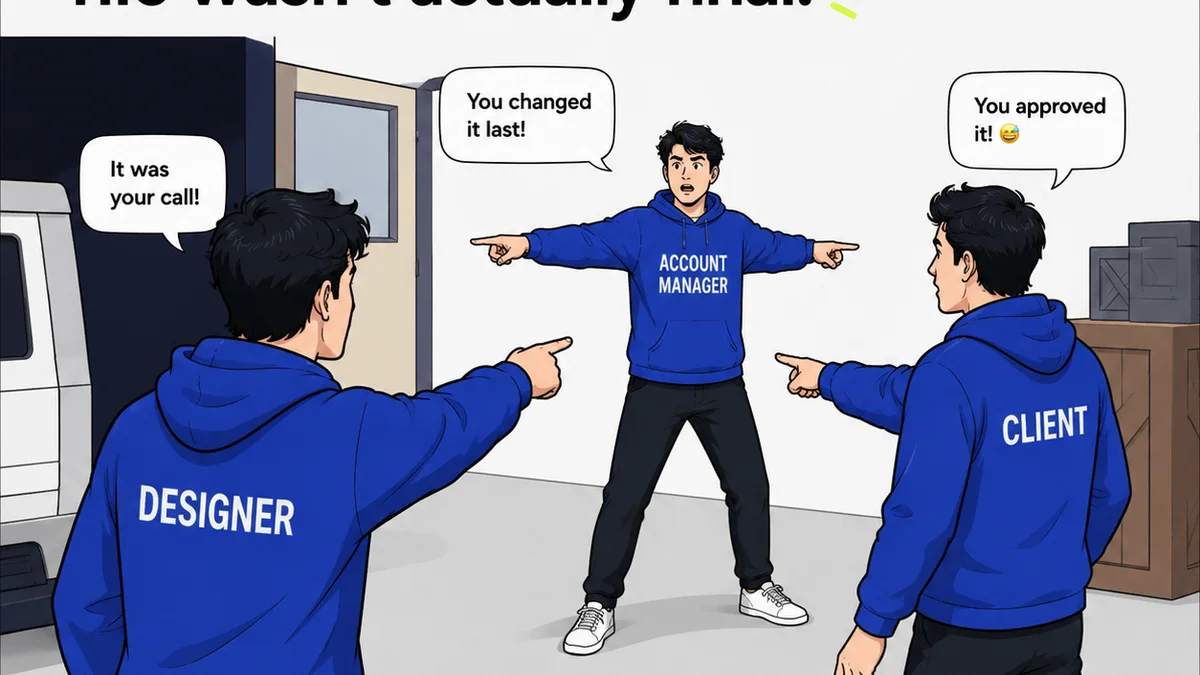
Everyone thinks creative workflow bottlenecks are about talent. Or maybe laziness. That your designers are just too slow, or your account managers aren't chasing clients effectively.
None of that is wrong. But it’s incomplete.
The hard truth is that most creative workflow bottlenecks aren't about the people doing the work. They're about the systems—or lack thereof—that govern how the work gets done. They’re the silent project killers lurking in plain sight.
1. The Illusion of Simultaneous Work
Agencies love to juggle. Clients demand it. So, you often have multiple projects, each with several stages, all supposedly moving forward at once. This is where the first bottleneck appears: the assumption that parallel processing equals progress.
In reality, true parallel work is rare in creative production. A designer can't effectively work on Wireframe Set B while waiting for feedback on Wireframe Set A. An editor can't finalize a video cut if the client hasn't approved the script.
This leads to:
- Idle team members waiting for dependencies.
- Context switching, which kills productivity and increases errors.
- A false sense of busyness that masks actual project delays.
- Clients getting frustrated because they don't see continuous progress.
The real goal isn't to do everything at once. It's to ensure that when a task is active, it has everything it needs to be completed efficiently and then handed off smoothly.
2. The Feedback Black Hole
Client feedback is the lifeblood of creative work. It's also a primary source of bottlenecks. It’s not just about receiving feedback; it’s about the *quality* and *timeliness* of that feedback, and how it's managed.
Common problems include:
- Vague or contradictory feedback that requires clarification, leading to more back-and-forth.
- Feedback delivered late, pushing back entire project timelines.
- Feedback scattered across emails, Slack messages, and random documents, making it impossible to track.
- Lack of a clear decision-maker on the client side, resulting in delayed approvals.
- Internal teams misinterpreting or losing feedback.
This isn't just an annoyance; it’s a direct drain on resources. Every hour spent deciphering unclear feedback or chasing down missing approvals is an hour not spent creating or delivering value.
The Cost of Ambiguity
When feedback is unclear, your team is forced to guess. This guess might be right, but it often isn't. The result? More revisions. More time wasted. More frustration for everyone involved.
The Email Avalanche
Trying to manage feedback through email chains is like trying to build a skyscraper with a single brick at a time. It's slow, inefficient, and prone to errors. Important comments get buried. Approved changes get missed.
3. Revision Rounds Without Limits
The
Frequently asked questions
What are the most common creative workflow bottlenecks?
The most common bottlenecks include unclear or delayed client feedback, excessive and undefined revision rounds, poor internal communication, lack of clear project prioritization, and inefficient handoffs between team members or stages.
How can I identify bottlenecks in my agency's workflow?
Start by mapping out your current project process. Then, observe where projects frequently get stuck, where team members are waiting, and where communication breaks down. Look for recurring delays, scope creep, and client dissatisfaction points. Using project management software with reporting features can also highlight these areas.
How can I reduce revision rounds?
Clearly define the scope of work and the number of revision rounds in your contract. Ensure all feedback is consolidated and actionable before presenting it to the client. Implement a structured review process with clear decision-makers. For complex projects, consider phased approvals for key milestones.
Can technology help solve workflow bottlenecks?
Yes, technology like centralized feedback and approval platforms, project management tools, and communication software can significantly streamline workflows. They provide visibility, centralize information, automate tasks, and improve collaboration, directly addressing many common bottlenecks.