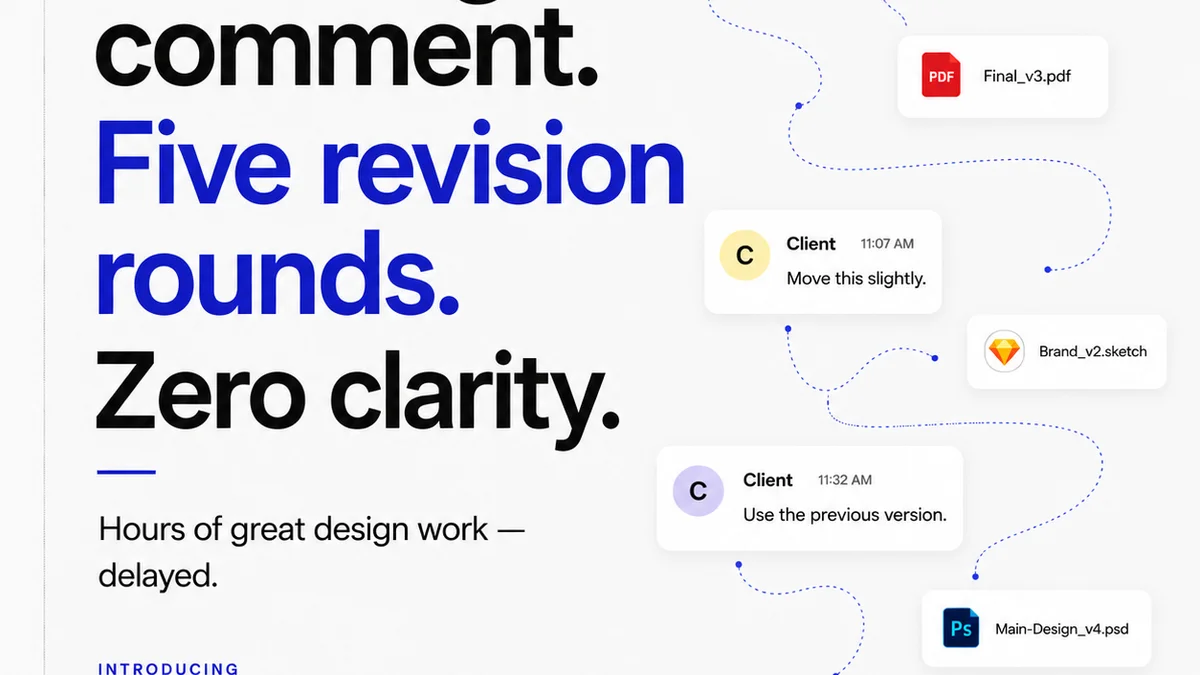
Everyone talks about creative workflow bottlenecks. They’re usually blamed on scope creep, tight deadlines, or difficult clients. And sure, those things can cause problems.
But that’s just the surface-level stuff. The real bottlenecks aren't external pressures; they're baked into your internal processes. They’re the invisible drag that slows everything down, frustrates your team, and eats into your profits.
The hard truth is, your workflow itself is likely the biggest bottleneck. And until you address its internal friction, you’ll keep hitting the same walls.
1. The Illusion of Parallel Processing
We like to think our teams can multitask. A designer juggles three projects, a copywriter spins plates, and a project manager herds cats. It feels efficient. It feels productive.
But true parallel processing is rare. What looks like multitasking is often rapid task-switching. And every switch costs time and cognitive load.
The Cost of Context Switching
Every time a team member switches from Project A to Project B, they lose momentum. They have to re-engage with the brief, remember where they left off, and find their creative headspace again.
This isn't just a minor annoyance. It's a quantifiable drain on productivity. Studies show it can take upwards of 20 minutes to regain full focus after an interruption.
For a designer hopping between client feedback on three different projects, that adds up fast. Hours lost every week, just in getting back on track.
Symptoms of Parallel Processing Paralysis:
- Frequent
Frequently asked questions
What are the most common creative workflow bottlenecks?
Common bottlenecks include unclear briefs, excessive rounds of revisions, inefficient feedback loops, poor communication, lack of clear approval processes, and context switching due to multitasking.
How can I identify bottlenecks in my agency's workflow?
Start by mapping your current process. Talk to your team about where they get stuck. Look for projects that consistently run over time or budget. Analyze feedback loops for delays and confusion.
Can technology solve workflow bottlenecks?
Technology can help significantly by centralizing communication, streamlining feedback, and automating tasks. However, technology alone isn't a solution. It needs to be integrated into well-defined processes and adopted by the team.
How do I get client buy-in for workflow improvements?
Clearly communicate the benefits to the client, such as faster turnaround times, fewer errors, and a more streamlined experience. Show them how improved processes lead to better outcomes for their project.