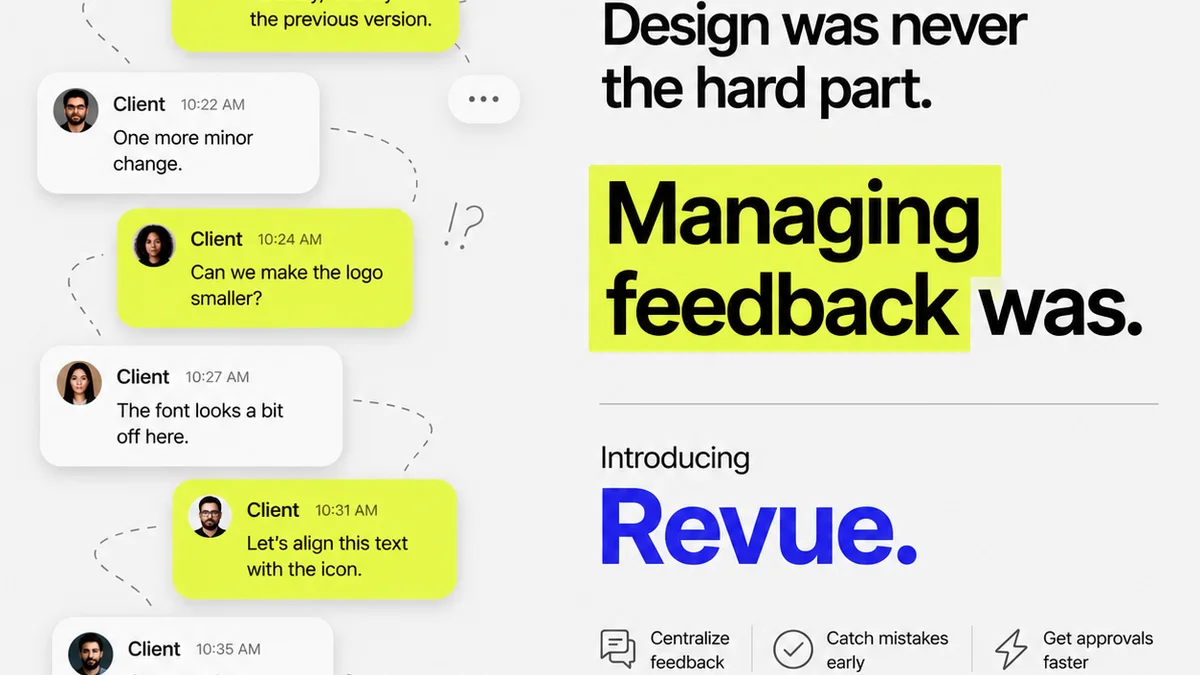
Everyone thinks creative workflow bottlenecks come down to talent. That your designers are too slow, your copywriters too precious, your video editors too bogged down. That if only you could hire more people, or push the existing ones harder, everything would flow like clockwork.
None of that is wrong. But it’s incomplete.
The hard truth is that for enterprise creative teams, the real bottlenecks aren’t about individual output. They’re about systemic friction. They’re buried in the processes, the tools, and the sheer complexity of large organizations.
1. The Illusion of Collaboration
Collaboration tools are everywhere. Slack, Teams, email chains, shared drives, project management software. They promise seamless connection and rapid iteration.
But for enterprise teams, this often becomes a digital labyrinth. Information gets scattered across platforms.
Decisions made in a Slack huddle disappear into the ether. Feedback buried in a sprawling email thread is missed. Version control becomes a nightmare.
This isn’t collaboration; it’s noise. And it slows everything down.
Symptoms of Collaboration Chaos
- Endless back-and-forth emails seeking clarification.
- Critical feedback lost in long comment threads.
- Inability to quickly find the latest approved version of a creative asset.
- Team members working on outdated files.
- Meetings dedicated solely to catching up on what’s happening.
2. The Approval Black Hole
The approval process is where many enterprise creative projects go to die. It’s a necessary evil, but it’s often poorly managed.
Think about it. How many stakeholders are involved? Legal, compliance, marketing leadership, regional teams, brand guardians… the list can be long.
Each stakeholder has their own priorities, their own feedback style, and their own schedule. Without a clear system, approvals become a waiting game. A black hole where assets disappear for days, or even weeks.
This isn’t just frustrating; it’s costly. Every day an asset is stuck in approval is a day it’s not live, not generating ROI, and not contributing to business goals.
Common Approval Pitfalls
- Lack of clear submission guidelines for stakeholders.
- Undefined roles and responsibilities for approvers.
- No defined turnaround times for feedback or approvals.
- Feedback that is vague, contradictory, or subjective.
- No centralized system to track approval status.
3. Tool Sprawl and Integration Gaps
Enterprise environments are notorious for their sprawling tech stacks. Creative teams often end up juggling a dozen different tools, each for a specific task.
You might have one tool for design, another for project management, a separate one for video editing, another for asset storage, and yet another for communication.
The problem isn’t just the number of tools. It’s the lack of integration between them. Data silos emerge.
Moving assets or information from one tool to another requires manual work, often involving downloads and uploads. This is tedious, error-prone, and a massive time sink.
When your tools don’t talk to each other, your workflow breaks.
Signs of Tool Sprawl Issues
- Constant exporting and importing of files between applications.
- Difficulty in tracking asset lineage and changes.
- Inconsistent data across different platforms.
- Wasted time searching for information that should be readily available.
- High cost of maintaining multiple, often redundant, software subscriptions.
4. The Ambiguity of Feedback
Feedback is the lifeblood of creative work. But in large organizations, feedback can become a source of confusion rather than clarity.
Vague comments like “make it pop” or “I don’t like it” are common. Without context or specific direction, creative teams are left guessing.
This leads to endless revision cycles, frustration, and a dilution of the original creative vision.
Clear, actionable feedback is crucial. But achieving it requires a structured approach, especially when multiple stakeholders are involved.
Making Feedback Actionable
- Establish clear creative briefs with defined goals.
- Train stakeholders on how to provide constructive feedback.
- Use annotation tools that allow for precise commenting directly on the creative.
- Centralize all feedback in one place to avoid misinterpretation.
- Define what constitutes
Frequently asked questions
What are the most common creative workflow bottlenecks for enterprise teams?
Common bottlenecks include the illusion of collaboration due to scattered tools, inefficient approval processes with too many stakeholders, tool sprawl leading to integration gaps, and ambiguous or unclear feedback that causes endless revision cycles.
How can enterprise teams improve their creative approval process?
Improve approvals by establishing clear submission guidelines, defining stakeholder roles, setting turnaround times, training on constructive feedback, and using a centralized system to track status and gather consolidated feedback.
Why is tool sprawl a problem for creative workflows?
Tool sprawl creates data silos and requires manual work to move information between applications. This leads to inefficiencies, errors, wasted time searching for assets, and can significantly slow down the creative process.
How can feedback be made more actionable for creative teams?
Make feedback actionable by providing clear creative briefs, training stakeholders on constructive criticism, using annotation tools for precise comments, centralizing all feedback, and defining what constitutes 'done' or 'approved' before starting.