You’re growing. Projects are piling up, clients are happy, and the team is buzzing. It feels like you’ve cracked the code. Many agency owners think that once they land more clients, the operational kinks will smooth themselves out. That more work automatically means more efficiency.
None of that is wrong. But it’s incomplete.
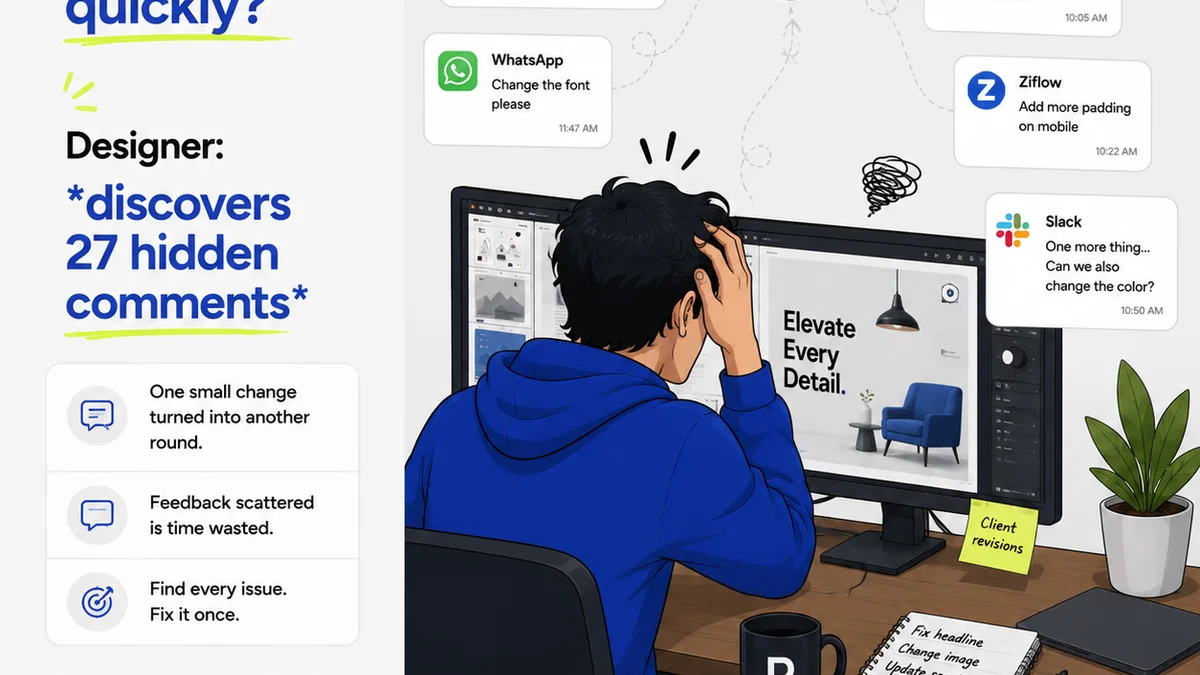
The real truth? Growth often exposes and amplifies your existing workflow weaknesses. What worked for a small team becomes a tangled mess when you scale. Your pipeline might be full, but if your internal processes are leaky, you’re leaking profit and sanity.
Let’s talk about the workflow mistakes that plague growing agencies, the ones that don’t show up on a balance sheet but cripple your capacity.
1. The "Just Do It" Feedback Loop
The assumption: Clients give feedback, you implement it. Simple, right?
The hard truth: This is where most agencies hemorrhage time. Unstructured feedback, endless revision rounds, and a lack of clear approval gates turn simple tasks into black holes of rework.
Endless Revisions
Client feedback is rarely a single, clear directive. It’s often a jumble of opinions, subjective preferences, and conflicting ideas. Without a system, your team spends hours deciphering vague comments like “make it pop” or “I don’t like it, change it.”
Lack of Accountability
When feedback isn’t logged, tracked, or formally approved, it’s easy for details to get lost. Did they approve the last round? Was that a final change or a suggestion? This ambiguity leads to wasted effort on revisions that might not even be necessary.
The Cost of Ambiguity
Each unmanaged revision round eats into your margins. It delays project completion, strains client relationships, and frustrates your creative team who are constantly chasing moving targets.
2. Siloed Communication Channels
The assumption: Email, Slack, and maybe a project management tool cover all communication needs.
The hard truth: This fragmented approach creates information silos, leading to missed details, duplicated effort, and a frustrating search for context.
The Email Black Hole
Important client feedback buried in an email chain from six months ago? We’ve all been there. Trying to reconstruct project history from scattered emails is a time sink of epic proportions.
Slack Storms
While great for quick chats, Slack can become a chaotic firehose of information. Critical feedback or decisions get lost in the noise, leading to misinterpretations and missed tasks.
Project Management Tool Overload
Even with a PM tool, if feedback isn’t centralized *within* the context of the creative asset, it’s easy to miss. Tasks get updated, but the *why* behind the change is lost in another app.
The Ripple Effect
When communication isn’t centralized, everyone operates with partial information. This leads to errors, requires constant follow-up, and makes onboarding new team members a nightmare.
3. The Manual Revision & Approval Grind
The assumption: Managing revisions and approvals is just part of the creative process.
The hard truth: Relying on manual methods for tracking, annotating, and approving creative work is a significant operational drag that slows everything down.
Version Control Chaos
How many versions of a design are floating around? V3_FINAL_FINAL_v2.pdf? Without a clear system, tracking the latest approved version becomes a guessing game.
Annotation Nightmares
Client markups directly on a PDF or a screenshot are notoriously difficult to translate into actionable design changes. They’re often unclear, overlapping, or simply impossible to implement accurately.
The Waiting Game
Waiting for client approval via email or a conference call adds days, sometimes weeks, to a project timeline. This passive waiting period is a major bottleneck for agile workflows.
Efficiency is Key
Manual tracking means more time spent organizing, less time spent creating. It’s a direct drain on billable hours and team productivity.
4. Neglecting Quality Assurance (QA)
The assumption: We’ll catch mistakes before we deliver. It’s the designer’s job, or the account manager’s.
The hard truth: Without a dedicated, systematic QA process, errors slip through, damaging your agency’s reputation and costing you costly rework.
The "Good Enough" Trap
As deadlines loom, the pressure to ship can lead to cutting corners on QA. This is a dangerous gamble.
Inconsistent Checklists
If QA relies on someone’s memory or an ad-hoc checklist, it’s bound to be inconsistent. What one person checks, another might miss.
Client as QA
The worst-case scenario is the client being the one to spot the typo, the broken link, or the misaligned element. This is a critical failure of your internal process.
The True Cost of Errors
Minor errors can lead to major client dissatisfaction. Fixing them post-delivery often involves rush jobs, overtime, and a hit to your profitability and reputation.
5. Lack of Standardized Processes
The assumption: Every project is unique, so rigid processes won’t work.
The hard truth: While creative work is inherently variable, the *workflow* around it doesn’t have to be. Lack of standardization creates inefficiency and unpredictability.
The "Heroic Effort" Problem
Your best people are often the ones who can navigate the chaos and get things done despite the process. This is not a scalable solution; it’s a sign of a broken system.
Onboarding Woes
New hires struggle to understand how things *really* get done. They’re left guessing, asking constant questions, and slowing down the existing team.
Inconsistent Outcomes
Without standard operating procedures for common tasks (like brief intake, feedback consolidation, or final file delivery), the quality and efficiency of your output will vary wildly.
The Power of Playbooks
Standardizing the steps for common workflows allows for training, measurement, and continuous improvement. It builds a foundation for predictable success.
Where Revue Fits In
These workflow bottlenecks aren’t theoretical. They’re the daily grind that eats away at growing agencies. You need a system that brings clarity and control back into the creative process.
Centralized Feedback: Revue acts as the single source of truth for all client feedback. No more digging through emails or Slack threads. Comments and annotations are tied directly to the creative asset, ensuring everyone sees the same information.
Streamlined Revisions & Approvals: Clearly defined review cycles, version tracking, and explicit approval buttons eliminate ambiguity. Your team knows exactly what needs to be done and when the work is officially signed off.
Built-in Quality Checks: By having all feedback and revisions documented and approved within Revue, you create a clear audit trail. This makes final quality checks more robust and less prone to human error.
Revue helps you transform these chaotic touchpoints into predictable, efficient stages of your creative workflow.
Final Thought
Growth is a privilege, but it can quickly become a burden if your operational foundation isn’t solid. Are you letting your workflow dictate your agency’s potential, or are you actively designing it to support your ambitions?
Frequently asked questions
What is the biggest workflow mistake growing agencies make?
The most common mistake is failing to adapt processes for scale. What worked for a small team often breaks under the pressure of increased project volume and client load, leading to communication breakdowns, endless revisions, and missed deadlines.
How can I improve client feedback management?
Centralize all feedback in one place, like a dedicated platform. Use tools that allow for clear annotations directly on creative assets. Establish clear review cycles and require explicit approval at key stages to avoid ambiguity and endless back-and-forth.
Why is version control important in creative workflows?
Version control prevents confusion about which file is the latest or approved version. It ensures everyone is working from the same asset, reduces the risk of implementing outdated feedback, and provides a clear history of changes.
How does a lack of standardized processes hurt an agency?
It leads to inconsistency in quality and efficiency, makes onboarding new team members difficult, and relies too heavily on individual 'heroes' to navigate chaos. Standardization creates predictability, scalability, and allows for continuous improvement.