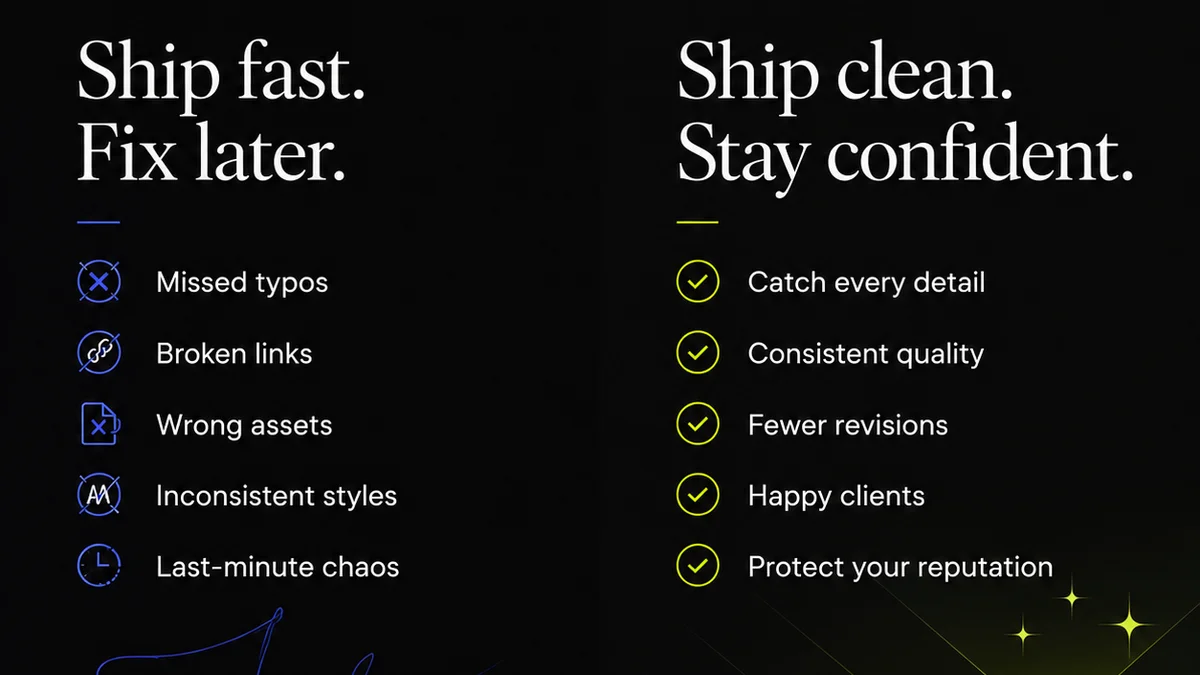
Everyone talks about streamlining creative workflows. They point to faster turnarounds, more efficient resource allocation, and better client communication. And none of that is wrong. But it’s incomplete. It misses the fundamental seismic shift that’s forcing agencies to rebuild their entire creative process from the ground up.
The hard truth? The old way of doing things is broken. Not just inefficient, but fundamentally misaligned with how creative work actually gets done and how clients actually interact with it. We’re not talking about minor tweaks anymore. We’re talking about a complete architectural overhaul.
1. The Illusion of Control: Why Linear Workflows Fail
For years, we’ve operated under a model of sequential steps. Brief, concept, design, feedback, revise, approve. It’s neat. It’s tidy. It looks great on a Gantt chart.
But creative work isn’t a factory assembly line.
It’s messy. It’s iterative. It’s inherently collaborative and often chaotic. Expecting a perfectly linear process to manage it is like trying to herd cats with a laser pointer. You might get some of them moving in the right direction, but you’ll spend more time chasing strays than achieving your goal.
The Feedback Loop From Hell
The biggest culprit? Client feedback. It’s often vague, contradictory, or arrives after a long silence. It’s rarely a single, clear directive. It’s a series of reactions, interpretations, and evolving opinions.
Traditional workflows treat feedback as a single gate. A checkpoint. But in reality, it’s a continuous, often unpredictable, stream.
- Client sends feedback via email, then Slack, then a hastily recorded Loom video.
- Designer interprets one piece of feedback, only for the client to change their mind based on a comment from their marketing intern.
- Revisions are made, but the original scope creep is never addressed, leading to endless back-and-forth.
- Key stakeholders are out of office, delaying approvals and grinding progress to a halt.
This isn’t just frustrating; it actively degrades the quality of the work. Rushed revisions, missed context, and unclear direction lead to compromises that nobody wants.
2. The Rise of Distributed and Asynchronous Collaboration
The pandemic accelerated a trend that was already underway: work is no longer confined to a single office, a single time zone, or even a single screen. Teams are distributed. Clients are distributed. The entire ecosystem is becoming asynchronous.
This isn't a temporary situation. It's the new normal.
And it breaks every workflow built on the assumption of real-time, in-person collaboration. Trying to schedule a feedback meeting with a global client team? Good luck.
The Myth of the 'Quick Chat'
We used to rely on quick chats by the coffee machine or impromptu desk visits to clarify requirements. Those days are largely gone for many teams.
Now, a 'quick chat' needs to be documented. A decision made in a Slack channel needs to be captured somewhere accessible. A quick screen share needs to be recorded or summarized.
This forces a shift from informal, ephemeral communication to structured, documented processes. It’s more work upfront, but it’s the only way to maintain clarity and accountability across distributed teams.
3. The Unseen Cost of Revision Chaos
Most agencies track billable hours. They might track project timelines. But they rarely quantify the true cost of endless revisions driven by poor feedback management.
Think about it:
- Hours spent re-doing work that was already approved (or thought to be).
- Designer frustration leading to burnout and turnover.
- Missed deadlines impacting client relationships and future opportunities.
- Scope creep that erodes profitability without being identified or charged for.
- Wasted output: multiple versions of assets that never see the light of day.
This isn't just about 'efficiency.' It's about the financial health and creative integrity of your agency.
Every hour lost to unnecessary revisions is an hour not spent on new business, strategic thinking, or developing truly groundbreaking creative.
4. Quality Control: The Last Line of Defense
Creative quality isn't just about the initial concept. It's about the execution, the polish, and the final delivery. And this is where many workflows crumble.
Without a clear, consistent process for reviewing and approving work at each stage, quality inevitably suffers.
This isn't just about catching typos. It's about ensuring:
- Brand consistency across all assets.
- Technical specifications are met (file formats, resolution, etc.).
- All feedback has been addressed accurately and completely.
- The final output aligns with the original brief and client objectives.
When quality checks are an afterthought, or happen only at the very end, the damage is already done. It’s expensive and time-consuming to fix issues that should have been caught much earlier.
Where Revue Fits In
Rebuilding your creative workflow isn't about adopting a new piece of software. It's about adopting a new philosophy. One that embraces iteration, clarifies communication, and prioritizes quality.
That’s where Revue comes in. We’re built to address the fundamental flaws in traditional creative workflows.
Centralized Feedback: Ditch the email chains and scattered Slack messages. Provide clear, contextual feedback directly on the creative assets. Everyone sees the same comments, the same version.
Revision & Approval Visibility: Track every change, every comment, and every approval. Understand the history of the project and who signed off on what, and when. No more
Frequently asked questions
What are the biggest challenges with traditional creative workflows?
Traditional workflows often fail because they assume linear progress, struggle with managing asynchronous and distributed feedback, and don't adequately account for the iterative nature of creative work, leading to chaos, lost time, and reduced quality.
How does distributed and asynchronous collaboration impact creative workflows?
It breaks workflows reliant on real-time, in-person interaction. Teams must shift to structured, documented processes to maintain clarity and accountability across different locations and time zones.
Why is managing client feedback so critical?
Client feedback is often the most unpredictable element. Poorly managed feedback loops, characterized by vagueness or contradiction, lead to endless revisions, scope creep, and ultimately, a degradation of the creative output and agency profitability.
What is the role of quality control in a modern creative workflow?
Quality control is not an afterthought. It's a continuous process integrated at each stage to ensure brand consistency, technical accuracy, and alignment with project goals. Catching issues early prevents costly rework later.