Everyone’s looking for the best CRM for marketing teams. They scour review sites, compare feature lists, and demo half a dozen platforms. The assumption is that the most feature-rich, the most integrated, or the most hyped tool will magically transform their marketing efforts.
None of that is wrong. But it’s incomplete.
The hard truth? The best CRM for your marketing team is the one that solves your biggest workflow headaches and actually gets adopted by your people. It’s not about the bells and whistles; it’s about fitting seamlessly into how you work.
1. Beyond Lead Capture: The Real Marketing CRM Needs
Many CRMs excel at capturing leads. That’s table stakes. But for a marketing team, the journey is far more complex. You’re not just collecting names; you’re nurturing relationships, segmenting audiences, personalizing campaigns, and measuring ROI across multiple touchpoints.
Your CRM needs to support:
- Sophisticated audience segmentation beyond basic demographics.
- Tools for personalized email marketing and campaign automation.
- Integration with your content management system (CMS) and analytics platforms.
- A clear view of the customer journey, from first touch to loyal advocate.
- Collaboration features for your entire marketing and sales team.
If your CRM can’t do this, it’s just a glorified contact list, not a strategic marketing asset.
2. The Collaboration Chasm: Why Silos Kill Campaigns
Marketing doesn’t happen in a vacuum. Yet, too many teams operate in silos. The content team creates assets, the social media manager posts them, the email marketer sends newsletters, and the sales team follows up (or doesn’t). Information gets lost, messages become inconsistent, and opportunities are missed.
A marketing CRM should bridge these gaps. It should be the central source of truth for:
- Who is being targeted with what message.
- What content assets are available and performing well.
- The status of ongoing campaigns and upcoming initiatives.
- Sales feedback on lead quality and conversion rates.
This interconnectedness is crucial. Without it, you’re running disjointed campaigns and confusing your audience.
2.1. The Cost of Disconnected Data
When data is scattered across spreadsheets, email inboxes, and disparate tools, the impact is real:
- Wasted ad spend on re-targeting cold leads or targeting the wrong segments.
- Inconsistent brand messaging across channels.
- Missed sales opportunities due to slow follow-up or lack of context.
- Difficulty in accurately measuring campaign performance and ROI.
A unified CRM eliminates this friction.
3. Measuring What Matters: Beyond Vanity Metrics
Marketing’s ultimate goal is business growth. But too often, teams get bogged down in metrics that don’t directly correlate with revenue. Likes, shares, and even website traffic are important, but they aren’t the whole story.
The best CRMs for marketing teams provide robust analytics that connect marketing activities to tangible business outcomes:
- Lead-to-customer conversion rates by campaign.
- Customer Lifetime Value (CLV) influenced by marketing efforts.
- Marketing-attributed revenue.
- Cost per Acquisition (CPA) and Return on Marketing Investment (ROMI).
This level of insight allows you to justify your budget, optimize your spend, and prove your value to the C-suite.
4. User Adoption: The Unsung Hero of CRM Success
You can have the most powerful CRM on the planet, but if your team doesn’t use it, it’s worthless. This is where many CRM implementations fail.
Why do teams resist? Often:
- The tool is too complex or has a steep learning curve.
- It adds manual steps to their existing workflow without clear benefit.
- Data entry feels like a chore rather than an essential part of their job.
- There’s a lack of clear training and ongoing support.
The best CRM is one that your team *wants* to use. It should simplify their tasks, provide immediate value, and feel intuitive.
4.1. Making CRM Stick
To drive adoption:
- Start with clear goals: What specific problems will the CRM solve?
- Involve your team in the selection process.
- Provide comprehensive, role-specific training.
- Integrate the CRM into daily workflows, not as an add-on.
- Appoint CRM champions within the team.
- Regularly solicit feedback and make adjustments.
Adoption isn't an afterthought; it's the primary driver of CRM ROI.
5. Where Revue Fits In
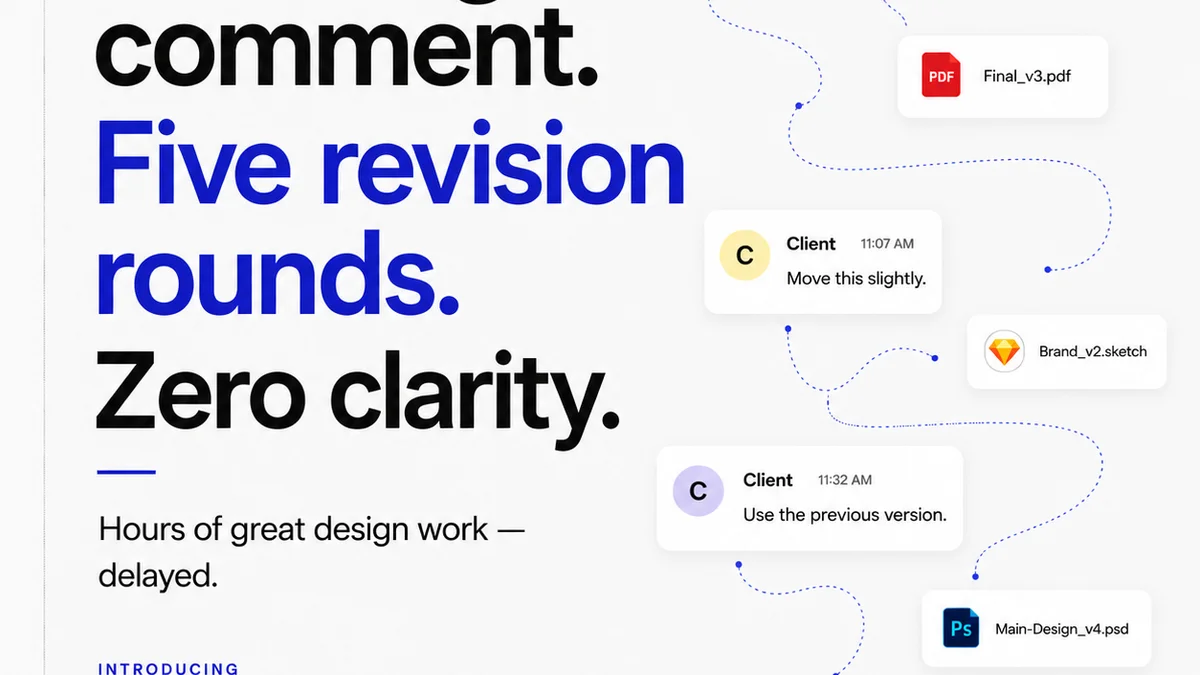
While a CRM manages customer relationships and sales pipelines, creative teams face a different set of challenges: managing feedback, approvals, and quality control on visual assets. This is where tools like Revue become indispensable, complementing your CRM by focusing on the creative workflow.
Revue centralizes client feedback, ensuring that all comments, revisions, and approvals are tracked in one place. This visibility is critical for marketing teams that rely on timely sign-offs for campaigns, ad creatives, and website updates.
Imagine your CRM tells you a campaign is ready to launch. But has the final banner ad been approved? Are all revisions accounted for? Revue provides the clarity:
- Centralized Feedback Hub: No more hunting through emails or Slack messages for the latest version or crucial comments.
- Streamlined Approvals: Clear workflows for client sign-offs reduce bottlenecks and delays.
- Revision History: Easily track changes and ensure everyone is working from the correct asset.
- Quality Assurance: A final checkpoint before assets go live, catching errors and inconsistencies.
By integrating Revue into your workflow, you ensure that the creative assets fueling your marketing campaigns are polished, approved, and ready for prime time, directly feeding into the customer journey managed by your CRM.
Final Thought
The search for the
Frequently asked questions
What is the primary difference between a sales CRM and a marketing CRM?
While many CRMs offer features for both, a marketing CRM typically emphasizes tools for lead generation, audience segmentation, campaign automation, and detailed marketing analytics (like ROMI). A sales CRM focuses more on pipeline management, deal tracking, and sales forecasting. The best CRMs for marketing teams bridge this gap, supporting the entire customer journey.
How important is CRM integration with other marketing tools?
Extremely important. Seamless integration with your email marketing platform, CMS, analytics tools, and social media management software ensures data consistency, automates workflows, and provides a holistic view of your marketing efforts. Without integration, you risk data silos and manual workarounds.
What are the biggest reasons marketing teams fail to adopt a CRM?
Common reasons include complexity, a steep learning curve, perceived increase in manual workload, lack of clear benefits for daily tasks, insufficient training, and poor integration into existing workflows. A CRM must simplify, not complicate, the team's job.
Can a CRM help improve marketing ROI?
Absolutely. By enabling better audience segmentation, personalized campaigns, streamlined lead nurturing, and precise tracking of marketing-attributed revenue, a well-used CRM allows you to optimize spend, focus on high-performing activities, and clearly demonstrate the financial impact of marketing initiatives.