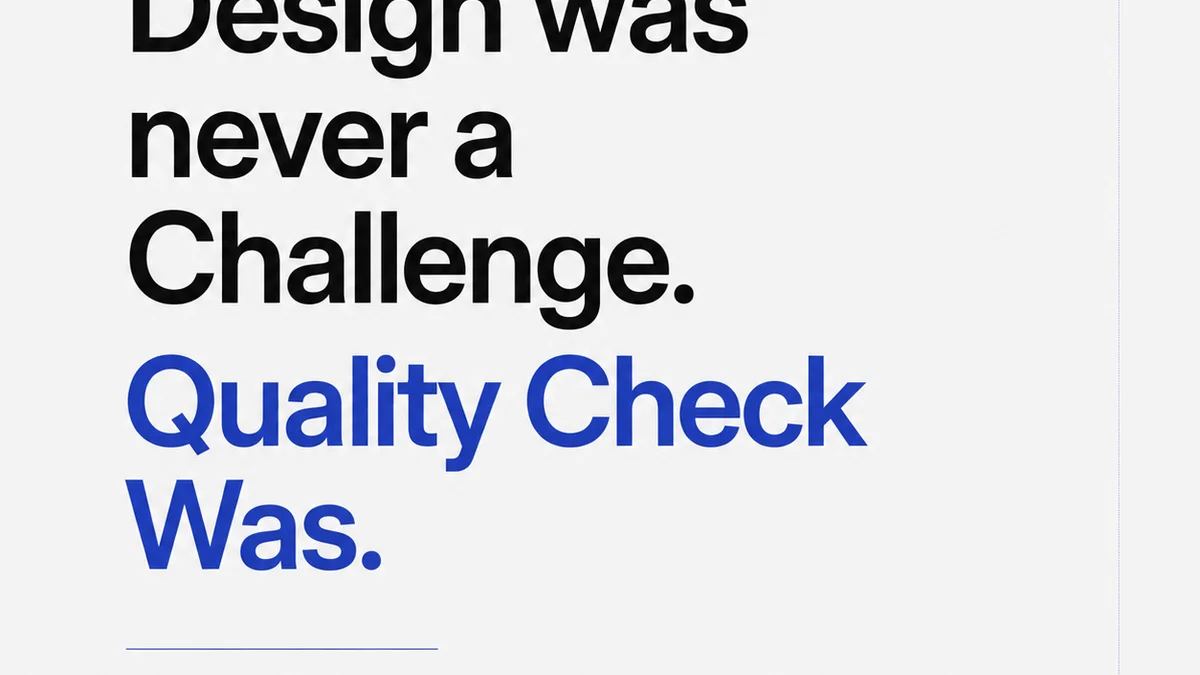
Everyone talks about the design approval checklist. You probably have one. It’s full of things like “Client happy?” and “All copy included?”
None of that is wrong. But it’s incomplete.
A checklist is not a magic wand to wave away client confusion or internal miscommunication. It’s a tool. And like any tool, its real value comes from how and why you use it.
The hard truth? Your design approval process, and the checklist that underpins it, is a direct reflection of your agency’s operational maturity. If approvals are a bottleneck, a source of endless revisions, or a black hole for feedback, your process is broken. Your checklist is just a symptom.
1. The Illusion of Clarity: What Your Checklist *Isn't* Doing
Most checklists are created with good intentions. They aim to catch obvious errors. But they often fail to address the *real* friction points in the approval cycle.
Think about it. What happens when a client says “I don’t like it” after you’ve ticked every box on your list?
Common Checklist Pitfalls
- Focusing only on surface-level errors (typos, image resolution).
- Ignoring strategic alignment (does it meet the brief?).
- Failing to capture nuanced subjective feedback.
- Not defining *who* approves what.
- Lacking a clear path for revisions and re-approval.
A checklist that only checks for the obvious is a false sense of security. It’s like having a fire extinguisher but never checking if it’s charged.
2. The Core Problem: Misaligned Expectations, Not Bad Design
The biggest reason approvals get stuck isn't a flaw in the design itself. It's a breakdown in understanding. What does
Frequently asked questions
What are the essential elements of a good design approval checklist?
A robust checklist includes: verifying all deliverables are present, checking for adherence to brand guidelines, ensuring all copy is final and proofread, confirming technical specifications are met, and a clear sign-off section. Crucially, it should also prompt a review against the original brief and objectives.
How can a checklist prevent scope creep during design approvals?
By clearly defining what is being approved and referencing the original brief, a checklist helps identify requests that fall outside the agreed scope. It provides a structured way to say 'this is a new request' rather than 'just make this one change'.
Can a checklist help manage subjective feedback?
While a checklist can't eliminate subjective preferences, it can help by ensuring the feedback is contextualized. For example, asking 'Does this visual align with the target audience emotion?' prompts more than just 'I don't like it.'
How often should a design approval checklist be updated?
Your checklist should be a living document. Review and update it quarterly or whenever you identify recurring issues in your approval process, learn about new client needs, or adopt new tools.