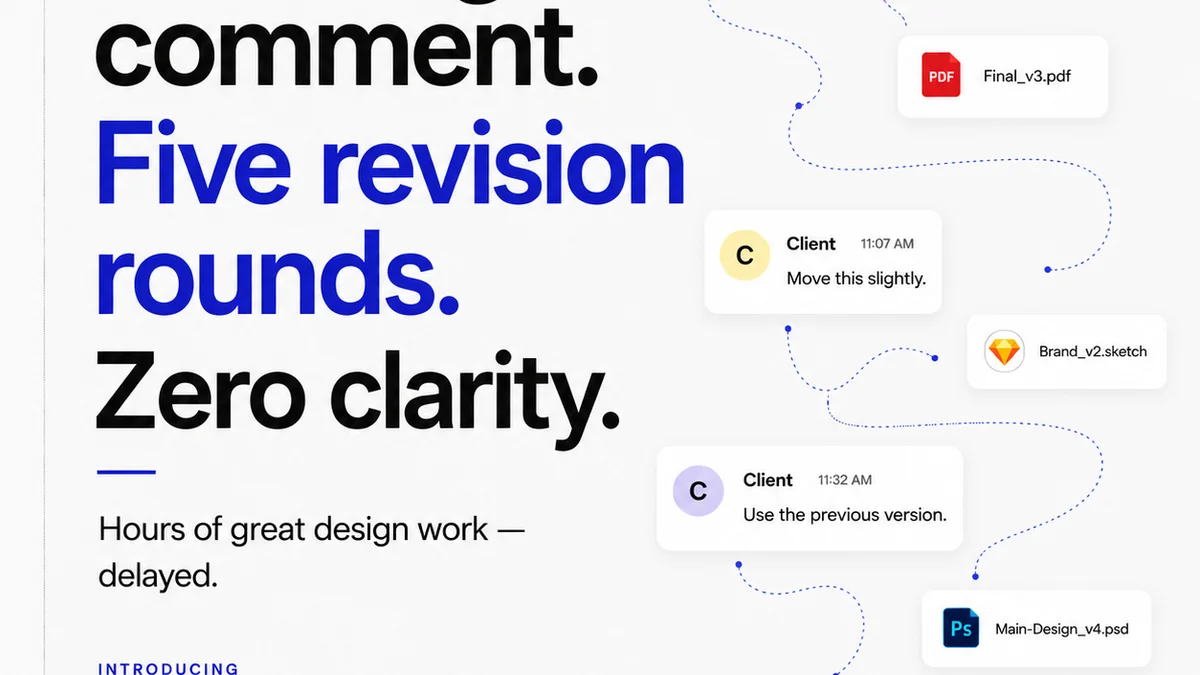
Everyone thinks design approval is about getting the client to say “yes.” That’s the easy part. The real challenge for manufacturing marketing teams is managing the *process* of approval. It’s not about the final sign-off; it’s about the messy middle. The endless email chains, the buried feedback, the version control nightmares. That’s where projects die. Or at least, where they get incredibly expensive and slow.
The hard truth? Your current design approval process is likely costing you more than you realize in time, money, and client relationships. It’s a hidden drain on productivity that impacts every stage of your marketing output.
1. The Illusion of Control: Why Email and Spreadsheets Fail
Manufacturing marketing demands precision. Product specs, regulatory compliance, brand consistency across diverse channels – it’s a complex ecosystem. Yet, many teams rely on outdated, fragmented methods for design feedback and approval.
Think about it:
- Feedback scattered across dozens of emails.
- Crucial comments buried in spreadsheet cells.
- Multiple versions of the same design file, leading to confusion.
- No clear audit trail of who approved what, when.
This isn't just inconvenient; it's a recipe for errors. An overlooked detail in a product spec sheet for a new industrial widget, or a misinterpreted brand guideline for a consumer product launch, can have significant financial consequences. It erodes client trust and delays go-to-market timelines.
The Cost of Chaos
Every hour spent hunting for feedback or deciphering conflicting instructions is an hour not spent on strategic marketing or creative development. For manufacturing, where lead times and precision are paramount, this delay is amplified.
Version Control is King
You can’t approve what you can’t trust. Without a single source of truth for design files, you’re operating on guesswork. Which PDF is the *final* one? Which CAD rendering reflects the latest spec changes?
2. Understanding the Manufacturing Marketing Lifecycle
Marketing for manufacturing isn’t like marketing for software or retail. The product itself is physical, often complex, and subject to stringent regulations. This impacts the entire design approval workflow.
Consider these touchpoints:
- Product Datasheets & Technical Specs: Accuracy is non-negotiable. Feedback must be precise and traceable.
- Packaging Design: Must adhere to material constraints, shipping regulations, and branding.
- Trade Show Collateral: Needs to be reviewed by engineering, sales, and marketing for technical accuracy and market appeal.
- Website Product Pages: Images, descriptions, and specs must align perfectly with the physical product.
- Instruction Manuals & User Guides: Clarity and accuracy are critical for user experience and liability.
Each of these requires input from multiple stakeholders, often with different priorities and levels of technical understanding. Marketing teams become the central hub, translating engineering speak into customer-facing content, and vice-versa.
Cross-Functional Feedback Loops
Engineering, legal, compliance, sales, and marketing all have a stake in design approvals. A system that can’t accommodate diverse feedback types and stakeholders will inevitably create bottlenecks.
Regulatory Hurdles
Depending on the industry (e.g., medical devices, automotive, aerospace), design elements might need approval from regulatory bodies. Your internal process must be robust enough to support this external scrutiny.
3. The Anatomy of an Effective Design Approval Process
An effective process isn't about adding more steps; it's about making the existing steps smarter and more visible. It’s about reducing friction and increasing clarity.
Centralized Feedback Hub
All comments, markups, and approvals should live in one place. This eliminates the need to sift through emails or Slack messages. Visual annotation tools are invaluable here, allowing reviewers to point directly to specific elements on a design.
Clear Roles and Responsibilities
Who is the final approver? Who provides technical feedback? Who checks for brand compliance? Define these roles upfront for each project or asset type. This prevents redundant reviews and ensures the right eyes are on the right details.
Defined Review Cycles
Set clear deadlines for feedback and approvals. Communicate these expectations to all stakeholders. A structured review cycle keeps the project moving and prevents indefinite delays.
Version Control with Clarity
Every revision should be tracked. Stakeholders should always be reviewing the latest version, and it should be obvious which version is which. This avoids confusion and ensures everyone is working from the same data.
Audit Trail for Accountability
A system that records who provided feedback, who approved it, and when, is essential. This protects your team, provides accountability, and serves as a valuable reference for future projects.
4. Common Pitfalls to Avoid
Even with the best intentions, design approval processes can go awry. Recognizing common pitfalls is the first step to avoiding them.
- The “Quick Look” Trap: Encouraging stakeholders to give feedback without a structured review process. This often leads to vague comments or missed details.
- Reviewer Fatigue: Overloading key stakeholders with too many review requests, leading to rushed or superficial feedback.
- Lack of Context: Reviewers don't have enough information (e.g., project brief, previous feedback, technical constraints) to provide informed comments.
- Ambiguous Feedback: Comments like “make it pop” or “I don’t like this” are unhelpful without specific, actionable direction.
- Ignoring the Workflow: Implementing a tool or process without considering how it fits into the existing daily tasks of your team and stakeholders.
These issues compound, turning a simple approval step into a major roadblock.
Where Revue Fits In
Managing design approvals for manufacturing marketing doesn't have to be a chaotic free-for-all. Tools designed for creative workflows can bring order to the process. Revue, for instance, is built to centralize client feedback, manage revisions, and ensure quality checks are performed systematically.
Imagine a single platform where:
- All design assets for a new product launch are stored and accessible.
- Stakeholders can leave visual comments directly on images, spec sheets, or CAD mockups.
- Every version of a design is tracked, with clear revision histories.
- Approval statuses are visible to everyone involved, eliminating guesswork.
- You can run quality checks against brand guidelines and technical requirements before final sign-off.
This level of centralization and visibility transforms the approval process from a point of friction into a smooth, efficient stage of your marketing workflow. It ensures that the final approved design is exactly what was intended, reducing costly errors and speeding up time-to-market.
5. Implementing a Smarter Approval Workflow
Transitioning to a more efficient process requires a strategic approach. It’s not just about adopting new software; it’s about rethinking your workflow.
Start with a Workflow Audit
Map out your current design approval process from start to finish. Identify every step, every person involved, and every tool used. Pinpoint the bottlenecks and points of confusion.
Select the Right Tools
Choose a platform that supports visual feedback, version control, and clear approval tracking. Look for solutions that integrate with your existing tools and are intuitive for all stakeholders.
Train Your Team and Stakeholders
Ensure everyone understands the new process and how to use the chosen tools. Clear communication and training are crucial for adoption.
Iterate and Refine
No process is perfect from day one. Regularly review your workflow, gather feedback from your team and clients, and make adjustments as needed.
Final Thought
Is your design approval process a strategic asset or a hidden liability? The answer lies not in the final sign-off, but in the clarity, efficiency, and accountability of the journey to get there. For manufacturing marketing, where precision and speed are critical, optimizing this process is no longer optional—it’s essential for competitive advantage.
Frequently asked questions
Why is design approval particularly challenging for manufacturing marketing teams?
Manufacturing marketing often involves complex technical specifications, regulatory compliance, and input from diverse teams like engineering and legal. This complexity, combined with traditional, fragmented feedback methods like email, creates significant challenges in tracking accuracy and ensuring all stakeholders are aligned.
What are the biggest risks of a poor design approval process in manufacturing?
The biggest risks include costly errors due to overlooked details, significant project delays impacting go-to-market timelines, damage to client trust, and potential non-compliance with industry regulations. Inefficient processes also waste valuable team resources.
How can a centralized feedback system improve design approvals?
A centralized system consolidates all feedback, markups, and approvals in one place. This eliminates confusion from scattered emails, ensures everyone is working from the latest version, provides a clear audit trail, and makes it easier to track who said what and when, leading to faster and more accurate approvals.
What is the role of version control in design approvals for physical products?
Version control is critical because it ensures that all reviewers are looking at the most up-to-date design files or specifications. For physical products, where small changes in specs or materials can have big impacts, having clear version control prevents errors and ensures the final approved design accurately reflects the latest requirements.