You hear it all the time: good design collaboration is about clear communication, kicking around ideas, and making sure everyone’s on the same page. None of that is wrong. But it’s incomplete.
It’s like saying a great meal is about having ingredients. True. But it’s the *method* – the prep, the cooking, the plating – that turns raw materials into something exceptional.
The hard truth is that great design collaboration isn't a spontaneous event. It’s a meticulously engineered process. And the best agencies don't just *talk* about collaboration; they *build* systems that make it inevitable.
1. Collaboration is a System, Not a Meeting
Most teams treat collaboration like a scheduled pit stop. A quick sync, a brainstorm session, a review. Then everyone goes back to their silo.
This is where most agencies get it wrong. They think the *act* of gathering is collaboration. It’s not. It’s just a data point.
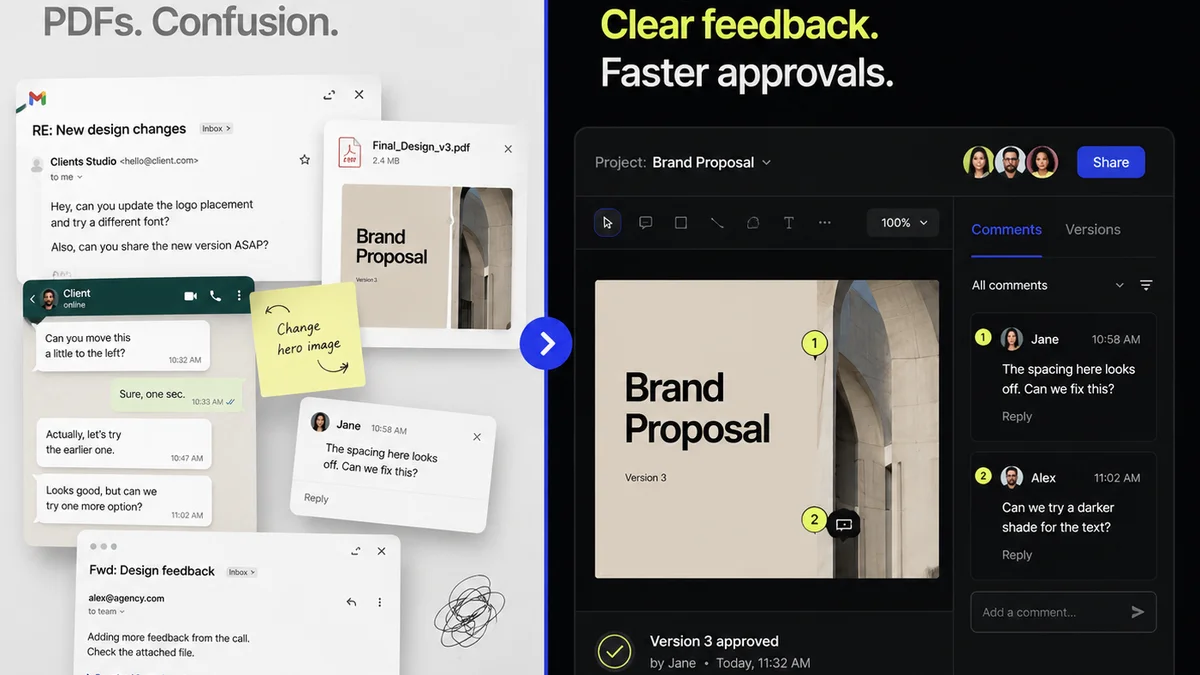
Real collaboration is the ongoing, interconnected flow of information, feedback, and iteration that happens *between* those meetings. It’s about how you capture, share, and act on insights.
Think about it:
- What happens to feedback after the meeting ends?
- How is it prioritized?
- Who owns the next action?
- How do you ensure consistency across multiple stakeholders?
If the answer is
Frequently asked questions
What's the biggest mistake agencies make with design collaboration?
Treating it as a series of isolated meetings rather than an integrated, ongoing process. This leads to lost feedback, miscommunication, and inefficient revisions.
How can agencies improve design feedback loops?
By implementing structured systems for capturing, organizing, and actioning feedback. This often involves dedicated tools and clear ownership for each piece of input.
Does better collaboration always mean more meetings?
No. Effective collaboration focuses on the quality and clarity of communication, not just the quantity of meetings. Streamlined digital workflows can reduce the need for lengthy discussions.
What role does technology play in design collaboration?
Technology is crucial for centralizing communication, tracking revisions, and ensuring all stakeholders have access to the latest information. Tools like Revue help manage this flow.