Everyone talks about design collaboration. It’s the hot topic, the magic bullet for creative teams. You hear about seamless handoffs, real-time ideation, and instant feedback loops.
None of that is wrong. But it’s incomplete.
The hard truth? Most teams are still fumbling through their collaborations, bogged down by inefficient processes and broken communication. They’re chasing the *idea* of collaboration without understanding the operational reality.
1. The Myth of the “Creative Genius” Working Alone
We love the narrative of the solitary genius, the lone wolf conjuring brilliance from thin air. It’s romantic. It’s also a lie in the context of professional creative work.
Modern design is rarely a solo act. It’s a team sport. Even if one person is the primary designer, they’re interacting with clients, project managers, strategists, copywriters, developers, and stakeholders. Each interaction is a point of potential friction or synergy.
The assumption is that if you hire the best individual talent, collaboration will just *happen*. That’s where things break.
Why Individual Brilliance Isn’t Enough
- Talent alone doesn’t ensure clear communication.
- Brilliant individuals can still clash on vision or process.
- Complex projects require diverse skill sets and perspectives.
- Client needs and stakeholder approvals add layers of necessary interaction.
Real collaboration starts *before* the design is even conceived. It’s about aligning on goals, understanding constraints, and building a shared understanding of the project’s DNA.
2. The Real Bottlenecks: Process, Not People
When collaboration fails, we tend to blame the people. Someone wasn’t responsive. Someone dropped the ball. Someone didn’t “get it.”
More often, the culprit is the process. Or, more accurately, the *lack* of a defined process.
Think about it. Where does feedback get lost? How are revisions tracked? Who has the final say? Without clear answers, you’re setting yourself up for miscommunication and duplicated effort.
Common Process Breakdowns
- Unstructured Feedback: Emails, Slack messages, random comments in a shared doc. No central source of truth.
- Ambiguous Revisions: “Make it pop more.” “I don’t like the blue.” What does that even mean?
- Approval Paralysis: Endless back-and-forth because the approval chain is unclear or stakeholders aren’t aligned.
- Version Control Chaos: Multiple versions of the same file floating around, leading to confusion and wasted work.
- Lack of Visibility: Team members don’t know the status of other parts of the project, leading to duplicated efforts or missed dependencies.
These aren’t failures of individual skill. They are failures of operational design.
3. Defining Your Collaboration Workflow
Collaboration isn’t a spontaneous combustion of good ideas. It’s a deliberate, structured workflow.
You need to define how your team and your clients will interact at every stage. This means mapping out the journey of a creative asset from brief to final delivery.
Key Stages to Define
- Briefing & Discovery: How do you capture client needs and project goals? What documentation is required? Who is involved?
- Ideation & Concepting: How are initial ideas shared and discussed? Is it internal brainstorming, client presentations, or both?
- Design Development: How are design files shared for internal review? What’s the process for marking up drafts?
- Client Feedback Rounds: Where and how does the client provide feedback? How do you ensure it’s actionable and consolidated?
- Revision & Iteration: How are changes tracked and implemented? Who signs off on each revision?
- Final Approval: What constitutes final approval? Who has the authority to give it?
- Handoff & Delivery: How are final assets delivered? What documentation accompanies them?
Each stage needs clear roles, responsibilities, and communication protocols. Without this, you’re operating on assumptions, and assumptions are the enemy of efficient collaboration.
4. The Role of Tools: Facilitators, Not Fixes
This is where many teams get it wrong. They buy the latest collaboration software, slap it onto their existing broken processes, and expect miracles. It doesn’t work.
Tools are essential, yes. But they are *enablers* of a good process, not a replacement for one.
A tool might offer real-time commenting, version history, or task management. But if your team doesn’t have a clear agreement on *when* and *how* to use those features, they become just another layer of complexity.
Choosing the Right Tools
- Centralization: Does it bring all feedback and assets into one place?
- Clarity: Does it make feedback actionable and easy to understand?
- Visibility: Does it provide transparency into the revision and approval process?
- Efficiency: Does it streamline handoffs and reduce manual work?
- Integration: Does it play well with your existing tech stack?
Don’t fall into the trap of tool-hopping. Define your process first, then find the tools that best support it. Often, simpler is better.
5. Where Revue Fits In
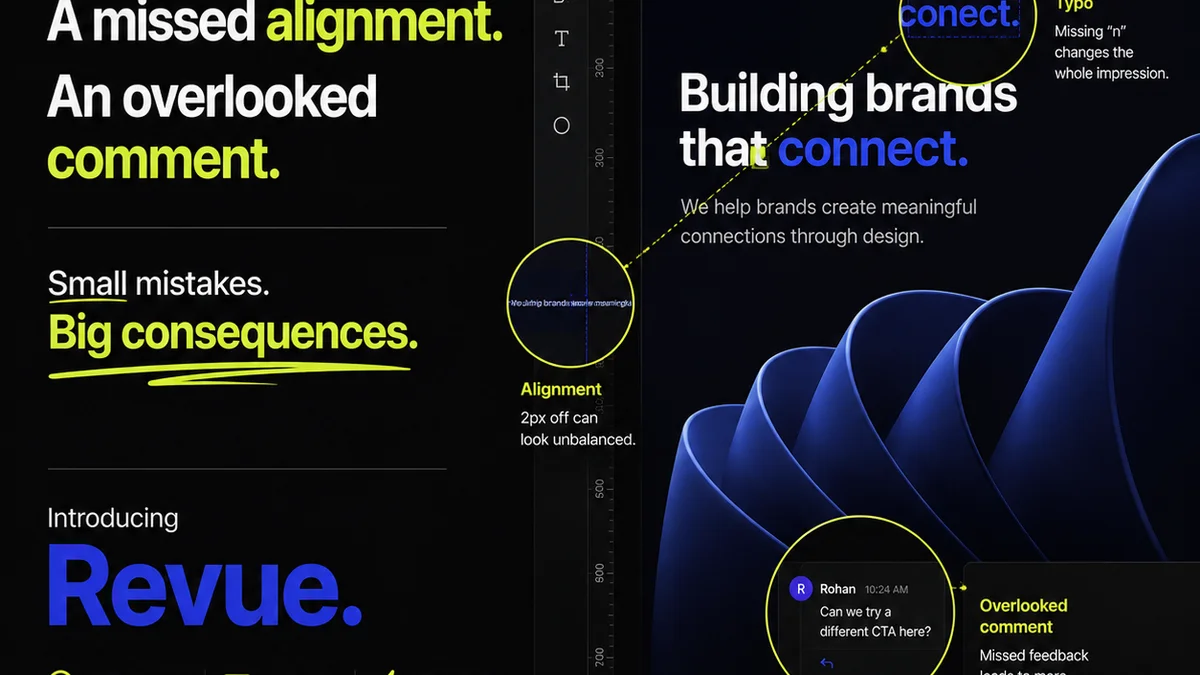
This is precisely why we built Revue. We saw creative teams drowning in scattered feedback, endless email chains, and opaque revision cycles.
Revue is designed to be the central nervous system for your creative workflow. It’s not just about storing files; it’s about orchestrating the entire collaboration process.
- Centralized Client Feedback: All comments, markups, and discussions happen directly on the creative asset. No more hunting through emails or Slack.
- Streamlined Revisions & Approvals: Clearly track who needs to review what, manage version history, and get explicit sign-offs. Everyone knows the status.
- Built-in Quality Checks: Ensure creative assets meet all requirements before they go live or to the client. Reduce errors and last-minute panics.
By providing a single source of truth for feedback, revisions, and approvals, Revue helps you implement a clear, efficient collaboration workflow. It removes the guesswork and the friction, allowing your team to focus on what they do best: creating great work.
Final Thought
Are you truly collaborating, or just passing files back and forth?
The difference is operational. It’s about having a defined, repeatable process that supports clear communication and efficient execution. It’s about building a system where great work can flow, not get stuck.
What’s the single biggest collaboration bottleneck in your team right now? And more importantly, what are you doing to fix the *process*, not just the tool?
Frequently asked questions
What's the difference between design collaboration and just sharing files?
Design collaboration is an active, structured process involving clear communication, defined roles, and shared understanding throughout the project lifecycle. Simply sharing files is a passive act that often lacks these crucial elements, leading to misunderstandings and inefficiency.
How can I ensure client feedback is actionable?
Establish a clear feedback process upfront. Use a centralized platform where clients can leave specific, contextual comments directly on the design. Train clients on how to provide constructive feedback and define what constitutes a 'final' revision.
What are the biggest mistakes teams make in design collaboration?
The biggest mistakes include relying on ad-hoc communication tools (like email or chat) instead of a centralized system, lacking a defined workflow for feedback and revisions, not clarifying roles and responsibilities, and assuming good tools alone will solve process problems.
How important is a defined process for design collaboration?
It's critical. A defined process provides the structure and clarity needed for effective collaboration. Without it, teams rely on assumptions, leading to miscommunication, delays, and frustration. Process enables people and tools to work effectively together.