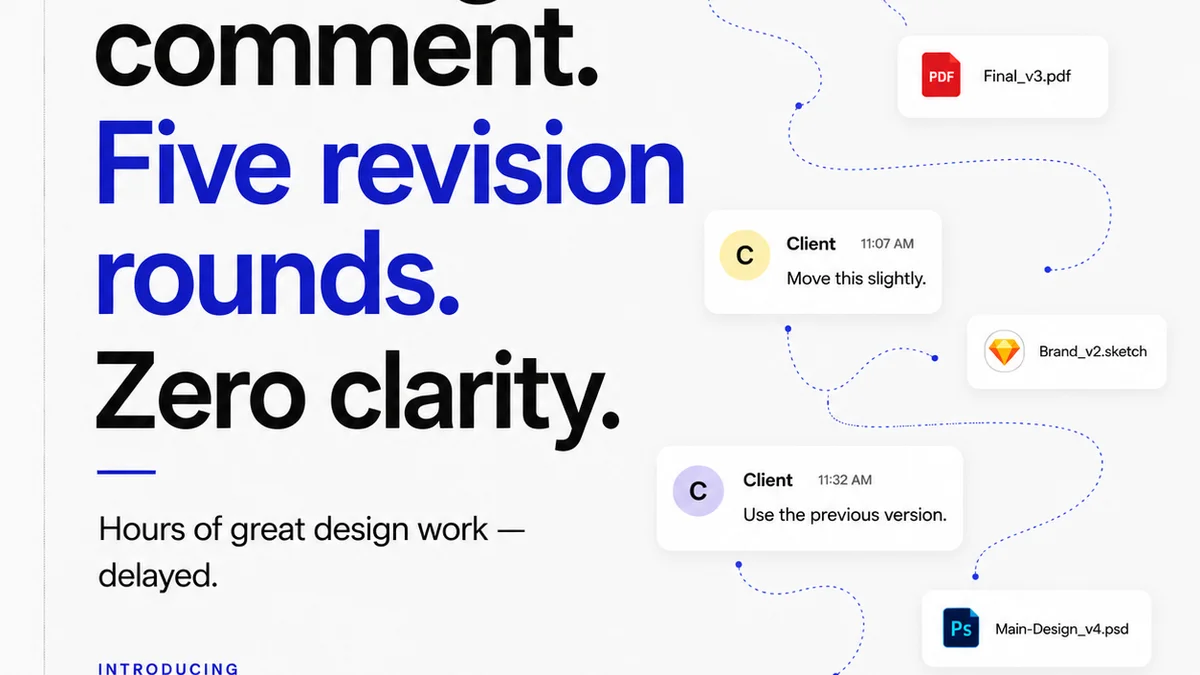
You hear it all the time. "Great design collaboration is all about communication." "It's about finding the right personalities." "It's about a shared vision." None of that is wrong. But it’s incomplete.
The real, hard truth? The biggest collaboration killers aren’t soft skills. They’re hard-wired into your workflow. They’re the messy, inefficient processes that suck time, create confusion, and kill creativity.
Let’s cut through the platitudes. We’re talking about the operational friction that grinds creative teams to a halt. The kind that leaves you wondering why a simple revision took three days and two arguments.
1. The Feedback Black Hole
Client feedback. It’s the lifeblood of any agency. But how it’s gathered, processed, and actioned is where projects go to die.
Think about it:
- Emails get buried.
- Comments on PDFs are vague.
- Verbal feedback is forgotten or misinterpreted.
- Multiple stakeholders give conflicting input.
- There’s no clear record of what was requested, or when.
This isn't just annoying. It’s a breeding ground for errors and wasted hours. You’re not just waiting for feedback; you’re wading through it.
The Assumption: Clients know what they want.
The Reality: Clients often know what they *feel*. Translating that feeling into actionable design direction is your job. And it’s impossible if you can’t clearly capture and parse their input.
The Assumption: A quick call solves it.
The Reality: A quick call often *creates* the problem. Without documentation, that verbal agreement vanishes. Then, the inevitable: “But I thought we agreed…”
The Operational Fix: Centralize and Structure Feedback
You need a single source of truth. A place where every comment, every revision request, lives and breathes. This isn't about making clients jump through hoops. It’s about making their input clear, actionable, and traceable.
- Use a dedicated platform for feedback, not your inbox.
- Require specific annotations tied to design elements.
- Establish a clear process for consolidating and prioritizing input.
- Use visual annotation tools that pinpoint exactly what needs changing.
When feedback is structured, it becomes a roadmap, not a minefield.
2. The Revision Roundabout
Revisions. They’re part of the game. But the way most teams handle them is a masterclass in inefficiency.
You send a draft back. You wait. Then you get a new file, or a new email, with changes. But what changed? Why? Was it *all* the requested changes? Or just some?
This lack of clarity leads to:
- Endless back-and-forth.
- Duplicated effort.
- Confusion over the latest version.
- Frustration for both the team and the client.
Frequently asked questions
What's the biggest mistake agencies make in design collaboration?
Relying on informal communication channels like email or chat for critical feedback and approvals. This leads to lost information, misunderstandings, and endless back-and-forth.
How can I make client feedback more actionable?
Implement a structured feedback process using a dedicated platform. Ensure clients can provide specific, annotated comments directly on the design assets, creating a clear record.
What's the best way to manage design revisions?
Use a system that clearly tracks all revision requests, shows what changes were made, and provides visibility into the approval status. This prevents confusion about the latest version and reduces duplicate work.
How can I ensure quality control in creative projects?
Integrate quality checks into your workflow, ideally within the same platform where feedback and revisions are managed. This allows for systematic review against project briefs and client requirements before final delivery.