Everyone agrees that good design collaboration is essential. You've probably heard it a million times: 'We need to break down silos.' 'Better communication is key.' 'Let's get the right tools in place.' None of that is wrong. But it’s incomplete.
The real reason most companies fail at design collaboration isn't a lack of communication channels or fancy software. It's a fundamental misunderstanding of what collaboration actually means in a creative context. It’s about structured processes, clear ownership, and defined decision-making, not just more Slack channels.
1. The Illusion of 'Everyone In The Loop'
The desire to involve everyone is noble. It feels inclusive. But in practice, it’s a recipe for chaos and diluted vision.
The 'Too Many Cooks' Syndrome
When every stakeholder, from the intern to the CEO, feels they have equal say on every creative decision, the result is often a Frankenstein’s monster of competing ideas. No single vision can survive.
This isn't about excluding people. It’s about defining roles and responsibilities. Who is the ultimate decision-maker? Who provides input? Who is responsible for the final sign-off?
Feedback Overload and Noise
Unfiltered, unmanaged feedback is toxic. It becomes a deluge of conflicting opinions, subjective preferences, and 'I don't like it' comments without actionable reasons.
This often happens because there’s no clear path for feedback. It’s a free-for-all. Emails, Slack messages, random hallway conversations – it all becomes noise.
The 'Design by Committee' Trap
Design by committee is rarely good design. Committees are designed for consensus, not for bold creative leaps. They tend to smooth out the edges, kill originality, and settle for 'good enough' rather than great.
This is a direct consequence of unclear decision-making authority. When nobody has the final call, the loudest voices or the highest-ranking individuals often dictate direction, regardless of design merit.
2. Ignoring the Workflow Bottlenecks
Design collaboration isn't just about the creative act itself. It’s about the entire lifecycle of a project, from brief to final delivery. Bottlenecks kill momentum and create friction.
Sequential Workflows with No Parallelism
Many teams operate in a strictly linear fashion. Design hands off to dev, dev hands off to QA, QA hands off to marketing. If one stage gets delayed, the whole project stalls.
True collaboration requires finding opportunities for parallel work where possible, and having clear handover points with defined expectations. What does the designer need to hand over? What does the developer need to start building? What are the acceptance criteria?
Lack of Centralized Information
Where is the latest version of the design? What were the specific comments from the last review? Who approved what and when? When this information is scattered across emails, cloud drives, and chat logs, it’s a productivity black hole.
Teams waste hours searching for context, re-explaining decisions, or worse, working off outdated versions. This leads to rework, missed deadlines, and frustration.
Unclear Revision and Approval Cycles
This is perhaps the most common failure point. Without a structured process for revisions and approvals, projects can languish indefinitely.
What constitutes a 'round' of revisions? How many rounds are allowed? Who is responsible for consolidating feedback? What happens when feedback is contradictory? Without answers, you get endless back-and-forth.
3. The Myth of 'Good Enough' Tools
People assume that if they have a design tool, a project management tool, and a communication tool, they’ve got collaboration covered. This is a dangerous assumption.
Tool Sprawl and Integration Gaps
Dozens of tools. None of them talk to each other effectively. Design files live in Figma, feedback is in Slack, assets are in Dropbox, tasks are in Asana. It’s a fragmented mess.
This fragmentation creates silos between tools, forcing users to manually transfer information, leading to errors and wasted time. The 'integration' is often just a basic link, not a true workflow connection.
Focusing on Features, Not Workflow
Many tools are built around features, not around the actual workflow of creative production and client feedback. They offer endless options for annotation, commenting, or task management, but they don't guide the user through a defined process.
The result? Teams end up using tools in ways they weren't intended, or they create complex custom workflows that are difficult to maintain and onboard new members into.
Lack of Visibility
When feedback, revisions, and approvals are buried in emails or scattered across different platforms, there’s no single source of truth for project status. Stakeholders don't know where things stand, designers don't know what’s been addressed, and managers can’t track progress effectively.
This lack of visibility breeds anxiety, requires constant status meetings, and makes it impossible to identify and resolve issues before they become critical problems.
4. The Missing Element: Process and Ownership
If tools and communication are the symptoms, then a lack of defined process and clear ownership is the disease. This is the hard truth that most companies ignore.
No Defined Creative Briefing Process
Collaboration starts before the design work even begins. A clear, comprehensive creative brief is the foundation. Without it, designers are working blind, and stakeholders have no shared understanding of goals.
A strong brief should outline objectives, target audience, key messages, deliverables, and success metrics. It should be a living document, agreed upon by all key stakeholders.
Undefined Roles and Responsibilities
Who is the point person for design? Who provides client feedback? Who has the final sign-off authority? Without explicit roles, you get confusion, missed communication, and power struggles.
This isn't just about titles. It's about assigning specific responsibilities for each stage of the design process. Clearly define who does what, and who is accountable.
Lack of a Standardized Review and Approval Process
How does feedback get collected? How is it prioritized? How are revisions managed? How is final approval obtained?
A standardized process ensures that feedback is constructive, actionable, and managed efficiently. It prevents endless loops of minor tweaks and subjective changes. It provides a clear path to 'done'.
Where Revue Fits In
This is where a platform designed for creative workflows makes a difference. It’s not just another tool; it’s a framework for better collaboration.
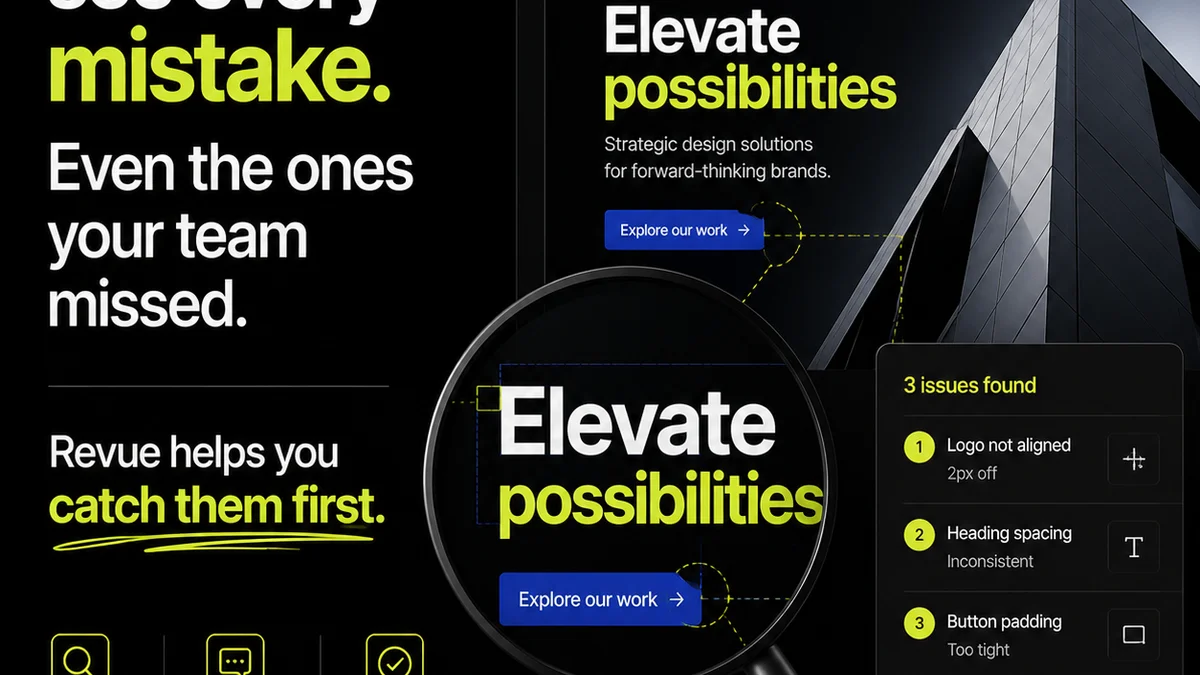
Revue helps teams centralize client feedback, moving it out of chaotic email threads and Slack channels into a single, organized space tied directly to the creative assets. This eliminates guesswork and ensures everyone is commenting on the latest version.
It brings clarity to revisions and approvals. You can track every iteration, see who has commented, who has approved, and what the status is at a glance. This visibility reduces ambiguity and speeds up decision-making.
By structuring the feedback and approval process, Revue helps enforce a clear workflow, reducing the 'design by committee' problem and ensuring that projects move forward efficiently towards a final, approved deliverable. It’s about bringing order to the creative chaos.
Final Thought
Are your tools serving your workflow, or is your workflow bending to accommodate your tools? The most effective design collaboration isn't about the latest app; it's about the deliberate, structured processes that empower your team to create their best work, efficiently and without internal friction.
Frequently asked questions
What is the biggest mistake companies make in design collaboration?
The biggest mistake is focusing on tools and communication channels rather than establishing clear, structured processes for feedback, revisions, and final approvals. This leads to chaos, subjectivity, and endless delays.
How can I avoid 'design by committee'?
Avoid 'design by committee' by clearly defining roles and responsibilities, designating a single point person or small group for final decision-making, and ensuring all stakeholders understand the project's core objectives and constraints before feedback begins.
What is the role of a creative brief in collaboration?
A well-defined creative brief is crucial. It sets the foundation for the project by outlining objectives, target audience, key messages, and success metrics. It ensures everyone is aligned from the start and provides a reference point for feedback, preventing subjective drift.
How does centralized feedback improve collaboration?
Centralized feedback consolidates all comments and suggestions in one place, tied to specific assets. This eliminates confusion from scattered communications, ensures everyone is referencing the same version, and makes it easier to track, prioritize, and act on input.