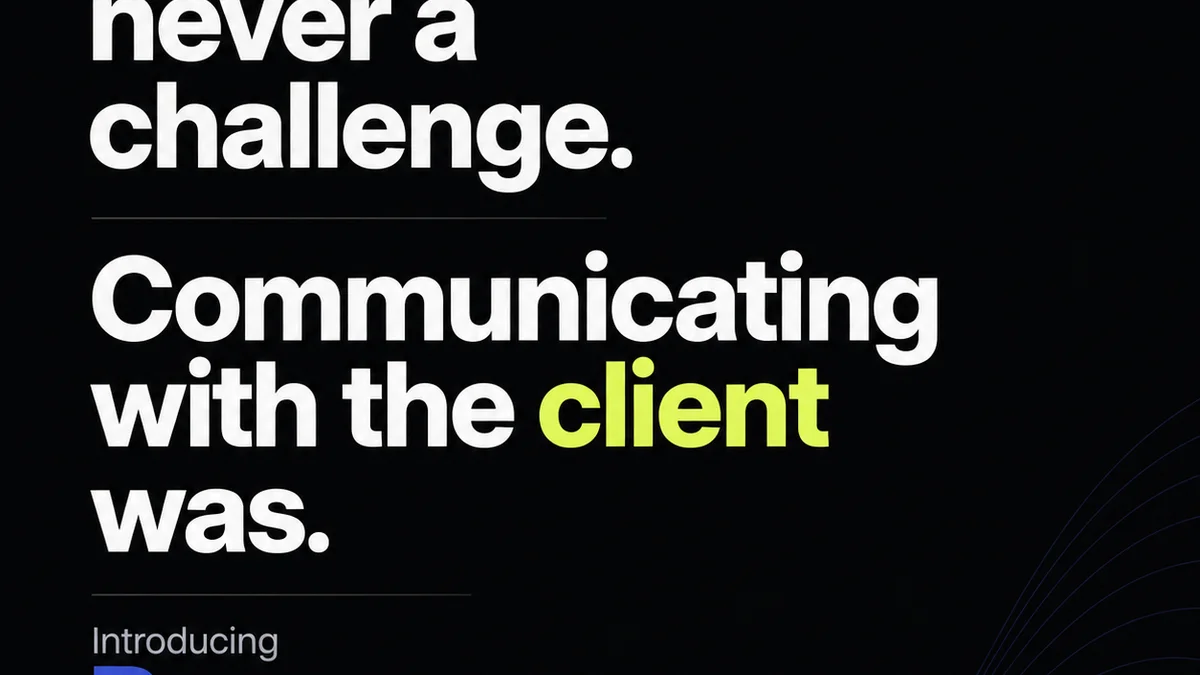
Everyone agrees design collaboration is crucial. You’ve probably read the articles, maybe even attended a webinar or two. They’ll tell you it’s about open communication, shared whiteboards, and maybe a few sticky notes.
None of that is wrong. But it’s incomplete.
The real truth? Effective design collaboration isn't about the tools or the kumbaya moments. It's about structured processes that eliminate friction and ensure clarity at every stage of a project. It’s about operational excellence, not just creative synergy.
1. The Illusion of 'Creative Flow'
Many teams chase a mythical 'creative flow' state. They assume that if everyone is in the same room, or on the same Slack channel, inspiration will just strike. This often leads to unstructured feedback sessions, endless 'what if' tangents, and a general lack of direction.
The problem isn't a lack of ideas. It's a lack of a framework to capture, evaluate, and implement those ideas efficiently.
The Symptoms of Poor Collaboration
- Endless revisions without clear direction.
- Feedback that's vague, contradictory, or ignored.
Frequently asked questions
What's the biggest mistake teams make in design collaboration?
Assuming collaboration is just about brainstorming or sharing files. The real mistake is not building a structured system around feedback, revisions, and approvals. This leads to chaos, not creativity.
How can I get clearer feedback from clients?
Provide specific prompts for feedback. Instead of asking 'What do you think?', ask 'Does this headline clearly communicate benefit X?' or 'Is the call to action prominent enough?' Use tools that allow for contextual, specific comments.
What's the role of a project manager in design collaboration?
A project manager is the gatekeeper of the process. They ensure feedback is captured, routed correctly, and addressed. They manage timelines, facilitate communication, and keep the project on track, preventing scope creep and misunderstandings.
How does technology help with design collaboration?
Technology, when used correctly, centralizes communication and feedback. It provides a single source of truth for versions, comments, and approvals, reducing miscommunication and speeding up the revision cycle. Tools like Revue are designed for this.