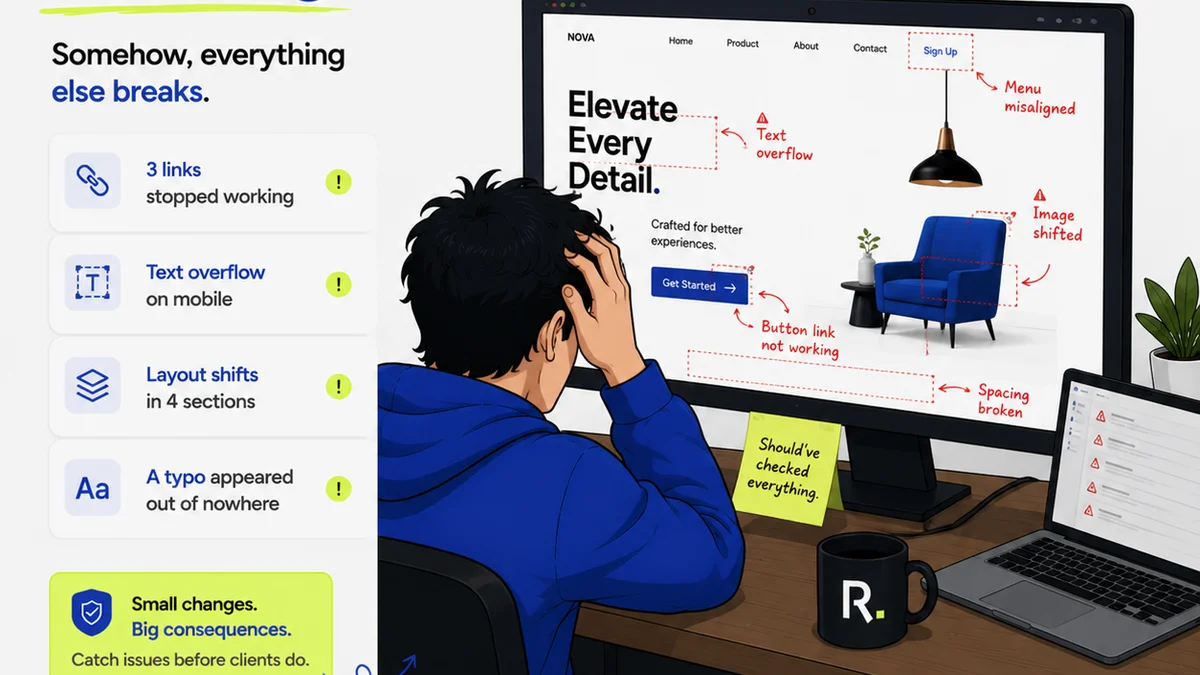
You think faster design collaboration means more tools, right? Better software, slicker integrations, maybe a fancier project management platform. None of that is wrong. But it’s incomplete.
The hard truth? Your tools are rarely the bottleneck. The real drag on design collaboration for growing agencies isn't a lack of technology. It's a lack of clarity, process, and accountability.
1. The Assumption: More Communication = Better Collaboration
We’re drowning in communication channels. Slack, email, Teams, Zoom, endless comment threads on shared docs. Everyone’s talking, all the time. It feels productive.
But is it?
Often, this constant chatter is just noise. It’s fragmented, lacks context, and rarely leads to decisive action. Decisions get lost in the shuffle. Feedback becomes a rambling, unfocused mess.
The Deeper Truth: Clarity Trumps Volume
Effective collaboration isn’t about shouting the loudest or sending the most messages. It’s about clear, concise, and actionable communication.
Think about it:
- Is feedback specific enough to act on?
- Is it clear *who* needs to act on it?
- Is it obvious *when* it’s due?
- Is there a single source of truth for decisions?
When communication is scattered across DMs, email chains, and random meeting notes, clarity dies. Decisions get revisited, scope creep sneaks in, and your team spins its wheels.
2. The Assumption: Everyone Knows Their Role
You’ve got designers, project managers, account leads, clients. Roles seem clear on paper. Everyone’s supposed to know what they’re doing.
But in the heat of a project, especially as you scale, this breaks down.
Who owns the final sign-off? Who’s responsible for consolidating feedback? Who’s the point person for client queries? When these lines blur, projects stall.
The Deeper Truth: Roles Need Explicit Definition and Ownership
Ambiguity is collaboration’s enemy. Growing agencies need to be ruthlessly explicit about responsibilities at every stage.
Consider these common points of failure:
- Feedback Consolidation: Is it clear who collects and synthesizes all client feedback before it hits the design team? If multiple people are
Frequently asked questions
What's the biggest mistake agencies make in design collaboration?
The biggest mistake is assuming more tools equal better collaboration. In reality, a lack of clear processes, defined roles, and centralized feedback is usually the core problem, not the technology itself.
How can I improve client feedback loops?
Centralize feedback in one place, make it specific and actionable, and clearly define who is responsible for providing it and who will consolidate it. Avoid scattered comments across emails and chat.
What are the signs my agency's collaboration is inefficient?
Common signs include repeated revisions, scope creep, missed deadlines, team burnout, confusion over who makes decisions, and clients feeling unheard or constantly having to repeat themselves.
How does Revue help with design collaboration issues?
Revue provides a central platform for all client feedback, revision tracking, and approval workflows. This eliminates scattered communication, clarifies decision-making, and ensures everyone is working from the latest version, reducing errors and delays.