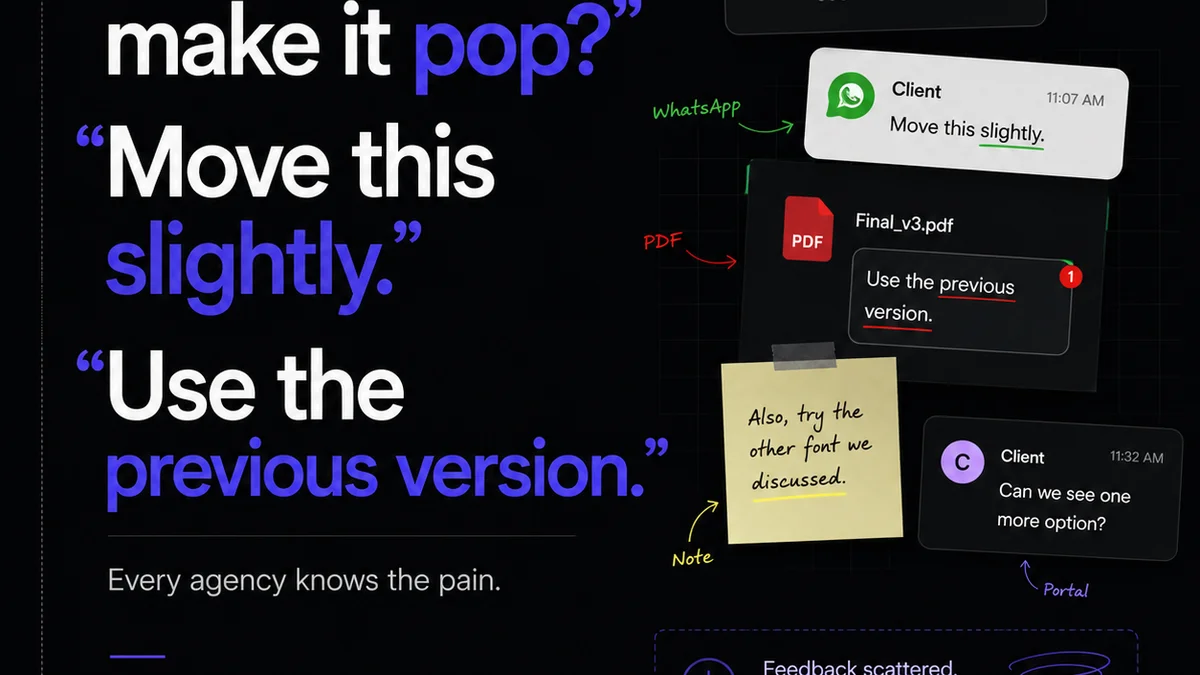
Everyone agrees that good design documentation is crucial. You’ve probably heard it’s about clear briefs, detailed annotations, and thorough style guides. None of that is wrong. But it’s incomplete.
The hard truth is that documentation isn't just a deliverable; it’s a continuous, often messy, process. When it becomes a bottleneck, it’s rarely about the *what* of the documentation itself, but the *how* of its creation, management, and integration into your workflow.
1. The Myth of the 'Final' Document
We treat documentation like a final report, a thing to be completed and filed away. This mindset is fundamentally flawed. Design documentation is a living entity.
It starts with a brief, evolves through wireframes and mockups, gets refined with feedback, and continues to live on in style guides and asset libraries. If you’re only documenting at the end, you’ve already missed critical opportunities.
Information Silos Kill Progress
When documentation lives in isolated documents – a Word doc here, a PDF there, a scattered collection of JPEGs – it becomes a knowledge silo. Your team spends more time hunting for information than using it.
- Lost client feedback details.
- Inconsistent asset versions.
- Endless
Frequently asked questions
What are the biggest signs of design documentation bottlenecks?
Common signs include team members constantly asking for clarification on requirements, difficulty locating the latest approved versions of assets, extended revision cycles due to unclear feedback, and inconsistencies in final deliverables because the source of truth was hard to find.
How can I make design documentation more collaborative?
Shift from static documents to dynamic platforms. Use tools that allow for real-time commenting, version control, and integrated feedback loops. Encourage team members and clients to contribute and review directly within the workflow, rather than relying on email chains.
Is it better to document at the beginning or end of a project?
It's neither. Effective documentation is a continuous process. Start with a clear brief, but constantly update and refine documentation throughout the design and development lifecycle. Treat it as a living record, not a final report.
How does centralized feedback help with documentation?
Centralized feedback ensures all comments, revisions, and approvals are logged in one place, directly tied to the relevant design asset. This creates an irrefutable audit trail, clarifies intent, and prevents information from getting lost or misinterpreted across disparate communication channels.