Everyone assumes design documentation is just busywork. A necessary evil to keep track of client requests, revisions, and final sign-offs. None of that is wrong. But it’s incomplete.
The hard truth is that poor documentation isn’t just an annoyance. It’s a direct drain on your agency’s profitability, a breeding ground for client friction, and a silent killer of team morale.
It’s the invisible overhead that eats into your margins, one forgotten email and misinterpreted comment at a time.
1. The Myth of 'Good Enough' Documentation
We all tell ourselves a story: "We know where everything is." "The team is small, we can just ask each other." "We'll document it later." This is the siren song of chaos.
The reality is that even the most talented teams falter when documentation is an afterthought. It leads to:
- Endless searching for lost files and crucial conversations.
- Revisiting decisions already made, costing billable hours.
- New team members struggling to get up to speed.
- Clients questioning your process and professionalism.
- Missed details that lead to costly rework.
This isn't about having the most elaborate system. It's about having a *functional* system that everyone actually uses.
2. The Information Silo Effect
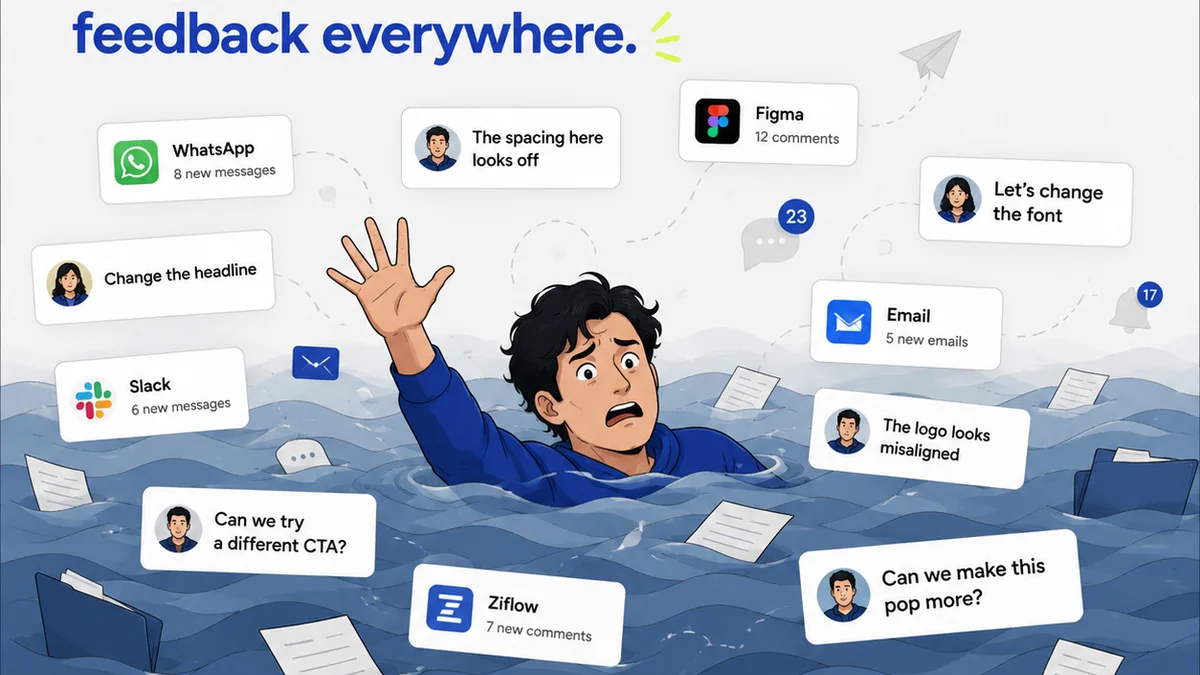
Your project management tool has notes. Your email inbox has approvals. Slack has the quick chats. Google Drive has the final files. And the client's original brief? It's somewhere in that mountain of PDFs.
This fragmentation is deadly.
When information is scattered across platforms, it creates silos. Each silo becomes a potential point of failure.
The Cost of Context Switching
Every time a team member has to jump between tools to piece together the project history, they lose focus and time. This constant context switching kills productivity.
It's not just about finding the *information*. It's about finding the *context* around that information.
Client Confusion and Frustration
For clients, this looks like disorganization. They receive feedback from one channel, a revised file from another, and then get asked about a decision made weeks ago.
It erodes their confidence in your agency's ability to manage their project effectively.
3. Approval Bottlenecks and Ambiguity
Sign-offs are where projects often get stuck. This isn't always the client's fault.
Often, the approval process itself is unclear. Who needs to approve what? When? What constitutes final approval?
Without a clear, documented process:
- Approvals get missed.
- Partial approvals are mistaken for full sign-off.
- Scope creep sneaks in under the guise of
Frequently asked questions
What's the biggest mistake agencies make with design documentation?
Assuming it's just about taking notes. The biggest mistake is treating it as an afterthought. Poor documentation directly impacts profitability, team efficiency, and client satisfaction.
How can I prevent scope creep through documentation?
Clearly define what constitutes a 'final' approval and document all scope changes and their implications (time, cost) before proceeding. Centralized feedback and revision tracking are key.
What's the role of a project management tool in documentation?
A good PM tool acts as a central hub. It should consolidate feedback, track revisions, store files, and log all communication related to a project, preventing information silos.
How do I get my team to actually use the documentation system?
Keep it simple and integrate it into your daily workflow. Provide clear guidelines, training, and emphasize the benefits. Lead by example and make it the default, not an option.