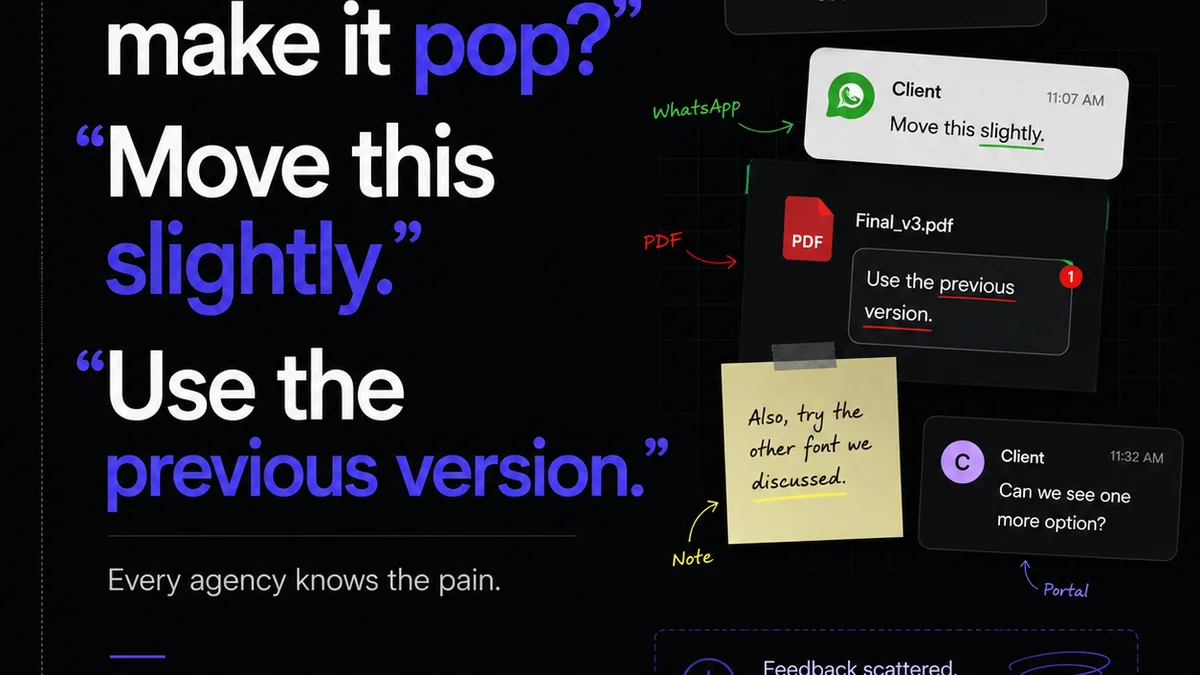
Everyone talks about streamlining creative workflows. They point to better briefs, smarter project management tools, faster communication channels. And none of that is wrong. But it’s incomplete.
The real bottleneck in creative operations isn’t about doing things faster. It’s about knowing what you’re doing, why you’re doing it, and how you’re supposed to know when it’s done right. That’s where design documentation comes in.
Think about it. What’s the biggest drain on your team’s time and energy? It’s the endless back-and-forth. The “wait, I thought we decided X,” or “can you remind me why we’re doing Y?” This isn’t a communication problem. It’s a memory and knowledge problem.
Design documentation is the antidote.
1. The Illusion of Speed
Agencies and in-house teams chase speed like it’s the ultimate prize. Faster turnaround, quicker approvals, more projects launched. But speed without clarity is just chaos at a higher velocity.
You might have the slickest project management software. You might have daily stand-ups. You might even have AI suggesting the next optimal move. But if the foundational decisions, the rationale, the evolving scope aren’t captured and accessible, you’re building on sand.
The Hidden Costs of “Getting It Done”
What does this look like in practice?
- Endless clarification loops on seemingly simple requests.
- Revisions that undo previous work because the original intent was forgotten.
- New team members taking weeks to onboard because tribal knowledge is undocumented.
- Disagreements about scope that derail projects and damage client relationships.
- A constant state of reactive firefighting rather than proactive strategy.
This isn’t about being slow. It’s about being inefficient and error-prone because the “why” and the “what” are constantly being rediscovered.
2. What “Design Documentation” Actually Means
Let’s kill the misconception. Design documentation isn’t a dusty binder filled with endless PDFs or a separate, burdensome task. It’s the living record of your creative decisions and their context.
It’s the thread that connects the initial client brief to the final delivered asset, capturing the evolution of thought, feedback, and iteration along the way.
Key Components of Effective Documentation
This isn’t an exhaustive checklist, but a guide to the essential elements:
- Decision Log: A clear record of key decisions made, who made them, and when. This includes scope changes, strategic pivots, and major feedback incorporation.
- Rationale: The “why” behind the decisions. Why was this visual direction chosen? Why was this feature prioritized? Why was this client feedback implemented (or rejected)?
- Feedback Synthesis: Not just a dump of client comments, but a summary of key feedback themes, points of agreement, and areas of contention, along with how they were addressed.
- Scope Agreements: Formalized sign-offs on project scope at key milestones, detailing what is in and out of scope.
- Asset Specifications: Clear guidelines on technical requirements, file formats, and delivery standards for final assets.
- Brand Guidelines (Evolved): Beyond static documents, how do these guidelines inform specific project decisions and iterations?
This documentation should be integrated into your workflow, not an add-on.
3. The Operational Truth: Documentation is Your Single Source of Truth
Your project management tool tells you *what* needs to be done. Your communication tool tells you *who* said *what* (often in a scattered way). Your design tool shows you the *current state* of the asset.
None of these inherently tell you the full story. None of them provide the historical context and rationale that prevent costly mistakes and endless loops.
Documentation fills this void. It becomes your agency’s collective memory and the ultimate arbiter of truth.
Why It’s So Hard (and Why You Must Do It Anyway)
- Perceived Overhead: It feels like extra work, especially under tight deadlines.
- Discipline Required: It demands consistent effort from the entire team.
- Tooling Gaps: Many tools don’t natively support robust, integrated documentation.
- Culture Shift: Moving from a “just do it” mentality to a “document why we did it” culture takes time.
The operational truth is that the upfront investment in documentation pays dividends in reduced errors, faster decision-making, and happier clients and teams.
4. Impact Across the Creative Lifecycle
When documentation is ingrained, its benefits ripple through every stage of a project.
From Brief to Launch
- Onboarding: New team members can quickly grasp project history and strategic intent without constant interruption.
- Collaboration: Designers, account managers, and clients are all working from the same documented understanding.
- Revision Rounds: Feedback is contextualized, making it easier to address efficiently and preventing scope creep.
- Client Communication: Disputes are minimized because decisions and scope are clearly recorded.
- Quality Assurance: QA teams can verify work against documented requirements and decisions.
- Post-Mortems: Learning from projects is more effective when decisions and outcomes are clearly logged.
This isn’t about bureaucracy. It’s about building a more intelligent, resilient, and predictable creative operation.
5. Where Revue Fits In
You’re probably thinking, “This sounds great, but where do I actually *do* this?” You need a system that doesn’t just manage tasks, but manages the *context* around those tasks.
Revue is built to bridge that gap. It centralizes client feedback, making it a natural place to capture and reference critical decisions and rationale directly tied to specific versions of creative work.
- Centralized Feedback: Instead of scattered emails and Slack messages, all client comments and your responses live with the asset. This is the raw material for your decision log.
- Revision Visibility: Every version upload is a point in time. By linking feedback and decisions to these versions, you build a clear, documented history of how the work evolved.
- Approval Tracking: Formal approvals become documented milestones, reinforcing scope and agreement.
- Quality Checks: When it’s time for QA, all the context – the brief, the feedback, the decisions – is readily available to ensure the final output meets all documented requirements.
Revue helps turn the messy, often-forgotten narrative of a project into an accessible, actionable record. It’s not just about getting feedback; it’s about capturing the *story* of the feedback and the decisions that followed.
6. Final Thought
Are you managing your creative projects, or are you just managing tasks?
The difference lies in the context, the rationale, and the documented history. Without it, you’re perpetually reinventing the wheel, lost in a fog of assumptions and forgotten conversations.
Start documenting. Not for the sake of documentation, but for the sake of clarity, efficiency, and a truly robust creative operation.
Frequently asked questions
What is design documentation in the context of creative operations?
Design documentation refers to the living record of creative decisions, rationale, feedback, and scope agreements made throughout a project's lifecycle. It bridges the gap between initial briefs and final deliverables, providing context and preventing miscommunication.
Why is design documentation often overlooked?
It's often overlooked due to a perceived overhead, a need for team discipline, gaps in existing tooling, and a cultural shift required to prioritize capturing 'why' over just 'what'.
How does design documentation improve efficiency?
By providing a single source of truth, it reduces clarification loops, minimizes rework from forgotten decisions, speeds up onboarding for new team members, and helps prevent scope creep, leading to more predictable project timelines.
What are the key components of effective design documentation?
Key components include a decision log, the rationale behind those decisions, feedback synthesis, clear scope agreements, asset specifications, and an evolving understanding of how brand guidelines apply to the project.
Can tools like Revue help with design documentation?
Yes, tools like Revue can help by centralizing client feedback, tracking revisions and approvals, and providing a contextual record of decisions linked to specific asset versions, thus supporting the creation of a comprehensive design documentation history.