Everyone in the agency or in-house creative world knows design documentation. You probably think of it as a time sink. A necessary evil. Something you *have* to do to hand off a project.
None of that is wrong. But it’s incomplete.
The deeper truth? Design documentation isn't just a record. It's a tool. A tool that, when managed correctly, directly impacts your bottom line. It’s about driving ROI, not just ticking a box.
1. The Hidden Costs of Poor Documentation
Think about the last time a project went sideways. Was it a scope creep issue? A miscommunication about deliverables? A client who swore they never approved that last round of changes?
Chances are, a lack of clear, accessible documentation was at the core of it.
These aren't just minor annoyances. They are direct drains on your resources.
Scope Creep and Unbilled Work
When project requirements aren't clearly documented, scope creep becomes inevitable. Clients see a gray area and push for more. Your team, lacking a definitive reference, might accommodate. You end up doing work you never quoted for.
This is unbilled work. It's time your team spent that should have been invoiced. It’s a direct hit to your profit margins.
Revision Hell and Team Burnout
Ambiguous feedback, lost comments, and unclear revision histories lead to endless back-and-forth. This isn't just frustrating for the client; it's soul-crushing for your designers and project managers.
Each extra revision round eats up billable hours. It delays project completion. It burns out your best talent, leading to higher turnover costs.
Knowledge Silos and Onboarding Woes
When design decisions, rationale, and final assets aren't documented, knowledge lives in people's heads. When a key team member leaves, that knowledge walks out the door with them.
This creates knowledge silos. It makes onboarding new team members a nightmare. They have to piece together project history from fragmented conversations and outdated files.
Client Disputes and Damaged Relationships
A lack of clear approval records and documented feedback can lead to ugly client disputes. The client claims they never signed off on a particular design direction. You can't prove otherwise.
These disputes erode trust. They damage long-term client relationships. And they can sometimes result in payment disputes or even legal battles.
2. What Good Design Documentation Looks Like
Good documentation isn't about creating War and Peace for every project. It's about capturing the *right* information, in the *right* place, at the *right* time.
It should be clear, concise, and easily accessible to everyone who needs it.
Key Elements of Effective Documentation
- Project Briefs & Scope Statements: The foundational document. Clearly outlines objectives, target audience, deliverables, timelines, and budget.
- Design Rationale: Explains *why* certain design decisions were made. Connects back to the brief and user needs.
- Feedback & Revision Logs: A clear, chronological record of all client feedback, team discussions, and approved revisions.
- Asset Specifications: Detailed instructions for final asset delivery, including formats, dimensions, color profiles, and usage guidelines.
- Style Guides & Design Systems: For ongoing projects or product development, these ensure consistency and efficiency.
- Approval Sign-offs: Formal, documented confirmation from clients or stakeholders at key project milestones.
Think of it as building a clear trail, not a dense forest.
Accessibility is Key
Documentation locked away in a forgotten folder or a single person's inbox is useless. It needs to be readily available.
This means a centralized system. A single source of truth for project details, feedback, and approvals.
3. Quantifying the Impact: Calculating Design Documentation ROI
This is where the contrarian part comes in. You *can* measure the ROI of design documentation. It's not just about saving time; it's about generating revenue and reducing costs.
Here’s how to start thinking about it:
Cost Savings
Calculate the hours lost to:
- Unnecessary revision cycles due to unclear feedback.
- Time spent searching for lost files or information.
- Onboarding new team members who need to learn project history.
- Resolving client disputes stemming from miscommunication.
- Rework due to incorrect asset specifications.
Estimate the hourly cost of your team members involved. Multiply the lost hours by their average hourly rate. This gives you a baseline cost of *poor* documentation.
Revenue Generation
Consider how improved documentation can:
- Speed up Project Delivery: Faster approvals and fewer revisions mean projects finish sooner, freeing up your team for more billable work. Calculate the potential extra projects you could take on per quarter.
- Increase Client Retention: Clear communication and successful project outcomes lead to happier clients who return for more work. Estimate the lifetime value of a retained client.
- Support Upselling: Well-documented processes and design systems can be leveraged to offer ongoing support, maintenance, or new feature development.
- Reduce Scope Creep: By having a clear, agreed-upon scope documented, you can more confidently identify and charge for out-of-scope requests.
The formula is simple: ROI = (Benefits - Costs) / Costs
Benefits here include direct cost savings and increased revenue. Costs include the time spent implementing and maintaining your documentation process (and the tools that support it).
4. Where Revue Fits In
Managing design documentation effectively isn't about adopting a new, complex system. It's about centralizing what you already do.
Revue provides a single source of truth for your creative workflow. It tackles the core challenges of design documentation head-on:
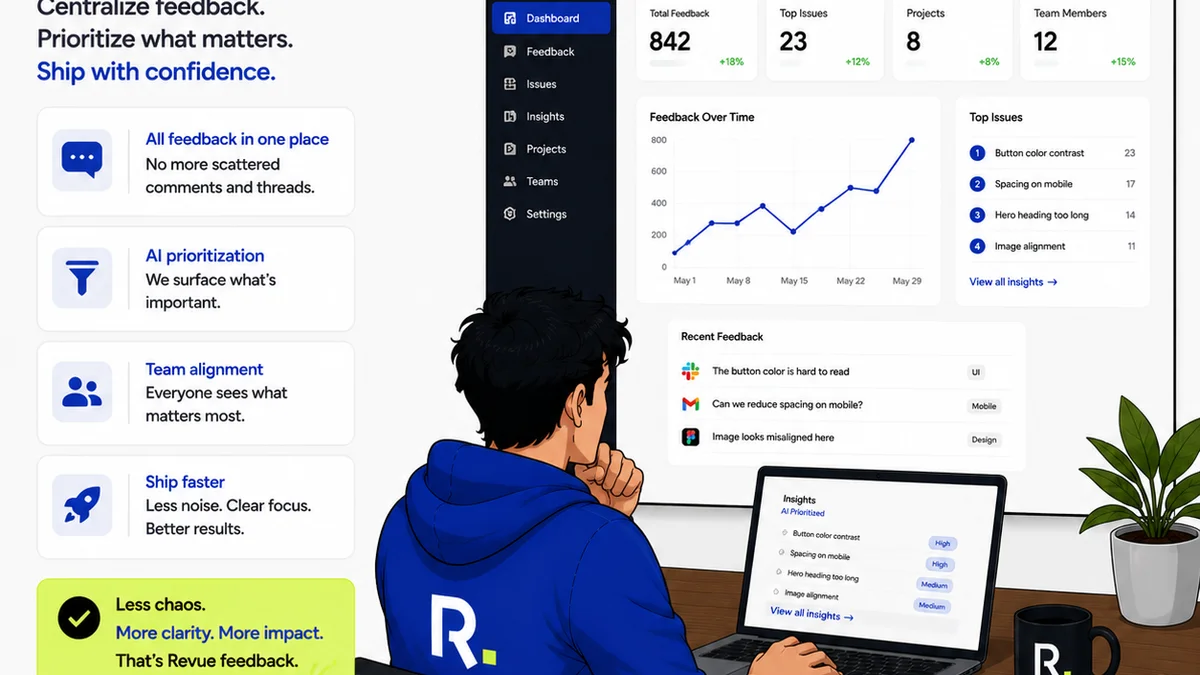
- Centralized Client Feedback: All comments, markups, and discussions live in one place, attached to the specific version of the creative asset. No more hunting through emails or Slack threads.
- Clear Revision and Approval Tracking: Every change is logged. Every approval is timestamped and recorded. This builds an irrefutable audit trail, preventing disputes and scope creep.
- Streamlined Quality Checks: Ensure all feedback has been addressed and revisions meet specifications before final delivery. Reduce errors and client dissatisfaction.
- Visibility for All Stakeholders: Clients, project managers, and team members have real-time access to the project status, feedback, and approvals.
By bringing these elements together, Revue transforms documentation from a burden into a strategic asset. It empowers your team and protects your profitability.
5. Final Thought
Is design documentation a cost center or a profit center? The answer depends entirely on how you approach it.
If you treat it as an afterthought, a box to be checked, it will always feel like a drain. But if you view it as a strategic tool for clarity, efficiency, and client satisfaction, its ROI becomes undeniable.
How are you currently tracking the impact of your documentation practices on your agency's performance?
Frequently asked questions
What is the primary benefit of good design documentation?
The primary benefit is increased clarity and efficiency, which directly translates into cost savings by reducing rework, scope creep, and team confusion, and can also lead to increased revenue through faster project completion and better client retention.
How can I calculate the ROI of design documentation?
Calculate the cost savings from reduced rework, fewer revision cycles, and less time spent searching for information. Then, factor in potential revenue increases from faster project delivery and improved client retention. The formula is (Benefits - Costs) / Costs.
What are the essential components of design documentation?
Key components include project briefs, design rationale, feedback and revision logs, asset specifications, style guides, and documented approval sign-offs. The goal is to capture critical project information clearly and accessibly.
How does a tool like Revue help with design documentation ROI?
Revue centralizes client feedback, tracks revisions and approvals, and provides a single source of truth, thereby reducing miscommunication, minimizing scope creep, speeding up project timelines, and creating a clear audit trail, all of which contribute to a positive ROI.