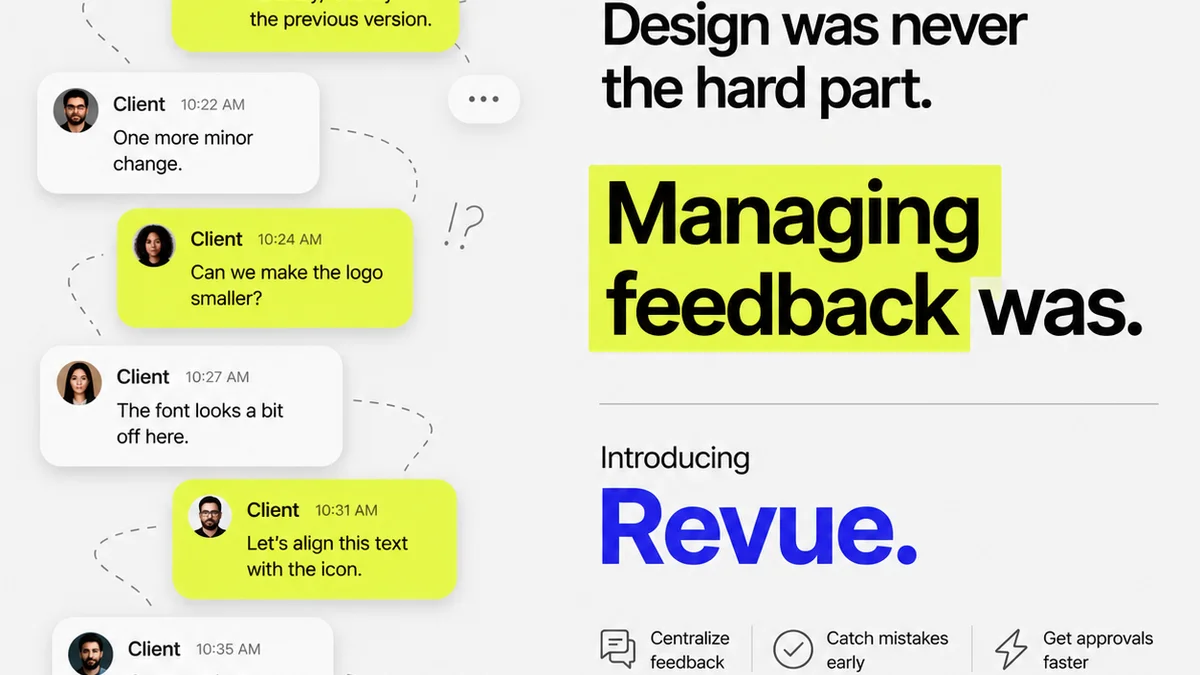
Everyone thinks design handoff is simple. You finish the design, you export the assets, you send them over to development. Done.
None of that is wrong. But it’s incomplete.
The hard truth is that design handoff is rarely a single, discrete event. It’s a complex, multi-stage process fraught with potential miscommunication, technical debt, and scope creep. Get it wrong, and your amazing design becomes a buggy, pixel-perfect mess. Or worse, it never gets built at all.
This isn't about blame. It’s about understanding the operational reality behind the creative output.
1. The Myth of the 'Final' Design
The assumption: The designer delivers a final, static design file, and the job is done. Developers then build from that single source of truth.
The reality: Design is iterative. Requirements change. Client feedback arrives late. The 'final' design you receive might be a week old by the time development starts, and it doesn't account for new technical constraints or user testing insights.
The Cascading Effect of Stale Designs
When development starts from an outdated design:
- Developers build against a spec that’s no longer relevant.
- Scope creep disguised as 'minor tweaks' becomes a major headache.
- The final product might not align with current business goals or user needs.
- Frustration mounts on both sides.
This isn’t a developer problem. It’s a process problem.
2. Understanding the 'Why' Behind the 'What'
The assumption: Developers just need the visual assets and specifications. They can figure out the rest.
The reality: Developers need context. They need to understand the user flows, the intended interactions, and the business objectives driving the design decisions. Without this, they’re just coding pixels, not building a solution.
Bridging the Context Gap
Consider the implications:
- Why is this button blue? (Brand guidelines, not just preference.)
- Why does this form have three steps? (User experience optimization, not just arbitrary structure.)
- What happens if a user enters invalid data here? (Edge case handling, crucial for robustness.)
When context is missing, developers make assumptions. These assumptions are often wrong.
3. The Pixel-Perfect Trap
The assumption: The design must be translated into code with absolute pixel-for-pixel accuracy.
The reality: While fidelity is important, rigid adherence to exact pixel values can be a technical and design handicap. Responsive design, accessibility, and varying screen resolutions mean 'pixel perfect' is often an illusion, and sometimes, a hindrance.
When Precision Becomes a Problem
Focusing solely on pixels can lead to:
- Wasted development time on micro-optimizations that users won't notice.
- Difficulty in creating truly responsive experiences that adapt fluidly.
- Accessibility issues if visual hierarchy and spacing aren't considered holistically.
- A disconnect between the design intent and the functional reality of the web or app.
The goal is functional perfection, not just visual mimicry.
4. Communication Breakdowns: The Silent Killer
The assumption: The handoff document or tool is the end of the communication loop.
The reality: Handoff is a conversation, not a monologue. Assumptions, misunderstandings, and questions will arise. A lack of clear, ongoing communication channels guarantees problems.
Symptoms of Poor Communication
- Endless email chains with scattered feedback.
- Developers guessing at intended interactions.
- Designers constantly being pulled away from new work to answer basic questions.
- Missed requirements that only surface during QA.
This friction bleeds time and erodes trust.
5. The Unmanaged Revision Cycle
The assumption: Revisions happen, and they're logged somewhere. It's handled.
The reality: Uncontrolled revisions are a black hole. Without a system to track who requested what, when, and why, it's impossible to manage scope, maintain design integrity, or even know if the 'latest' version is truly the one to build from.
The Cost of Chaos
- Scope creep that blows budgets and timelines.
- Inconsistent design application across different features or modules.
- Difficulty in rolling back to a previous, stable version if a new direction fails.
- Client confusion about what's been approved and what's still in flux.
This isn't just messy; it's actively damaging to the project.
Where Revue Fits In
These challenges aren't insurmountable. They’re operational bottlenecks that creative teams and agencies face every day. The key is a centralized, transparent process.
Revue acts as that central hub for creative work and client feedback. Instead of scattered emails and ambiguous Slack messages, all feedback is collected, organized, and versioned within the platform.
This means:
- Clearer Feedback: Clients provide feedback directly on the design assets, eliminating ambiguity.
- Version Control: Every revision is tracked, so you always know which version is current and approved.
- Streamlined Approvals: Formal approval steps ensure everyone is aligned before development proceeds.
- Contextual Information: Designers can add notes, specifications, and even links to user flows directly within the review, providing developers with the context they need.
By centralizing feedback and managing revisions visibly, Revue helps ensure that the design intent is accurately translated into the final product, reducing friction and saving valuable time.
Final Thought
Design handoff isn't a technical task. It's a strategic bridge between creative vision and functional reality. Are you building that bridge with solid foundations, or are you hoping the gap closes on its own?
Frequently asked questions
What is the biggest mistake agencies make in design handoff?
Treating it as a one-time file transfer rather than an ongoing, communicative process. This leads to stale designs, lack of context for developers, and scope creep.
How can I ensure developers have enough context for the design?
Provide not just static assets, but also explain user flows, interaction details, and the 'why' behind design decisions. Tools that allow for contextual notes and links are invaluable.
Is 'pixel perfect' always the goal in design handoff?
Not necessarily. While accuracy is important, the focus should be on functional perfection and responsive behavior. Over-emphasizing exact pixels can hinder development and create accessibility issues.
How can I manage design revisions effectively during handoff?
Implement a clear system for tracking all revisions, including who requested them, when, and why. Formal approval steps are crucial to prevent uncontrolled scope creep and ensure alignment.