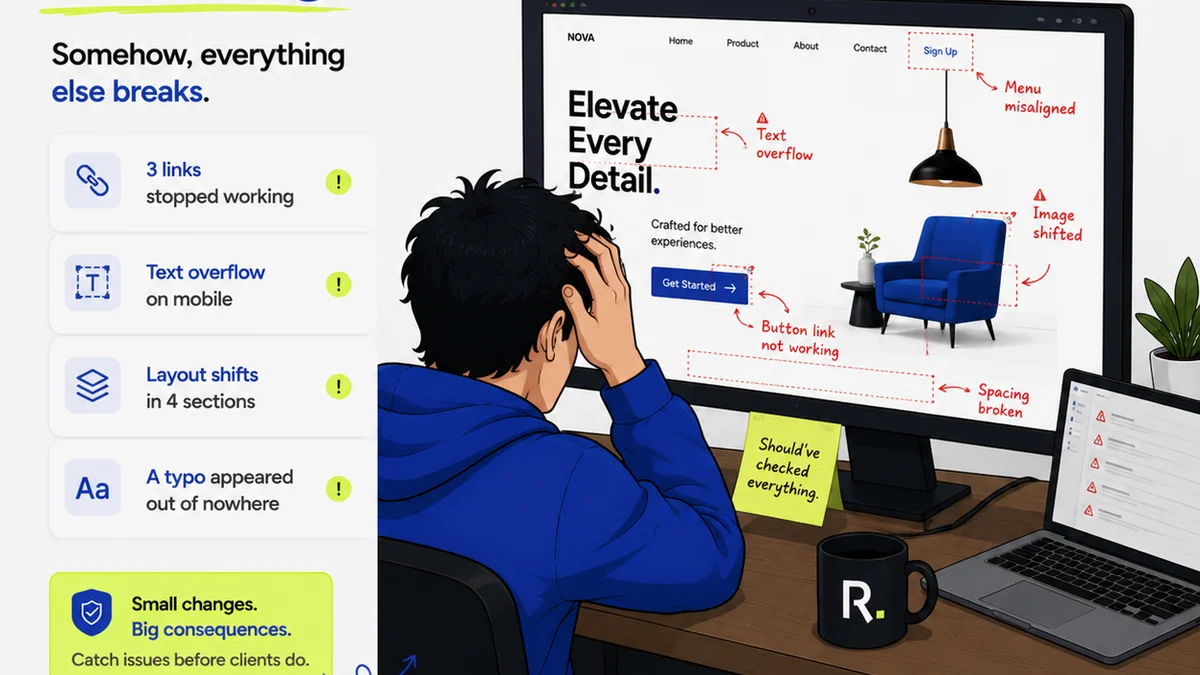
Everyone talks about streamlining creative operations. They focus on project management tools, client communication platforms, and optimizing internal workflows. And that’s all important stuff, don’t get me wrong.
But there’s a critical juncture that’s often overlooked, a moment where all that creative brilliance meets the stark reality of production. It’s the design handoff.
And if yours is broken, you’re bleeding efficiency and probably don’t even realize it.
The Hard Truth About Design Handoff
The common assumption? Handoff is just about delivering files. Get the final designs to the developer or printer, and your job is done. Easy.
That’s a naive view. A dangerous one.
The hard truth is that a clunky, unclear, or incomplete design handoff is a direct pipeline to costly errors, frustrating delays, and damaged client relationships. It’s not an endpoint; it’s a crucial bridge. And if that bridge is weak, the whole project can collapse.
1. The Illusion of 'Final' Files
You’ve got the client sign-off. The designs are “final.” You package them up and send them off. What could go wrong?
Plenty.
“Final” files often lack context. Developers need to know about spacing, typography, states (hover, active, disabled), and responsive behavior. Printers need to know about bleed, color profiles, and fold lines.
What's Often Missing?
- Clear asset naming conventions.
- Layer organization.
- Specific interaction notes.
- Color profiles and font embedding information.
- Responsive breakpoints and variations.
- Accessibility considerations (e.g., contrast ratios, focus states).
Without this, your dev team is guessing. Your print vendor is making educated assumptions. This isn't collaboration; it's a recipe for rework.
2. Communication Breakdown: The Silent Killer
The handoff isn't just a file transfer; it's a communication event. And most agencies treat it like a whisper in the wind.
A quick email with a link to a Dropbox folder isn't a handoff; it's a liability.
Where are the questions answered? Where is the rationale behind design decisions documented? Where can the receiving party see the full scope of the project’s visual requirements?
Symptoms of Poor Handoff Communication:
- Endless back-and-forth emails asking for clarification.
- Developers building based on outdated versions.
- Misinterpreted design elements leading to visual inconsistencies.
- Missed deadlines because of unforeseen technical hurdles.
- Frustrated team members on both the creative and production sides.
This friction isn’t just annoying; it’s expensive. Every minute spent deciphering unclear instructions is a minute not spent building or producing.
3. Version Control Chaos
This is a classic. The developer is working off v1 of the mockups, but the designer sent v3 yesterday via a different channel.
Or worse, the client requested a minor tweak *after* sign-off, and that change wasn't properly communicated or tracked.
The result? Inconsistencies. Bugs. Clients questioning why the final output doesn't match what they approved.
The Vicious Cycle:
- Designers complete a set of mockups.
- Client approves.
- Files are handed off.
- A minor change is requested *after* sign-off, via email.
- Designer makes the change, sends a new file, but forgets to update the main project folder.
- Developer continues working from the *original* files.
- The final output has errors.
- Blame game ensues.
This isn't an operational efficiency; it's a self-inflicted wound.
4. The Cost of Rework and Delays
Let’s talk numbers, even without inventing them.
Think about the hours your developers spend trying to decipher ambiguous specs. Think about the revisions needed because a button color was off, or a spacing guideline was missed. Think about the client service hours spent smoothing over the resulting chaos.
These aren’t line items on a project budget. They’re hidden costs, eroding your profitability with every missed detail.
A smooth handoff isn’t about saving a few minutes on delivery. It’s about preventing hours, even days, of costly rework down the line. It’s about protecting your profit margins and your reputation.
5. Impact on Client Perception
Clients hire you for your creative vision and your ability to execute it flawlessly.
When the final product doesn’t quite match the approved designs, or when the launch is delayed due to production issues stemming from a poor handoff, what does that say about your agency?
It suggests disorganization. It suggests a lack of attention to detail. It suggests you might not be as professional as you claim.
This erodes trust. And trust is the currency of client relationships.
Where Revue Fits In
This is precisely why tools like Revue exist. We’re not just about collecting feedback; we’re about creating a single source of truth throughout the entire creative lifecycle, including that critical handoff phase.
Imagine this:
- Centralized Feedback: All client comments, annotations, and approvals live in one place, tied directly to the design assets. No more hunting through email chains.
- Clear Revision History: Every iteration, every change, every approval is logged. The handoff package can include a direct link or a summary of the approved version, leaving no room for doubt.
- Visibility for All Stakeholders: Developers and production teams can be given access to view the approved designs and their associated feedback, providing context that static files alone can’t offer.
- Quality Assurance Checkpoints: Use Revue to ensure that what’s being handed off actually matches the approved designs, catching discrepancies *before* they reach the next stage.
Revue bridges the gap between creative and production by ensuring clarity, accountability, and a complete record of decisions. It transforms the handoff from a potential point of failure into a streamlined, documented process.
Final Thought
Are you treating design handoff as an afterthought, or as the vital operational checkpoint it truly is?
The efficiency, profitability, and client satisfaction of your agency might depend on the answer.
Frequently asked questions
What is a design handoff?
A design handoff is the process of transferring finalized design assets and specifications from the design team to the development or production team. It includes not just the final files but also all necessary context, guidelines, and documentation required for accurate implementation.
Why is design handoff often a problem?
It's often a problem because it's treated as a simple file delivery rather than a complex communication event. Missing context, unclear specifications, poor version control, and lack of centralized communication lead to errors, delays, and rework.
How can agencies improve their design handoff process?
Agencies can improve handoffs by creating detailed style guides, using dedicated handoff tools or platforms, documenting all decisions and changes, ensuring clear communication channels, and establishing standardized checklists for what must be included in every handoff.
What are the consequences of a bad design handoff?
A bad handoff can lead to significant project delays, costly rework, increased costs due to developer confusion, inconsistent final products, damaged client trust, and a negative impact on team morale.