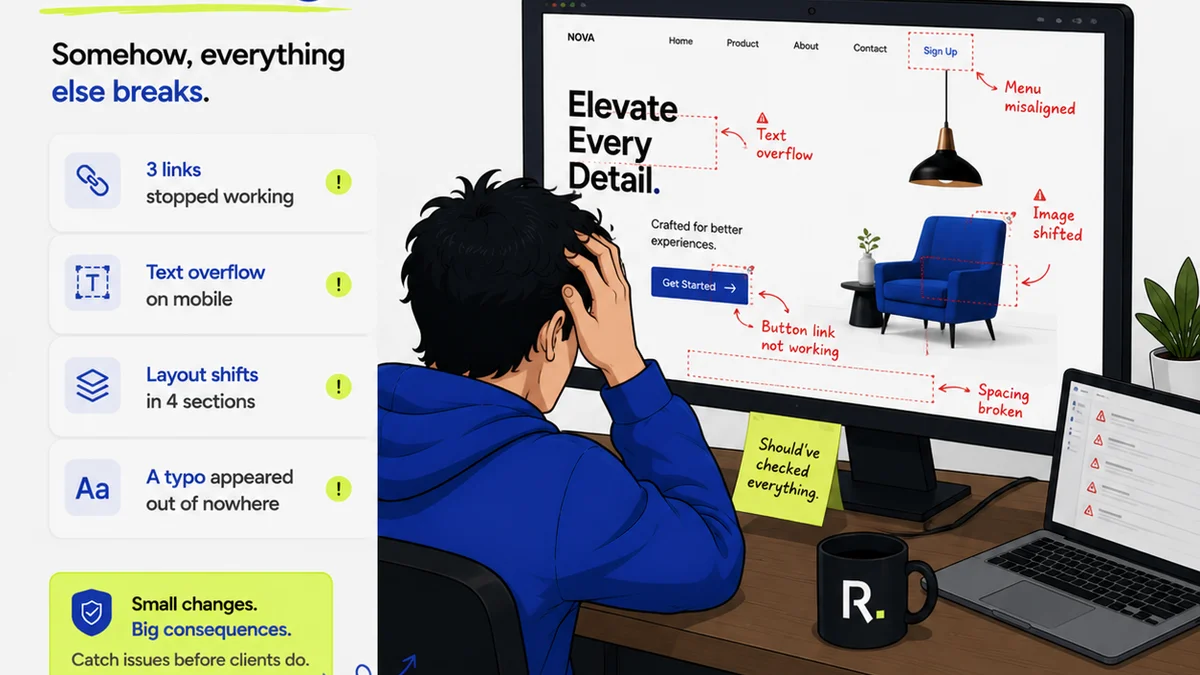
Everyone talks about design handoff. They talk about making it faster, smoother, more automated. They cite tools, checklists, and best practices. And none of that is wrong. But it’s incomplete.
The real problem isn't just the *process* of handoff. It's what you're *measuring* (or not measuring) that tells you if that process is actually working for your clients and your team.
Most agencies focus on vanity metrics. Time saved on a single handoff. Number of assets delivered. These tell you nothing about the *quality* of the handoff or its impact on the downstream development and client experience.
The hard truth? Your design handoff KPIs should reflect client satisfaction, development efficiency, and the reduction of costly errors. Anything else is just busywork.
1. The Myth of Speed Over Everything
We’re all under pressure to deliver faster. Clients want things yesterday. But a rushed handoff is a recipe for disaster. It leads to misinterpretations, scope creep, and a frustrated development team.
Blindly optimizing for speed means you’re likely cutting corners. You’re skipping crucial QA steps. You’re not giving developers enough context. You’re prioritizing output over outcome.
What Speed KPIs Really Tell You
When you track only handoff speed, you learn:
- How fast your *designers* can package files.
- How fast your *project managers* can click ‘send’.
- How fast the *initial transfer* happens.
This is a very narrow view. It doesn't account for the time spent *fixing* issues that arise later because the handoff was poor.
2. The Real Impact: Development Rework Rate
This is the metric that separates agencies that deliver quality from those that just deliver.
Development Rework Rate: The percentage of development time spent fixing issues directly attributable to unclear, incomplete, or inaccurate design handoffs.
This isn't about bugs in the code itself. This is about developers having to go back to the design files, ask clarifying questions, or rebuild components because the handoff was flawed.
Think about it: A handoff that takes an extra day but prevents a week of developer confusion and rework is a massive win. Tracking rework rate forces you to confront the *true cost* of a bad handoff.
How to Track Rework Rate
This requires collaboration between design and development leads.
- Log Handoff-Related Issues: When a developer encounters a problem clearly stemming from the design handoff (e.g., missing specs, ambiguous states, incorrect assets), they log it.
- Estimate Time Spent: Developers estimate the time spent resolving each issue.
- Calculate Total Development Hours: Track the total hours spent by the development team on the project.
- Calculate the Percentage: (Total Rework Hours / Total Development Hours) * 100.
A high rework rate signals a broken handoff process. A low rate means your handoffs are clear, comprehensive, and efficient.
3. Client Satisfaction with the Handoff Process
Your client sees the final product. But they also experience the process. A smooth handoff builds trust. A chaotic one erodes it.
Clients don't care about your internal file-naming conventions. They care if the developer understood the design and if the final output matches expectations.
Client Satisfaction with Handoff: Measured through direct feedback on the clarity, completeness, and ease of understanding the design deliverables.
This isn't just about client happiness; it's a leading indicator of future project success and repeat business.
Gathering Client Feedback
Make it easy for clients to give this feedback.
- Post-Handoff Surveys: Short, targeted questions immediately after handoff.
- Project Retrospectives: Include specific discussion points about the design delivery.
- Direct Conversations: Encourage account managers and project managers to solicit feedback.
Ask questions like: "How clear were the design specifications?" "Did you feel confident the development team understood the vision?" "Were there any surprises or ambiguities in the handoff materials?"
4. Design Scope Adherence
This KPI is crucial for profitability and client relationships. It measures how closely the development output aligns with the *agreed-upon* design scope during handoff.
It's easy for scope to creep, especially when handoffs are vague. Developers, trying to make the design work, might make assumptions or build features that weren't explicitly defined.
Design Scope Adherence: The degree to which the implemented features and user experience match the approved design specifications at the point of handoff.
This KPI directly impacts your bottom line by minimizing unbilled work and preventing client disputes over what was included.
What to Look For
Low adherence often means:
- Designs were ambiguous or lacked detail.
- Key states, edge cases, or interactions were not documented.
- The handoff documentation was not easily accessible or understandable by developers.
- There was no clear point of review for the *design implementation* before full development.
5. Revision Cycles Post-Handoff
This is a direct consequence of handoff quality. If your handoff is crystal clear, development should proceed with minimal design intervention or revision requests.
If you’re seeing multiple rounds of revisions requested by the development team *after* the initial handoff, something is fundamentally wrong with the way designs are being communicated.
Revisions Post-Handoff: The number of significant design revisions required *after* the initial handoff, initiated by the development team or due to implementation issues.
This metric highlights friction points and misunderstandings that are costing you time and money.
Tracking Revision Drivers
When revisions are needed, ask:
- Was this an edge case missed in the design?
- Was this an interaction that wasn't specified?
- Was this a technical limitation that should have been discussed earlier?
- Was this simply a misinterpretation of the design?
The answers point directly to weaknesses in your handoff process.
Where Revue Fits In
You can’t effectively track these critical KPIs without a centralized system for managing feedback, revisions, and approvals.
This is where Revue shines. By bringing all client feedback and stakeholder approvals into one place, you create an undeniable source of truth.
When your designs are managed in Revue:
- Clarity is built-in: Every comment, every revision, every approval is logged. There’s no ambiguity about what was agreed upon.
- Context is preserved: Developers have access to the full history of feedback and design decisions, reducing the need for constant Q&A.
- Visibility is paramount: You can clearly see the evolution of a design, understand the rationale behind changes, and track approval status in real-time.
- Quality Checks are streamlined: Revue’s structured review process helps ensure all requirements are met before handoff, catching potential issues early.
This level of transparency and control is essential for improving your rework rates, boosting client satisfaction, and ensuring design scope adherence. It transforms handoff from a potential bottleneck into a predictable, high-quality output.
Final Thought
Are you measuring the speed at which you throw the ball over the fence, or are you measuring how accurately it lands in the catcher’s mitt?
Focusing on the right KPIs — those that reflect downstream impact and client value — is the only way to truly optimize your design handoff process and build a more efficient, profitable agency.
Frequently asked questions
What is the most important KPI for design handoff?
While multiple KPIs are important, the Development Rework Rate is arguably the most critical. It directly measures the cost of poor handoffs in terms of developer time and project delays, impacting profitability and client satisfaction.
How can I accurately measure development rework rate?
Accurate measurement requires collaboration. Developers need to log issues clearly attributable to handoff flaws and estimate the time spent resolving them. This data, compared against total project development hours, gives you the rework rate.
Why is client satisfaction with the handoff process important?
Client satisfaction with the handoff reflects their perception of clarity, professionalism, and ease of process. A positive experience builds trust, reduces potential misunderstandings, and contributes to repeat business and referrals.
How does design scope adherence relate to handoff KPIs?
Design scope adherence is a direct outcome of a clear handoff. If the handoff is vague, developers may make assumptions or build features outside the agreed scope. Tracking adherence reveals the clarity and completeness of your handoff documentation.
Can a tool like Revue directly improve my handoff KPIs?
Yes. Revue provides a centralized platform for feedback, revisions, and approvals, creating a clear source of truth. This reduces ambiguity, preserves context, and ensures everyone is aligned on the final design, thereby improving rework rates, scope adherence, and overall satisfaction.