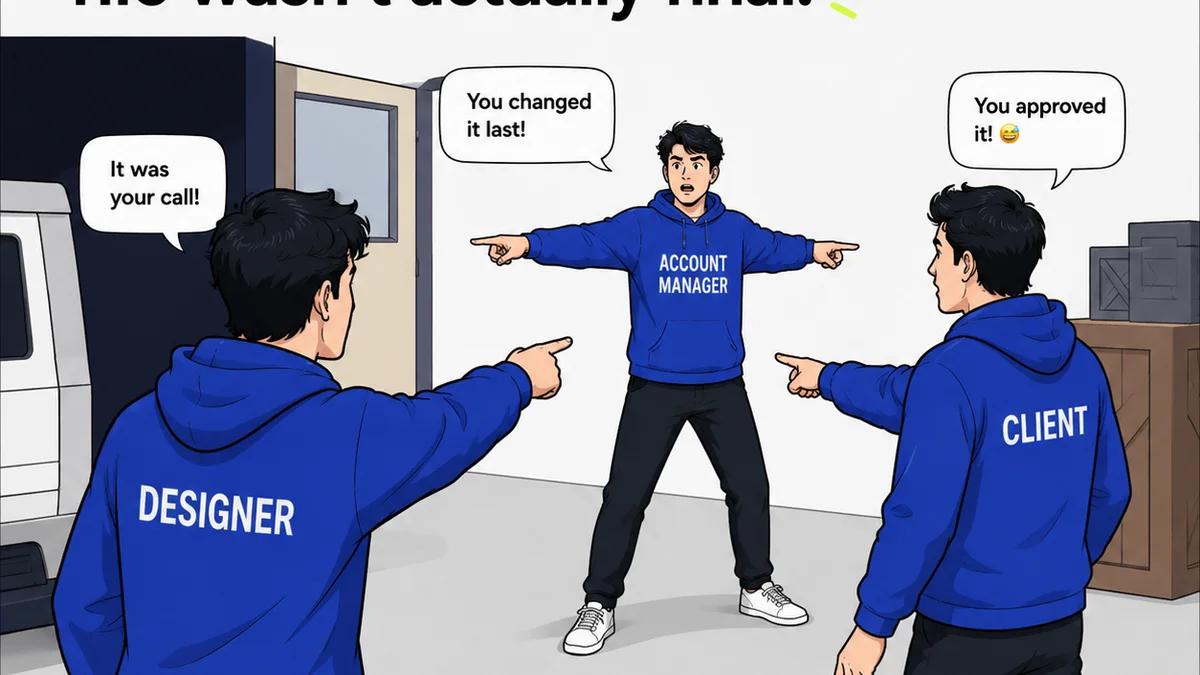
Everyone thinks design handoff is about a final file delivery. A neatly zipped folder, a link to a shared drive, and boom – done. That’s the assumption, right?
None of that is wrong. But it’s incomplete.
The hard truth is that design handoff is not a singular event. It’s a process. A continuous, evolving conversation between design and development, and increasingly, between creatives and clients themselves. The agencies and teams that nail this process aren't just delivering files; they're building bridges of clarity.
1. The Myth of the 'Final' Handoff
For years, the industry standard has been: Design creates, then Design throws it over the wall to Development. The handoff was the moment the designer washed their hands of the project.
This created inevitable friction.
Development would get files, find ambiguities, make assumptions, and build something that wasn’t quite the vision. Then came the endless back-and-forth, the blame game, and the missed deadlines.
This siloed approach is a relic of a bygone era.
The Real Handoff is Collaborative
Modern, efficient teams understand that handoff starts much earlier. It’s about bringing development into the loop during the design process. It’s about iterative feedback and shared understanding.
- Early developer input on technical feasibility.
- Joint review of design prototypes.
- Clear documentation of interactions and states.
- Shared access to design systems.
This isn't just good practice; it’s essential for speed and quality.
2. The Rise of the Living Style Guide and Design Systems
Remember when design systems were just for massive tech companies? Those days are over.
Now, even smaller agencies are realizing the power of a centralized, living style guide. This isn't just a PDF of brand colors and fonts.
It’s a dynamic, accessible repository of UI components, patterns, and guidelines that serves as the single source of truth.
Why Design Systems Are Non-Negotiable
A robust design system drastically simplifies handoff. Developers don't need to guess how a button should look or behave. They can simply pull the component from the system.
- Ensures brand consistency across all touchpoints.
- Speeds up both design and development cycles.
- Reduces errors and redundant work.
- Facilitates easier updates and maintenance.
This is the future of efficient creative production.
3. Client Involvement: From Passive Recipient to Active Participant
The biggest shift? Clients are no longer passive recipients of final designs. They're increasingly involved throughout the process.
This isn't about letting clients dictate every pixel. It’s about leveraging their business context and domain expertise effectively.
This requires a transparent, structured way to gather and manage feedback.
The Challenge of Client Feedback
Unstructured feedback is chaos. Emails, Slack messages, random comments on PDFs – it’s a recipe for missed revisions and scope creep.
Creative leaders need a system that:
- Centralizes all client feedback in one place.
- Provides clear context for each comment (e.g., which screen, which element).
- Allows for easy tracking of revisions and approvals.
- Facilitates direct communication without endless email chains.
When clients can see their feedback being addressed, and understand the implications of their requests, they become more collaborative partners.
4. Automation and Integration: The Unsung Heroes
The manual aspects of handoff are a drain on resources. Copying assets, meticulously documenting interactions, exporting specs – it all takes time.
Smart teams are leveraging tools that automate these tedious tasks.
This isn't about replacing human creativity; it’s about freeing up creatives to do more of it.
Tools That Streamline the Workflow
Think beyond static mockups. Modern tools offer:
- Automated spec generation (redlines, measurements, CSS snippets).
- Integration between design tools and development environments.
- Version control for design assets.
- Automated QA checks against design specifications.
The goal is a seamless flow of information, minimizing manual translation errors.
5. The Shift to Prototyping as the Source of Truth
Static mockups are great. But they only tell part of the story.
Interactive prototypes are becoming the de facto standard for communicating complex user flows and interactions.
They allow stakeholders to experience the design, not just view it.
Why Prototypes Trump Static Designs
A well-built prototype can:
- Demonstrate micro-interactions and animations.
- Test user flows and identify usability issues early.
- Provide a tangible, clickable experience for clients and developers.
- Serve as a clear reference for how the final product should behave.
This reduces ambiguity and ensures everyone is aligned on the intended user experience.
Where Revue Fits In
Managing the complexities of modern design handoff requires more than just good intentions. It demands a structured approach to communication and collaboration.
When feedback is scattered across emails, Slack, and random documents, crucial details get lost. Revisions become a guessing game. Clients feel unheard, and developers struggle to interpret the final vision.
Revue acts as the central nervous system for this entire process.
- Centralized Feedback: All client comments, designer responses, and developer queries live in one organized place, tied directly to the creative asset. No more hunting through inboxes.
- Revision Visibility: Track every iteration, every approval, and every change request. This creates an undeniable audit trail and fosters accountability.
- Quality Checks: Ensure that what was designed is what gets built. By providing a clear, documented history of feedback and approvals, Revue helps catch discrepancies before they become costly problems.
It bridges the gap between creative vision and final execution, ensuring clarity and alignment at every stage.
Final Thought
The definition of 'handoff' is evolving. It’s no longer about a final, static delivery. It's about creating a dynamic, collaborative environment where clarity is paramount.
Are you still treating design handoff as a single event, or are you embracing it as an ongoing conversation?
Frequently asked questions
What is the most common mistake agencies make with design handoff?
The most common mistake is treating design handoff as a single, final event rather than an ongoing process. This leads to silos between design and development, missed feedback, and misinterpretations.
How do design systems improve the handoff process?
Design systems provide a single source of truth for UI components, patterns, and guidelines. This allows developers to pull pre-defined elements, ensuring consistency and drastically reducing the need for guesswork or manual specification.
What role does client feedback play in modern design handoff?
Clients are increasingly involved throughout the process. Modern handoff involves structured ways to gather, manage, and act on client feedback, making them active participants rather than passive recipients.
How can automation help with design handoff?
Automation can streamline tedious tasks like generating specs, exporting assets, and performing basic QA checks against design files. This frees up creative teams to focus on higher-value work.
Why are interactive prototypes more effective than static mockups for handoff?
Prototypes allow stakeholders to experience the design's flow and interactions, revealing nuances that static images can't convey. They serve as a clearer, more tangible reference for how the final product should behave.