Everyone’s chasing design productivity. We want more output, faster turnaround, happier clients. And the usual advice? Get a better tool. Automate something. Streamline your workflow.
None of that is wrong. But it’s incomplete.
The real secret to design productivity isn’t about adding more to your plate. It’s about ruthlessly removing the friction that slows you down. It’s about clarity, not just speed.
The Hard Truth: Productivity Is About Friction Reduction
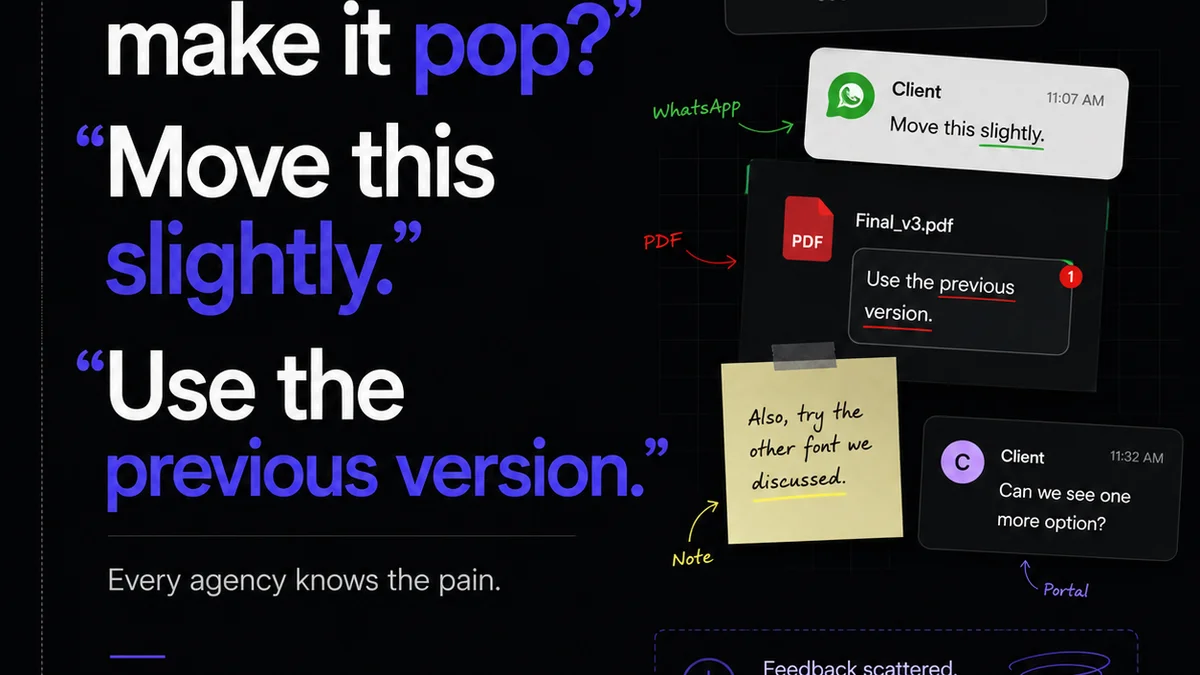
Most agencies think productivity means doing more, faster. They invest in new software, add more features to existing tools, and expect magic. But the real bottleneck isn't your software's capabilities. It's the human element. It's the miscommunication, the endless back-and-forth, the unclear feedback, the wasted time spent searching for assets or approvals.
True design productivity is built on a foundation of clear processes and minimal friction. It’s about making it easy for your team to do great work, and easy for clients to give you the information you need to do it.
1. Embrace Feedback Clarity, Not Just Volume
The assumption: More feedback is better. More eyes on the work means a better final product.
The truth: Unclear, contradictory, or poorly delivered feedback is a productivity killer. It leads to rework, frustration, and a diluted creative vision.
Symptoms of Feedback Friction
- Endless revision cycles on the same points.
Frequently asked questions
What's the biggest mistake agencies make when trying to improve design productivity?
The biggest mistake is focusing solely on tools and automation without addressing underlying process friction. Agencies often chase new software, assuming it will magically fix issues, when the real problems lie in unclear feedback loops, inefficient revision management, and poor communication.
How can I get clearer feedback from clients?
Establish a structured feedback process. Provide clear guidelines on how clients should submit feedback (e.g., specific annotation tools, clear categorization of comments). Schedule dedicated feedback review sessions to discuss comments directly rather than relying solely on written notes. Empower your project managers to act as a filter, clarifying ambiguous client input before it reaches the design team.
What are the key elements of a frictionless design workflow?
A frictionless workflow involves clear project briefs, centralized asset management, streamlined communication channels, efficient revision and approval processes, and automated quality checks. It means minimizing the time spent searching for information, clarifying requirements, or chasing approvals.
How does a centralized feedback system improve productivity?
A centralized system consolidates all client comments, annotations, and approval statuses in one place. This eliminates the need to hunt through emails or disparate documents, reduces misinterpretations, provides a clear audit trail, and ensures everyone is working from the latest version, drastically cutting down on wasted time and rework.