Everyone wants to be more productive. Especially in creative agencies and design teams. The assumption is simple: more output, faster. Work harder, work longer, and you’ll get more done.
None of that is wrong. But it’s incomplete.
The real truth about design productivity isn't about sheer speed or output volume. It’s about clarity. It’s about minimizing friction, eliminating wasted effort, and ensuring every action taken moves the project forward effectively.
1. The Myth of the Always-On Designer
We’ve all seen it. The designer chained to their desk, fueled by caffeine and the looming deadline. The narrative is that this intense, continuous effort is the hallmark of a productive designer.
But this often masks a deeper problem: inefficient workflows.
When designers are constantly firefighting, context-switching, or waiting for approvals, they *appear* busy. They're certainly stressed. But are they truly productive?
The Symptoms of Perceived Productivity
- Constant context switching between tasks.
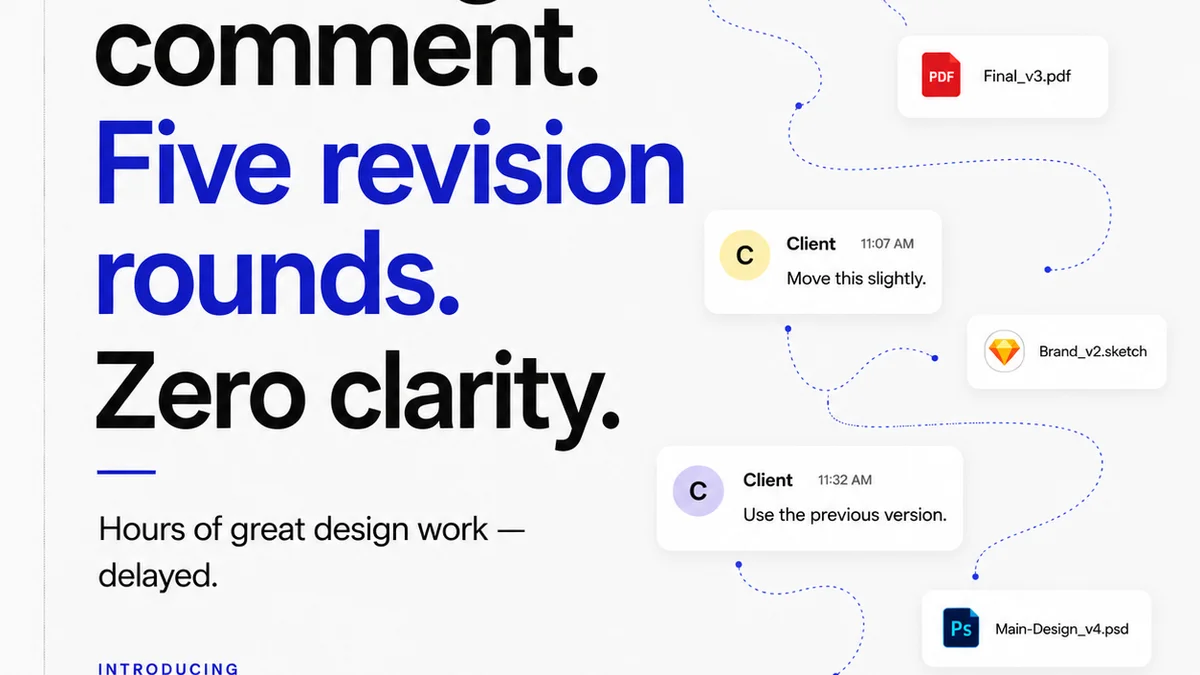
- Endless revisions due to unclear feedback.
- Waiting periods for stakeholder input.
- Reworking elements that were already approved (or mis-approved).
- A general feeling of being overwhelmed, despite long hours.
This isn't productivity; it's chaos disguised as effort. True productivity means streamlining the *process*, not just the individual's keystrokes.
2. Friction is the Enemy of Flow
The creative process thrives on flow state. That’s when deep work happens. When ideas connect. When brilliant solutions emerge.
Friction is anything that pulls a designer out of that state. It’s the enemy of flow.
Common Friction Points in Design Workflows
- Unclear Briefs: Starting a project without knowing the *real* objectives.
- Ambiguous Feedback: Receiving comments like “make it pop” or “I don’t like it” without specifics.
- Approval Bottlenecks: Waiting days for a single sign-off, halting progress.
- Tool Overload: Juggling too many platforms for communication, feedback, and asset management.
- Scope Creep: Constant, unmanaged additions to the project brief.
- Lack of Clear Roles: Not knowing who is responsible for what decision or action.
Each point of friction adds minutes, hours, or even days of delay. It breaks concentration. It kills momentum.
Eliminating these points is the core of boosting design productivity.
3. The Power of a Defined Process
A well-defined process acts like a lubricant for your creative engine. It anticipates friction points and builds in mechanisms to smooth them over.
It’s not about rigid bureaucracy. It’s about intelligent structure.
Key Elements of a Productive Design Process
- Crystal-Clear Briefing: A structured template that forces clients and stakeholders to define goals, target audience, key messages, and success metrics upfront.
- Centralized Feedback Loops: A single source of truth for all comments, annotations, and discussions.
- Defined Revision Cycles: Setting clear expectations for how many rounds of revisions are included and what constitutes a revision versus a new request.
- Streamlined Approvals: Clear pathways for sign-off, with designated approvers and reasonable turnaround times.
- Version Control: Easy access to previous versions and clear tracking of the current approved state.
This isn't about slowing things down. It's about ensuring that when work *is* happening, it's the *right* work, and it’s moving towards a clear goal without getting derailed.
4. Feedback: The Double-Edged Sword
Feedback is essential for good design. It’s how we iterate, improve, and ensure the final output meets client needs. But it’s also a notorious productivity killer.
Why? Because feedback, when unstructured, is often:
- Vague: Lacking actionable detail.
- Conflicting: Different stakeholders saying opposite things.
- Delayed: Arriving long after the work was done, requiring significant rework.
- Disorganized: Scattered across emails, Slack messages, and verbal conversations.
This chaos leads to endless cycles of minor tweaks and fundamental misunderstandings. It drains creative energy and stretches timelines unnecessarily.
The solution isn't to avoid feedback. It's to manage it.
Strategies for Productive Feedback
- Consolidated Feedback Sessions: Schedule specific times for feedback, ideally with all key stakeholders present or providing input simultaneously.
- Structured Annotation Tools: Use tools that allow for precise visual feedback directly on the design asset.
- Clear Actionability Criteria: Train clients and internal teams on what constitutes useful feedback (e.g.,
Frequently asked questions
What is the biggest misconception about design productivity?
The biggest misconception is that productivity means working faster or longer hours. True design productivity is about creating clarity, minimizing friction in the workflow, and ensuring every action directly contributes to project goals.
How can design teams reduce friction in their workflow?
Reducing friction involves streamlining communication, consolidating feedback, clarifying project briefs, defining approval processes, and using integrated tools that minimize context switching and manual handoffs.
Why is feedback often a productivity killer?
Feedback can kill productivity when it's vague, conflicting, delayed, or scattered across multiple channels. This leads to rework, misunderstandings, and endless revision cycles.
What's the role of a defined process in design productivity?
A defined process provides structure, anticipates potential issues, and ensures smooth transitions between project stages. It guides the team, clarifies expectations, and prevents common bottlenecks.