Everyone talks about efficiency in creative operations. Streamline workflows, cut down on meetings, implement new software. It all sounds right. It all sounds necessary.
But it’s incomplete. And focusing solely on the mechanics of *how* work gets done misses the most critical lever for unlocking agency growth and profitability.
The real missing piece isn't just about being faster. It's about being more *productive*.
1. The Myth of "Busy" vs. "Productive"
Agencies are filled with people who look busy. They’re in back-to-back calls, hunched over their screens, juggling multiple projects. This often gets mistaken for high productivity.
But busywork isn't productive work. Productivity is about output. It’s about delivering high-quality creative that drives client results, not just churning out deliverables.
Consider this:
- A designer spending an extra hour on a minor tweak that a client will never notice.
- A team rushing through a creative concept to meet a deadline, only to have it rejected and require a full rework.
- Hours lost in endless feedback loops, with multiple versions and miscommunications.
These are symptoms of a system that prioritizes activity over actual output and impact.
The Real Cost of Inefficiency
It’s not just about wasted hours. It’s about:
- Missed deadlines
- Client dissatisfaction
- Burnout among creative teams
- Reduced profitability
- Stunted agency growth
You can optimize every single step of your process, but if the *quality* and *impact* of the creative output doesn’t improve, you’re just optimizing for busyness.
2. Defining True Design Productivity
Productivity in a creative context is different from manufacturing. You can’t just measure units produced per hour. It’s a blend of speed, quality, and strategic impact.
True design productivity means:
- Delivering creative that meets and exceeds client objectives.
- Minimizing rework and revisions through clear briefs and effective feedback.
- Empowering designers to focus on high-value creative thinking, not administrative tasks.
- Ensuring creative work is strategically sound and aligned with business goals.
This requires a shift in focus from process mechanics to creative outcomes.
The Role of Client Communication
A huge chunk of non-productive time in agencies is spent managing client relationships and feedback. This isn't inherently bad. It's essential.
But *how* it’s managed makes all the difference.
Unstructured feedback, vague comments, and endless back-and-forth kill productivity faster than almost anything else.
It forces designers to guess, to iterate on subjective opinions, and to spend time deciphering unclear direction.
The Pitfall of "More Resources"
When teams are struggling, the knee-jerk reaction is often to hire more people. This can seem like the obvious solution to increased workload.
But throwing more bodies at an inefficient system doesn't fix the underlying problems. It often just increases complexity and overhead.
You end up with more people doing the same unproductive things, just at a larger scale.
3. The Hidden Drain: Unmanaged Revisions and Feedback
If you’ve ever worked in an agency, you know the pain. The email chains that go on for weeks. The Slack threads that get lost. The multiple versions of a file where no one is quite sure which is the latest.
This is where productivity goes to die.
Clients provide feedback, often with good intentions, but without a clear structure. Designers try to incorporate it, leading to more questions, more confusion, and more revisions.
This cycle is incredibly damaging:
- It erodes the creative’s focus.
- It introduces errors and inconsistencies.
- It delays project timelines significantly.
- It creates frustration for both the agency and the client.
And the worst part? Often, the revisions aren't even addressing the core strategic goals. They're just subjective tweaks.
The Illusion of Control
Many agencies *think* they have a handle on this. They have project managers, they have status meetings. But often, these are just band-aids.
The real issue is a lack of a centralized, transparent system for feedback and approvals. Without it, you’re relying on tribal knowledge and manual tracking, which is a recipe for disaster.
Quality Control: Not Just an Afterthought
Effective quality control isn't just a final check. It's built into the entire process. When feedback is managed poorly, the final QA step becomes a frantic scramble to catch mistakes, rather than a final polish.
This means more time spent fixing issues that should have been caught and addressed earlier. It’s a direct hit to your bottom line and your reputation.
4. Where Revue Fits In
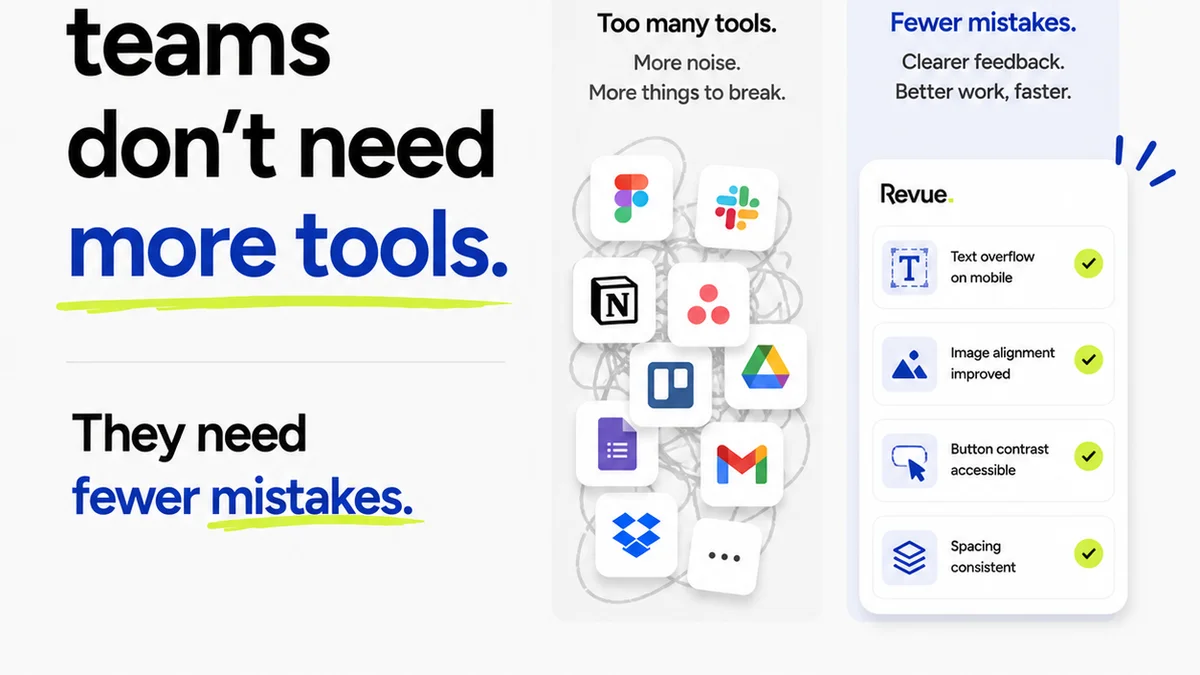
This is precisely why tools like Revue exist. They’re built to tackle the inefficiencies that plague creative operations, not by just speeding up tasks, but by fundamentally improving how creative work is managed, reviewed, and approved.
Revue provides a central hub for:
- Centralized Client Feedback: All comments, annotations, and discussions happen in one place, tied directly to the creative asset. No more digging through emails or Slack.
- Revision and Approval Visibility: Track every version, every change, and every approval status. Everyone knows where things stand, reducing confusion and speeding up decision-making.
- Streamlined Quality Checks: Integrate review and approval into the workflow, ensuring that feedback is addressed systematically and that final sign-offs are clear and documented.
By structuring the feedback loop and providing clear oversight, Revue helps agencies move beyond simply being busy to being genuinely productive. It ensures that creative energy is focused on creating great work, not on navigating chaos.
5. Cultivating a Culture of Productive Creativity
Beyond tools, fostering a culture that values true productivity is key. This means:
- Clear Briefs: Investing time upfront to ensure every project starts with a solid, strategic brief.
- Defined Roles: Making sure everyone knows their responsibilities in the feedback and approval process.
- Empowered Creatives: Trusting your designers to execute, and providing them with the systems to do so effectively.
- Data-Driven Insights: Understanding where time is actually being spent and identifying bottlenecks.
It’s about creating an environment where creatives can do their best work, with minimal friction and maximum impact.
The Role of Leadership
Agency leaders must champion this shift. It requires moving beyond a focus on billable hours and embracing a focus on value delivered.
This means investing in processes and tools that support high-impact creative output, even if they don’t directly translate to more hours billed.
It’s a strategic investment in the agency’s future.
Final Thought
Are you measuring the right things? Is your agency optimizing for the appearance of work, or the actual delivery of impactful, high-quality creative that drives client success? The difference might be the single most important factor in your agency’s long-term health and growth.
Frequently asked questions
What's the difference between efficiency and productivity in design?
Efficiency is about doing things faster or with fewer resources. Productivity is about delivering high-quality, impactful output that achieves strategic goals. An agency can be efficient (fast) but not productive (not delivering great results).
How does unmanaged client feedback impact productivity?
Unmanaged feedback leads to endless revisions, confusion, scope creep, and wasted creative time. It distracts designers from high-value work and delays project timelines, directly harming productivity.
Can simply hiring more designers increase productivity?
Not necessarily. If the underlying processes are inefficient, adding more people can just add complexity and overhead without solving the core issues. True productivity comes from optimizing the system, not just the headcount.
What are the signs of low design productivity in an agency?
Common signs include missed deadlines, frequent scope creep, high rates of revision, client dissatisfaction, creative burnout, and a general feeling of being constantly busy but not achieving much.