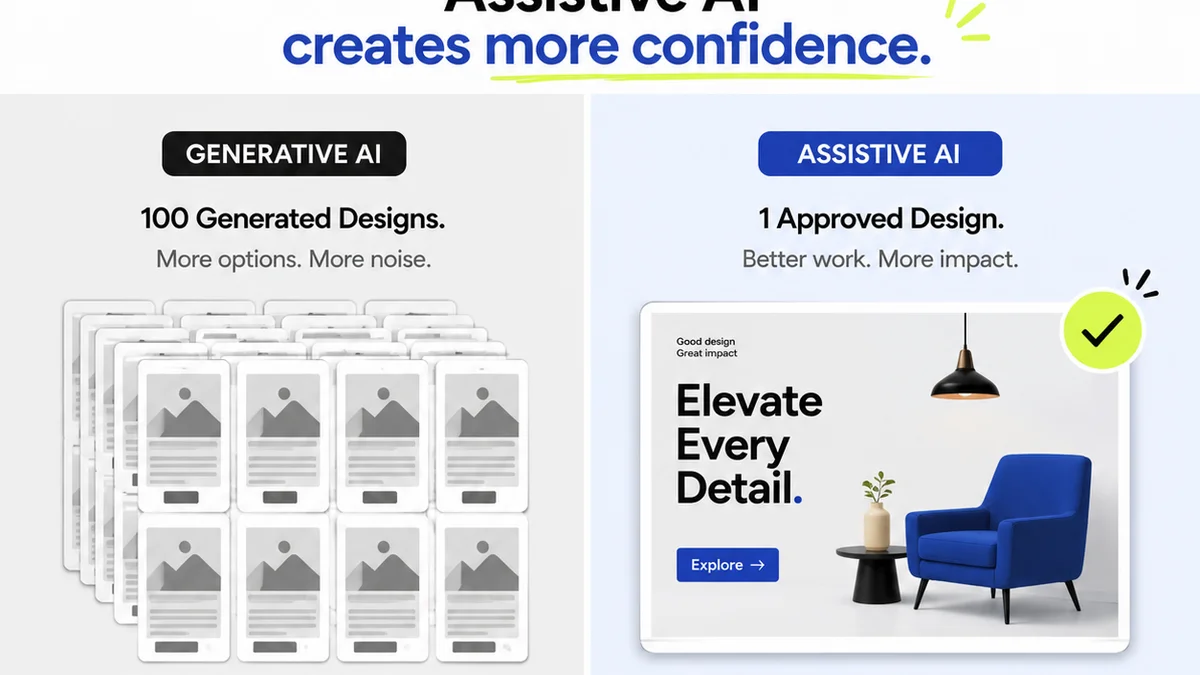
Everyone talks about design productivity. They point to faster software, AI tools, and slicker workflows. They say, "Just adopt this new thing, and you'll be twice as fast." None of that is wrong. But it’s incomplete.
The real truth about design productivity isn't about going faster. It's about working smarter, with less friction. It's about eliminating the drains that slow your team down, not just adding more tools to the pile.
Here are the design productivity trends that actually matter for creative leaders. Forget the hype. Focus on what works.
1. The End of the "Creative Genius" Myth
For years, we’ve romanticized the lone genius. The designer who just *knows*. The CD who has all the answers. This myth is holding your team back.
Real productivity comes from collaboration, clear communication, and shared understanding. It’s about building systems that amplify collective intelligence, not relying on individual brilliance.
The Shift from Solo to System
The modern creative process is a team sport. Projects involve strategists, account managers, clients, and multiple designers. Expecting one person to be the bottleneck and the oracle is a recipe for disaster.
This trend means moving away from siloed work and towards integrated teams. It means making sure everyone understands the brief, the feedback, and the decisions. It’s about transparency.
- Symptom: Key decisions are made in Slack DMs, lost forever.
- Symptom: Designers are constantly re-explaining rationale to account managers.
- Symptom: Late-stage feedback arrives because clients didn't see the
Frequently asked questions
What's the biggest misconception about design productivity?
The biggest misconception is that it's all about speed and new tools. True design productivity comes from reducing friction, improving communication, and streamlining workflows, not just working faster.
How can creative leaders foster better collaboration?
Foster collaboration by centralizing feedback, ensuring clear communication channels, using project management tools effectively, and promoting transparency in decision-making processes. Encourage shared understanding of project goals and client objectives.
Is AI a significant trend in design productivity?
AI is a growing trend, but its true impact on productivity is still being defined. For now, focus on how AI can augment existing workflows rather than replace core creative processes. The real productivity gains are often in streamlining repetitive tasks.
How does client feedback impact design productivity?
Unmanaged client feedback is a major productivity drain. Centralizing feedback, making it actionable, and providing clear revision tracking reduces back-and-forth and prevents misinterpretations, significantly boosting team efficiency.