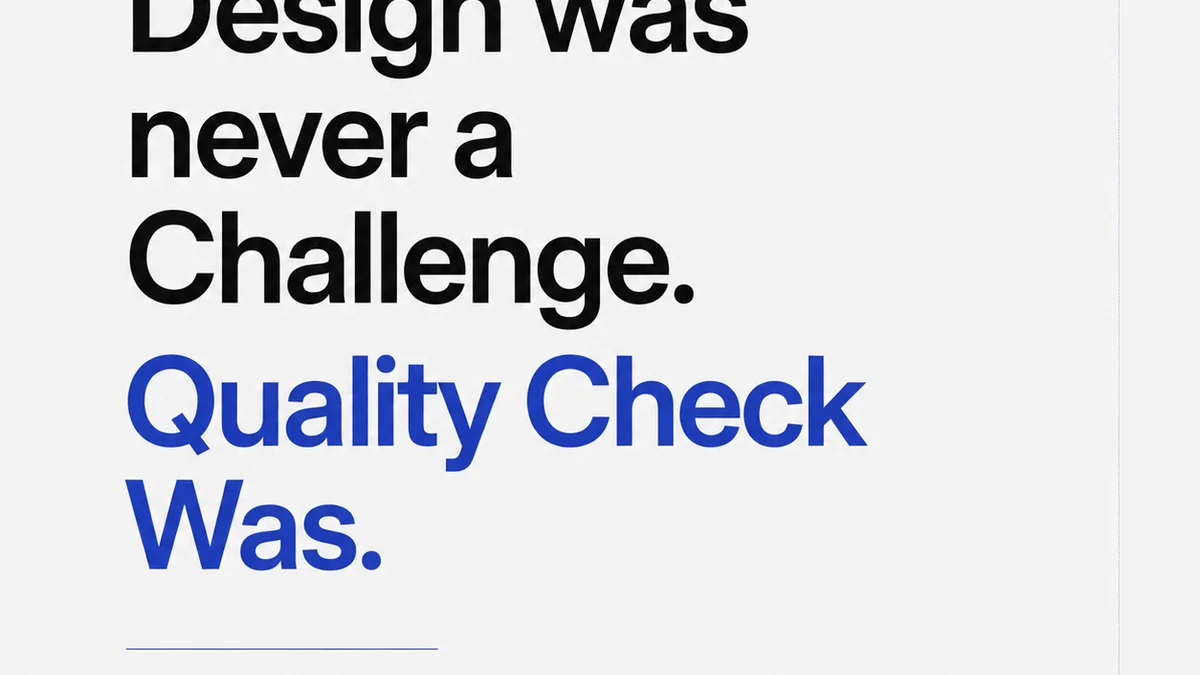
Everyone agrees: good design needs a solid QA process. It’s the last gate before client eyes, the final shield against embarrassing errors. Sounds simple, right? Just a quick check for typos, broken links, and off-brand colors.
None of that is wrong. But it’s incomplete.
The hard truth is that design QA isn't a single event at the end of a project. It’s a continuous mindset, a series of integrated checks woven into the entire creative workflow. Treating QA as an afterthought is a fast track to burnout, client frustration, and costly rework.
1. The Myth of the "Final" Review
Most agencies treat QA like a final inspection. The designer hands off, the QA person (or project manager, or account exec) looks it over, signs off, and it goes to the client. This is a recipe for disaster.
Why?
- It puts immense pressure on one person to catch everything.
- It assumes the creator is too close to the work to see flaws.
- It delays feedback, pushing issues closer to deadlines.
- It creates a bottleneck.
This model is fundamentally broken. It’s reactive, not proactive. It’s a band-aid, not a cure.
The Real Problem: Quality is Built, Not Inspected
Quality doesn't magically appear at the end. It's the result of deliberate choices and consistent checks throughout the process. This means integrating QA thinking from the very first brief.
It’s about asking the right questions at every stage:
- Does this concept align with the brief?
- Is this visual hierarchy clear?
- Are these interactive states properly defined?
- Is this copy accurate and on-brand?
- Does this asset meet technical specifications?
These aren't just QA questions. They're good design and good project management questions.
2. Defining "Done" – Beyond Pixel Perfection
What does
Frequently asked questions
What is the difference between design QA and proofreading?
Design QA is a broad term encompassing checks for visual consistency, functionality, adherence to brand guidelines, technical specifications, and overall user experience. Proofreading is a specific type of QA focused solely on text-based errors like typos, grammar, and punctuation.
When should design QA start in a project?
Ideally, design QA should be integrated from the very beginning. This means reviewing briefs for clarity, checking wireframes for usability, and ensuring concepts align with objectives, not just waiting until the final design is complete.
Who is responsible for design QA in an agency?
Responsibility should be shared. Designers should self-check, project managers should ensure adherence to brief and specs, and dedicated QA specialists (if available) can provide an objective final review. Ultimately, the entire team is accountable for delivering quality.
How can we make design QA more efficient?
Efficiency comes from standardization and integration. Use checklists, templates, and automated tools where possible. Most importantly, build quality checks into each phase of the project, rather than saving everything for the end. Centralized feedback platforms also streamline the review process.