Everyone thinks brand identity projects are about big ideas and beautiful logos. That the real work is done in the brainstorming sessions and the final pixel-perfect mockups.
None of that is wrong. But it’s incomplete.
The hard truth is that the success of any brand identity hinges on its flawless execution across every single touchpoint. And that requires a level of quality assurance that goes far beyond simply liking the logo.
1. The Assumption: Brand QA is Just About the Logo
The most common mistake agencies and clients make is treating brand identity QA as a final sign-off on the core assets: the logo, the color palette, the typography. If those look good, the job is done, right?
Wrong.
A brand identity is a system. It’s a living, breathing set of rules and assets that must perform consistently. Treating it like a static deliverable is a recipe for fragmentation and brand dilution down the line.
The Deeper Reality: Brand Identity is a System, Not a Snapshot
Your brand identity is the sum of its parts, and its true strength lies in its application. A stunning logo on a business card means nothing if it’s poorly reproduced on a website, or if the brand colors bleed into illegibility on a social media graphic. QA needs to anticipate and validate these real-world applications.
This isn't about nitpicking. It's about safeguarding the investment made in the brand strategy and design.
2. The Hidden Pitfalls of Inconsistent Application
Think about the brands you’ve encountered that felt… off. Maybe the messaging was great, but the visuals felt amateurish. Or the visuals were striking, but the tone of voice was all over the place. Often, this stems from a lack of rigorous QA during the rollout phase.
Here’s where things typically break down:
- Asset Mismanagement: Different versions of logos or incorrect color codes being used by various teams or vendors.
- Format Errors: Incorrect file types, resolutions, or color spaces being used for specific applications (e.g., RGB for print, CMYK for web).
- Contextual Inappropriateness: Brand elements being used in ways that undermine the brand’s intended message or aesthetic.
- Inconsistent Tone: Visuals and copy not aligning in terms of mood, style, or formality.
- Accessibility Oversights: Color contrast ratios that fail accessibility standards, or typography that’s too small for legibility.
These aren't minor glitches. They are cracks in the foundation of the brand’s perceived professionalism and coherence.
The Cost of a Fractured Identity
Every inconsistency erodes trust. It makes the brand feel less polished, less reliable, and ultimately, less valuable.
Clients often underestimate the sheer volume of assets and touchpoints a brand identity needs to cover. From digital ads and social media posts to internal documents and merchandise, the list is exhaustive. Each one is an opportunity for the brand to shine—or to falter.
3. Building a Robust Brand QA Framework
Effective brand identity QA isn't an afterthought; it's a built-in process. It requires a shift from reactive problem-solving to proactive validation.
Key Components of a Strong QA Process:
- Comprehensive Brand Guidelines: Not just a PDF, but a living document with clear rules, examples, and do's/don'ts for every conceivable application.
- Asset Auditing: Maintaining a single source of truth for all approved brand assets, ensuring everyone uses the correct versions.
- Application-Specific Checklists: Developing tailored QA checklists for different asset types (e.g., web banners, print collateral, social media templates, video intros).
- Cross-Functional Collaboration: Ensuring designers, copywriters, developers, and marketing teams are all aligned on brand standards.
- Regular Audits: Periodically reviewing live brand applications to catch any drift or misuse.
This isn't about creating more work; it's about creating more effective work.
The Role of Tools in Brand QA
Manual checking is prone to error and incredibly time-consuming, especially for large or complex brand systems. This is where robust tools become indispensable.
Consider the sheer volume of assets required for a modern brand. A single campaign might need dozens of variations for different platforms and sizes. Manually checking each one for correct logo placement, color accuracy, and adherence to typography rules is a Sisyphean task.
The right tools can automate checks, centralize asset management, and provide clear visibility into the review and approval process, drastically reducing the risk of human error.
4. Where Revue Fits In
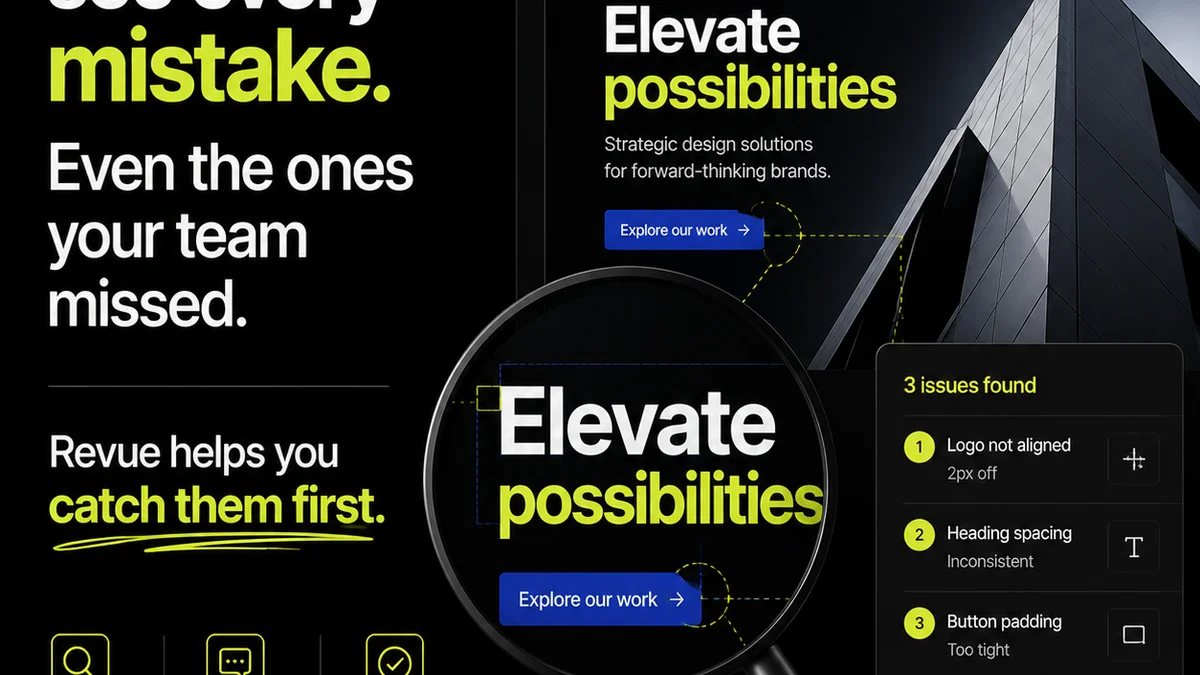
Managing client feedback, revisions, and approvals for brand identity projects can quickly become chaotic. This is precisely where a platform like Revue can bring order and ensure your brand QA process is watertight.
Centralized Feedback and Revision Tracking
Instead of sifting through endless email chains or scattered Slack messages, Revue provides a single hub for all feedback. For brand identity projects, this means:
- Clearer Communication: All comments and annotations are tied directly to specific assets, eliminating ambiguity.
- Version Control: Easily track revisions and see how feedback has been implemented, ensuring no changes are missed.
- Stakeholder Alignment: Keep all relevant parties—client and internal teams—on the same page, reducing conflicting input.
Streamlined Approvals
Getting final sign-off on brand assets can be a bottleneck. Revue simplifies this by:
- Visual Approval Workflows: Clearly defined stages for review and approval ensure accountability.
- Audit Trails: Every approval is logged, providing a clear history for future reference and accountability.
- Reduced Rework: By ensuring feedback is captured and addressed systematically, you minimize the need for costly and time-consuming rework.
Quality Checks Built-In
While Revue doesn't replace detailed technical QA, it significantly enhances the process by ensuring the *right* assets are being reviewed and approved. This means:
- Asset Integrity: Ensuring that the final approved versions are the ones distributed and used.
- Consistency Across Deliverables: Reviewing multiple assets in context helps identify inconsistencies that might be missed when looking at them in isolation.
By centralizing the feedback and approval loop, Revue ensures that the rigorous QA standards you set are actually met, delivering a cohesive and powerful brand identity.
5. The Human Element: Training and Culture
Even with the best tools and processes, brand QA ultimately relies on people. A culture that values brand consistency is paramount.
Fostering a Brand-Conscious Culture
- Internal Training: Regularly educate your team on the brand guidelines and the importance of adhering to them.
- Empowerment: Encourage team members to speak up if they see a potential brand misstep, regardless of their role.
- Client Education: Work with clients to help them understand the value of consistent brand application and how to maintain it.
This isn't just about following rules; it's about understanding the strategic importance of every brand touchpoint.
The Role of the Brand Guardian
Designating a specific person or team as the 'brand guardian' can be highly effective. This individual or group is responsible for overseeing brand consistency, approving new applications, and ensuring adherence to guidelines.
They act as the ultimate check, ensuring that the brand’s integrity is maintained across all activities.
Final Thought
The next time you're deep in a brand identity project, look beyond the initial wow factor of the logo. Ask yourself: Have we built a system that can scale? Have we implemented checks that ensure consistency everywhere it matters? Because a truly successful brand identity isn't just designed; it's meticulously guarded.
Frequently asked questions
What is the most common mistake in brand identity QA?
The most common mistake is treating brand identity QA as a final sign-off on just the core assets like the logo and color palette. This overlooks the crucial need for consistent application across all touchpoints, which is where brand dilution often occurs.
Why is consistent application of brand identity important?
Consistent application builds trust and reinforces brand recognition. Every touchpoint is an opportunity to strengthen the brand's perception. Inconsistency, conversely, can make a brand appear unprofessional, unreliable, and dilute its overall impact and value.
How can agencies improve their brand identity QA process?
Agencies can improve by building a robust QA framework that includes comprehensive brand guidelines, asset auditing, application-specific checklists, cross-functional collaboration, and regular audits. Utilizing specialized tools can also automate checks and streamline workflows.
What role does client feedback play in brand identity QA?
Client feedback is integral, but it needs to be managed effectively. Centralizing feedback on specific assets, tracking revisions clearly, and ensuring all stakeholders are aligned prevents conflicting input and ensures the final approved assets meet all requirements.