Most agency owners think design Quality Assurance is about catching typos. Or making sure the logo isn't slightly off-center. That’s a surface-level view.
It’s not wrong, but it’s dangerously incomplete.
The real reason design QA matters for growing agencies is far more strategic. It’s about building a repeatable, reliable process that scales. It’s about protecting your profit margins and your client relationships.
Neglecting QA isn't just about a few embarrassing mistakes. It's a direct drag on your bottom line and a silent killer of agency growth.
1. The Myth of 'Good Enough' Design
There’s a pervasive myth that once a design *looks* good, the job is done. The client is happy, the creative director signed off, and it's off to development or print.
This is where many agencies stumble.
“Good enough” is the enemy of professional execution. It’s a shortcut that leads to rework, client dissatisfaction, and a damaged reputation. For a growing agency, this isn't a minor hiccup; it's a systemic risk.
Think about the downstream effects:
- A client spots an error *after* launch, demanding free revisions.
- A development team builds based on flawed assets, requiring costly rebuilds.
- Internal teams waste time chasing down minor inconsistencies that should have been caught.
- Your agency’s reputation for meticulousness erodes, project by project.
This isn't about perfectionism for its own sake. It’s about professionalism and operational efficiency.
The Cost of Rework
Every hour spent fixing a mistake is an hour not spent on billable client work or new business development. For a growing agency, this hits hard. Your capacity is finite. Wasting it on preventable errors stunts your ability to take on more work or increase your rates.
Rework eats into your profit margins. If a project is quoted at 100 hours, and 10 hours turn into rework, your profit is halved. That’s not sustainable growth.
2. QA as a Scalability Engine
Growth isn't just about getting more clients; it's about handling more work without breaking. This is where a robust QA process becomes your secret weapon.
A structured QA process isn't a bottleneck; it's a quality gate. It ensures that what leaves your agency is consistently excellent, reducing the chances of costly errors and unhappy clients.
Consider the alternative: ad-hoc checks. As your team grows, so does the potential for miscommunication and oversight. What one person checks, another might miss. Without a defined system, you’re relying on luck.
Building a Repeatable Process
A solid QA framework involves:
- Defined Checklists: Standardized lists for different project types (web, print, social, etc.).
- Clear Responsibilities: Who is responsible for which stage of QA?
- Multiple Reviewers: Not just the designer and the CD, but a dedicated QA step.
- Tools for Consistency: Leveraging software to ensure brand guidelines, pixel perfection, and accessibility standards are met.
This isn't about adding bureaucracy; it's about adding clarity and control.
When your QA process is dialed in, you can onboard new designers faster. They understand the standards and the checks required. You can hand off projects with confidence, knowing they'll meet your agency's quality bar.
The Financial Upside
Agencies with strong QA processes experience:
- Fewer client complaints and revision requests post-delivery.
- Higher client retention rates.
- More predictable project timelines and budgets.
- Increased profitability due to reduced rework.
This is the engine that drives scalable growth. It allows you to deliver more value, more consistently, to more clients.
3. Beyond the Visual: Types of Design QA
Design QA isn’t just about pixels and pantones. It’s a multi-faceted discipline that touches various aspects of the creative output.
To truly benefit, you need to look beyond just the visual fidelity.
Functional QA (for Digital)
For web and app design, this means ensuring:
- Links work correctly.
- Interactive elements behave as expected (hovers, clicks, animations).
- Forms submit properly.
- Responsive designs adapt across all target devices and screen sizes.
- Performance is considered (e.g., image optimization).
A beautiful design that doesn’t function is a failure.
Content QA
This is often overlooked but critical:
- Accuracy: Is all copy correct? Are names, dates, and figures accurate?
- Grammar & Spelling: Even the most stunning visuals can be undermined by typos.
- Tone of Voice: Does the copy align with the client's brand and the overall design?
- Legalities: Are disclaimers, privacy policies, and other legal text present and correct?
This isn't the designer's job alone; it requires collaboration with copywriters and clients.
Brand Consistency QA
This ensures:
- Correct logo usage (colors, clear space, minimum size).
- Adherence to brand color palettes and typography.
- Consistent application of brand elements across all touchpoints.
- Brand guidelines are followed meticulously.
This is crucial for maintaining brand integrity for your clients, which is what they pay you for.
Technical QA
Depending on the deliverable:
- Print: Correct bleed, crop marks, color modes (CMYK), resolution, and file format.
- Digital: Correct file formats (JPG, PNG, SVG), color profiles (RGB), and optimization for web.
- Accessibility: Ensuring designs meet WCAG standards (contrast ratios, focus states, etc.).
Ignoring these technical details can lead to print production issues or inaccessible digital products.
4. Where Revue Fits In
Managing these layers of QA manually is a recipe for disaster, especially as you scale.
This is where a centralized platform becomes essential.
Revue helps by providing a single source of truth for feedback, revisions, and approvals.
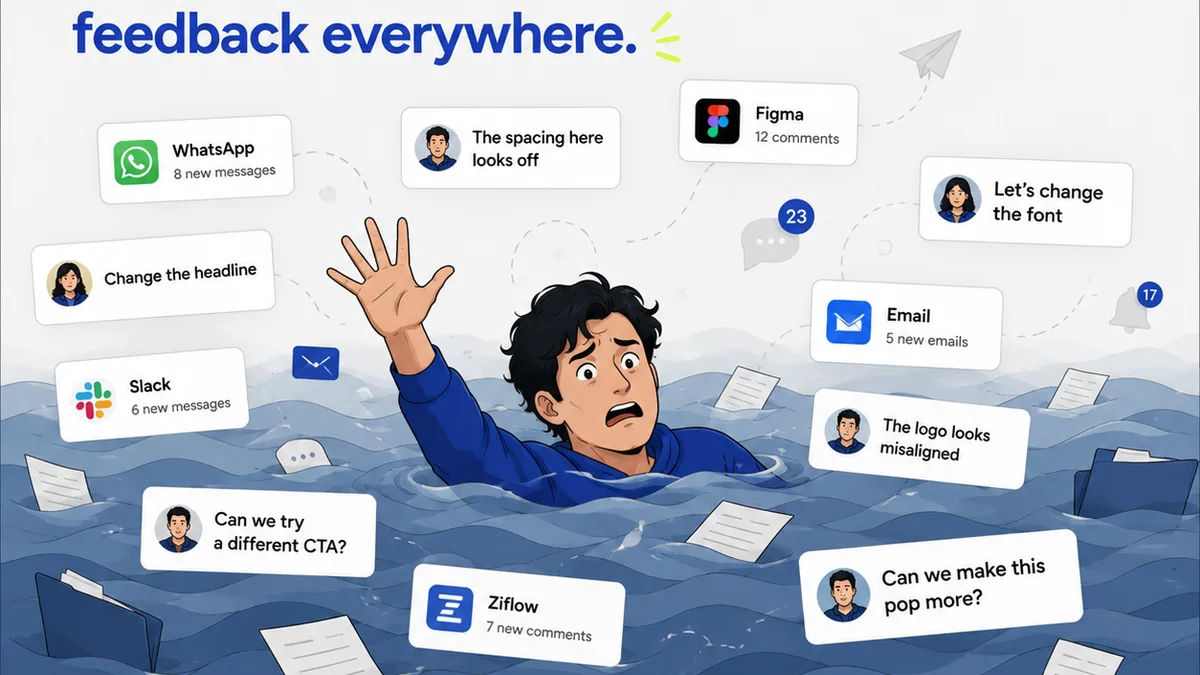
- Centralized Feedback: All comments and annotations are in one place, linked to specific versions of the creative asset. No more digging through emails or Slack threads.
- Revision Visibility: Track the history of changes. Understand *why* a change was made and who requested it. This context is vital for QA.
- Streamlined Approvals: Formal sign-offs are captured digitally, creating a clear audit trail and reducing ambiguity.
- Quality Check Workflows: You can build specific QA steps into your project flow, ensuring that assets go through a defined checklist before final delivery.
By bringing structure to the feedback and revision process, Revue directly supports your QA efforts. It reduces the chaos that leads to errors and makes it easier to maintain high standards across your team and projects.
It’s not about replacing human judgment; it’s about augmenting it with process and clarity.
5. Implementing a QA Culture
A formal QA process is only as good as the culture that supports it.
This means fostering an environment where quality is everyone’s responsibility, not just a single person’s job.
Lead by Example
Creative directors and agency owners must champion QA. If you cut corners on QA to meet a deadline, your team will learn that cutting corners is acceptable.
Train Your Team
Don't assume everyone knows what
Frequently asked questions
What is design QA in the context of an agency?
Design QA for agencies goes beyond checking for typos. It's a systematic process to ensure creative work meets predefined quality standards for visual accuracy, functionality, brand consistency, content correctness, and technical specifications before final delivery to the client.
How does design QA help an agency scale?
A strong QA process creates a repeatable system for delivering high-quality work. This reduces costly rework, minimizes client complaints, improves efficiency, and builds client trust, all of which are essential for handling more projects and clients without compromising quality.
Who should be responsible for design QA?
While a dedicated QA role or a specific team member can be beneficial, quality assurance should ideally be a shared responsibility. Designers should self-check, project managers should oversee the process, and a final review step should involve someone not directly involved in the creation to catch fresh eyes.
What are the key components of a design QA checklist?
Key components typically include: visual accuracy (alignment, spacing, color), brand consistency (logo, typography, colors), content accuracy (copy, stats), functional testing (for digital), technical specifications (file formats, resolution, bleed), and accessibility standards.