Everyone thinks design QA is about spotting spelling mistakes and making sure the logo isn't blurry. That’s part of it, sure. But it’s not the whole story. Not even close.
The real truth? Design QA is the operational backbone that supports client satisfaction, protects your profitability, and builds your agency’s reputation. It’s not a final step; it’s a continuous process woven into every stage of a project.
1. The Myth of the Final Review
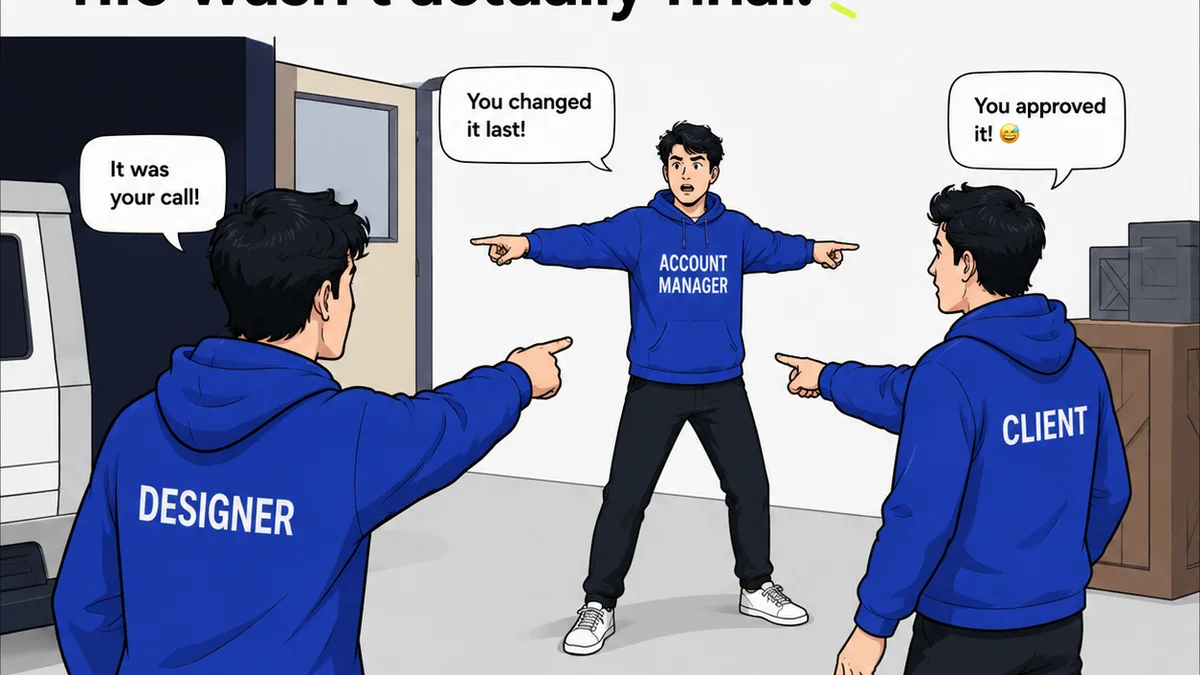
Many agencies treat QA as a last-minute sweep. The design is “done,” the client has signed off on *something*, and then someone does a quick check before launch or delivery. This is a recipe for disaster.
This approach assumes:
- All feedback was captured correctly the first time.
- The client understood what they were approving.
- No new issues arose during development or final assembly.
- The design itself was flawless from a functional and brand perspective.
None of that is guaranteed. In fact, it’s often the opposite.
The hard truth is that QA isn't a gate; it’s a bridge. It connects the creative vision to the client’s reality and the project’s requirements.
2. What Design QA *Really* Is
Design Quality Assurance is the systematic process of ensuring that creative deliverables meet established standards, client expectations, and project objectives. It’s about:
Brand Consistency
Does the final output align with the established brand guidelines? This isn't just about colors and fonts; it’s about tone, messaging, and overall brand experience across all touchpoints.
Functional Integrity
Does it work as intended? For digital projects, this means checking user flows, interactive elements, responsiveness across devices and browsers, and accessibility standards. For print, it’s about bleed, trim, color profiles, and print-readiness.
Client Requirements
Did we deliver exactly what the client asked for and agreed to? This means cross-referencing the final asset against the brief, scope of work, and any approved mockups or wireframes.
Technical Accuracy
Are there any errors that could cause technical problems? This includes checking file formats, resolution, color modes, metadata, and ensuring all necessary assets are present and correctly named.
Usability and User Experience
Even if technically perfect, is it intuitive and effective for the end-user? This goes beyond basic functionality to consider clarity, ease of navigation, and overall user satisfaction.
Think of it as a multi-faceted lens, not a single magnifying glass.
3. The Cost of Neglecting QA
Skipping or rushing QA might seem like a time-saver. It’s not. It’s a direct hit to your bottom line and your reputation.
The downstream costs include:
- Rework: Catching errors post-launch or post-delivery means costly revisions, often under tight, client-imposed deadlines.
- Client Dissatisfaction: Repeated mistakes erode trust. Clients expect polish, not excuses.
- Brand Damage: Errors reflect poorly on both the client’s brand and your agency’s credibility.
- Missed Opportunities: A poorly executed design can fail to achieve its intended business goals, making the client question the value of the investment.
- Scope Creep: When clients spot errors they believe weren't part of the original scope, it can lead to difficult conversations and potential scope creep claims.
This isn't about being perfect. It's about being professional and minimizing preventable problems.
4. Implementing a Robust QA Process
A strong QA process isn't an afterthought; it’s integrated.
a. Pre-Design QA (The Briefing Stage)
This sounds counterintuitive, but it’s crucial. Before any pixels are pushed, ensure:
- The brief is crystal clear and signed off.
- All client requirements are documented and understood.
- Brand guidelines are accessible and unambiguous.
- Success metrics are defined.
If the foundation is shaky, the entire structure is at risk.
b. In-Progress QA (During Design)
Regular check-ins are vital. This isn't about micromanaging; it’s about course correction.
- Internal Critiques: Team members review work in progress, offering fresh eyes.
- Milestone Reviews: Formal reviews at key project stages (e.g., after wireframes, after initial concepts, after detailed design).
- Checklists: Use project-specific checklists to ensure all required elements are present and correct at each stage.
This catches issues early when they are cheapest and easiest to fix.
c. Pre-Delivery QA (The Final Polish)
This is the traditional
Frequently asked questions
What's the difference between design review and design QA?
A design review is typically a subjective evaluation of the creative direction and aesthetic. Design QA is a more objective, systematic process focused on ensuring the deliverable meets functional, technical, and client-specific requirements, free from errors.
Who should be responsible for design QA?
Ideally, it's a shared responsibility. The designer should self-check, a project manager or dedicated QA specialist should conduct formal reviews, and sometimes a senior creative or even a client representative (for specific checks) is involved. The key is clear ownership and process.
How can I create a design QA checklist?
Start by breaking down your typical project into stages and deliverables. For each deliverable, list the essential checks: brand compliance, functional requirements, technical specs (file types, resolution), copy accuracy, accessibility, and cross-device/browser compatibility. Tailor it to each project's unique needs.
How does QA impact agency profitability?
Thorough QA prevents costly rework, reduces client complaints, minimizes scope creep related to errors, and ensures projects are delivered efficiently. This directly protects profit margins and frees up resources for more billable work.