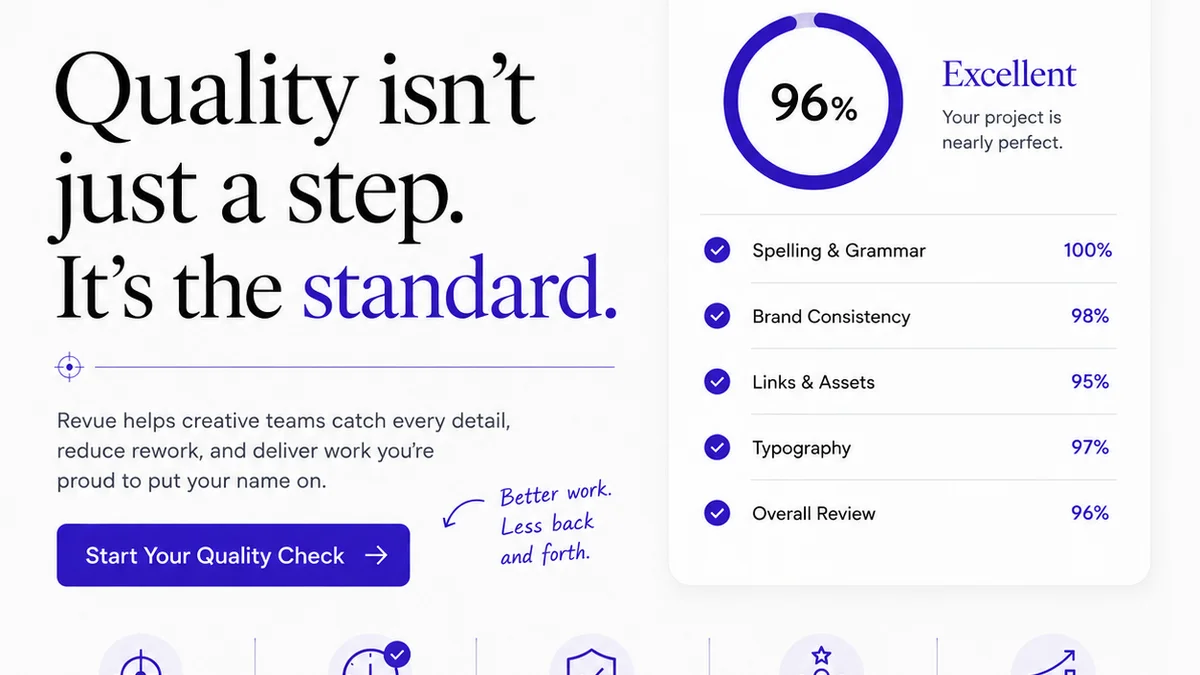
Everyone talks about design QA. They say it’s about catching typos, checking brand colors, and making sure links work. None of that is wrong. But it’s incomplete.
The hard truth? Design QA is not just a final step; it’s a foundational element of effective marketing creative. It’s about protecting your brand, ensuring your message lands, and maximizing your return on investment, not just avoiding embarrassing mistakes.
1. The Real Cost of Poor Design QA
Skipping or rushing design QA seems like a time-saver. It isn’t.
The actual cost shows up later, often in ways you don’t immediately connect to a missed punctuation mark or a slightly off-brand shade of blue.
Brand Erosion
Inconsistent or error-riddled creative erodes trust. If your marketing materials look sloppy, clients and prospects will assume your service or product is also sloppy. This isn’t about perfection; it’s about professionalism.
Wasted Ad Spend
You spend good money driving traffic to your campaigns. What happens when the landing page has broken elements, or the ad creative has a factual error? The click is wasted. The budget is burned. Your conversion rates tank.
Missed Opportunities
A campaign that doesn’t look or feel right might not resonate. Subtle errors in messaging, tone, or visual hierarchy can dilute impact. This means fewer leads, fewer sales, and a lower ROI on your entire marketing effort.
Internal Friction
Rework is a killer. When QA is an afterthought, problems are found late. This forces designers back to the drawing board, delays launches, and frustrates the entire team. It’s a drain on resources and morale.
2. What Good Design QA Looks Like
Design quality assurance (QA) for marketing teams needs to be systematic. It goes beyond a simple proofread.
Think of it as a multi-stage process, integrated into your workflow, not tacked on at the end.
Pre-Flight Checks
Before any creative even gets to a dedicated QA stage, build checks into the creation process itself. This includes:
- Clear briefs with defined goals and constraints.
- Regular check-ins between designers and marketing leads.
- Using style guides and component libraries consistently.
- Automated checks for code-based assets (like HTML emails or web banners).
The Dedicated QA Pass
This is where a focused review happens. It should cover multiple dimensions:
- Accuracy: Are all facts, figures, dates, and names correct?
- Brand Compliance: Does it adhere to brand guidelines (logos, colors, fonts, tone of voice)?
- Technical Integrity: Do all interactive elements work? Are files correctly formatted and sized for their intended platforms? Is the code clean and efficient?
- Usability & Accessibility: Is it easy to understand and navigate? Does it meet accessibility standards (e.g., WCAG guidelines for contrast ratios and keyboard navigation)?
- Strategic Alignment: Does the creative effectively communicate the intended message and achieve the campaign goals?
Post-Launch Monitoring
QA doesn't stop when the campaign goes live. Monitor performance, user feedback, and analytics for any issues that weren't caught. This feeds back into your process.
3. Building Your Design QA Process
You can’t just wing it. A robust design QA process requires structure and buy-in.
Define Your Standards
What does
Frequently asked questions
What is design QA in marketing?
Design QA in marketing is the process of reviewing creative assets to ensure they are accurate, on-brand, technically sound, and strategically aligned with campaign goals before they are published or distributed.
Why is design QA important for marketing teams?
It's crucial for protecting brand reputation, preventing costly errors, optimizing ad spend by ensuring functional and effective creative, improving user experience, and maximizing the overall ROI of marketing campaigns.
What are the key areas to check during design QA?
Key areas include accuracy of information, brand guideline adherence (logos, colors, fonts), technical functionality (links, interactive elements), usability, accessibility standards, and strategic message alignment.
How can a marketing team improve its design QA process?
Improve by defining clear standards, integrating QA throughout the workflow (not just at the end), using checklists and templates, leveraging technology for automated checks, and establishing clear roles and responsibilities for review.