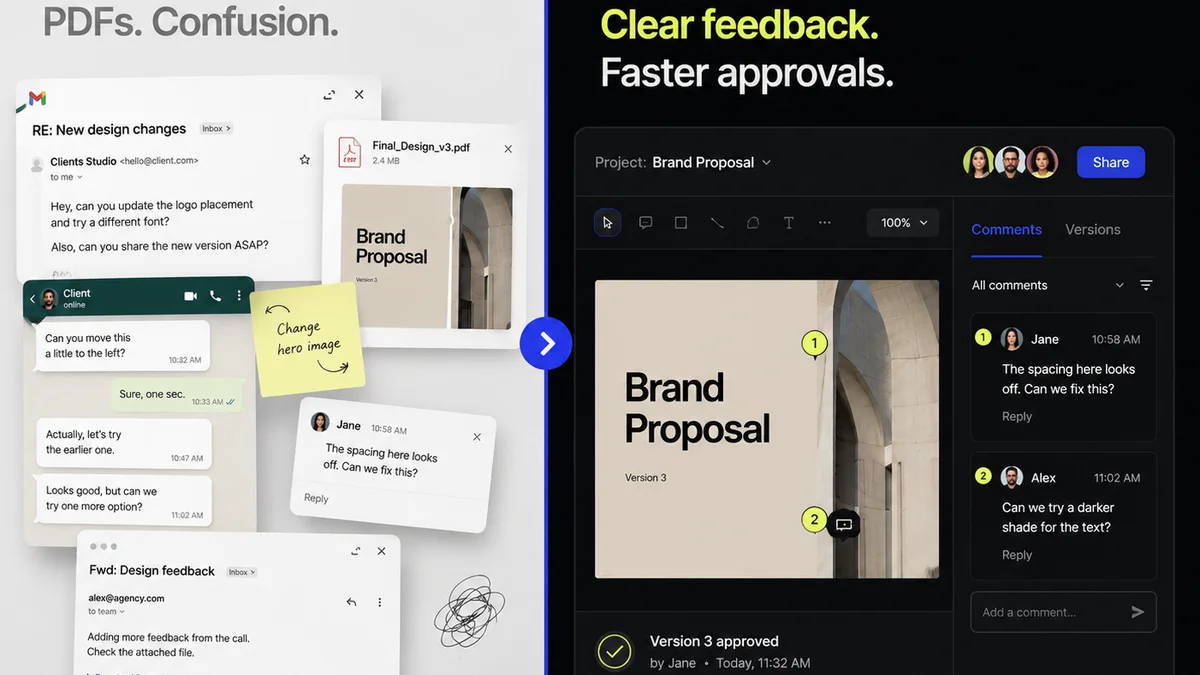
Design quality assurance. It sounds straightforward, right? You check the work. You catch the errors. You sign off.
None of that is wrong. But it’s incomplete. It misses the systemic issues that turn QA from a safety net into a bottleneck, or worse, a source of conflict.
The hard truth is that most teams treat QA as a final check, a gatekeeper at the end of a long process. They see it as a task, not a continuous, integrated part of the creative workflow. This approach guarantees problems.
It guarantees missed feedback. It guarantees wasted revisions. It guarantees friction between creative and client teams. And it guarantees that the *real* quality issues – the strategic and executional misalignments – get overlooked in favor of pixel-perfect typos.
Let’s break down the common mistakes agencies and in-house teams make with design QA and how to fix them, so you can move beyond just catching errors to truly ensuring quality.
1. Treating QA as an Afterthought, Not a Process
This is the big one. You’ve got a great creative concept, stunning visuals, and copy that sings. Now, someone needs to give it one last look. That’s QA, right?
Wrong. That’s a final review, and it’s often too late.
True QA isn’t a single event. It’s a series of checks and balances woven into the entire project lifecycle. It starts with the brief and continues through every stage of creative development.
The Symptoms of Late-Stage QA
- Constant
Frequently asked questions
What is the biggest mistake teams make with design QA?
The biggest mistake is treating design QA as a final, isolated step rather than an integrated process. This leads to missed feedback, wasted revisions, and overlooking strategic issues.
How can I make client feedback more effective for QA?
Centralize all client feedback in one place. This prevents scattered comments, ensures all stakeholders have seen the same version, and makes it easier to track which feedback has been addressed.
What’s the difference between QA and a final review?
A final review is a last-look check for obvious errors. QA is a more comprehensive, ongoing process of validation against objectives, briefs, and brand guidelines throughout the project.
How does a tool like Revue help with design QA?
Revue centralizes feedback, provides clear version control, tracks revision history, and offers visibility into the approval process. This reduces miscommunication and ensures everyone is working from the latest, approved assets.