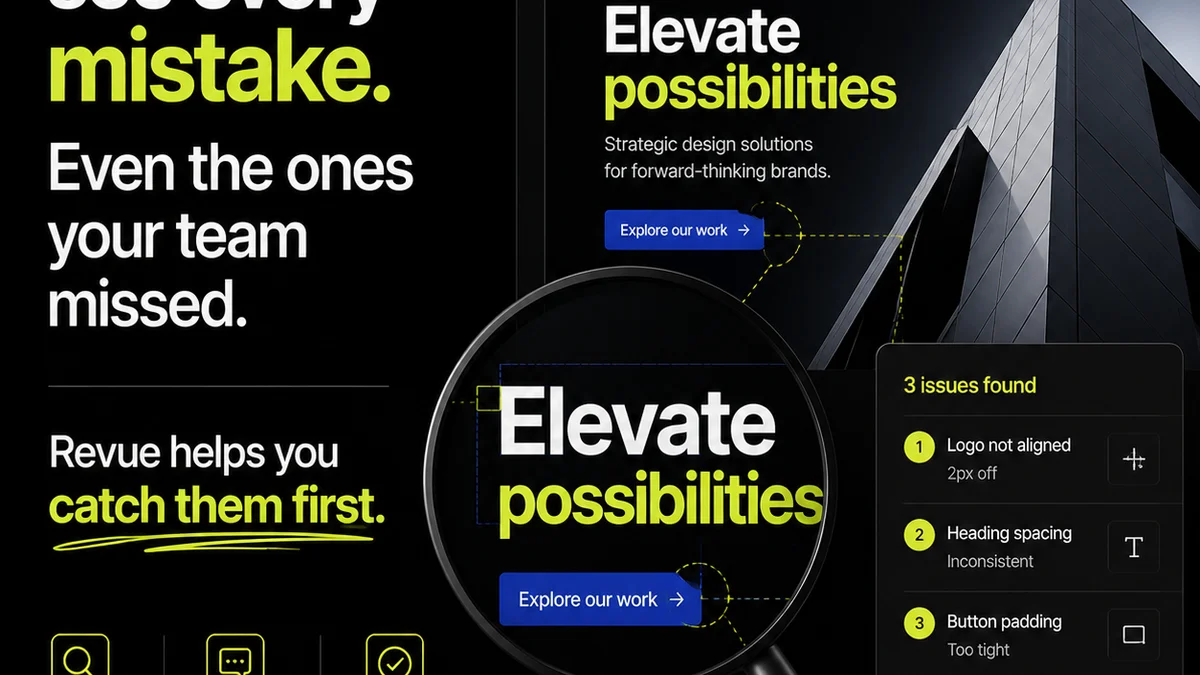
We all know design QA is important. It’s the final sanity check before a client sees the work. It’s about catching typos, broken links, and misaligned elements. None of that is wrong. But it’s incomplete.
The deeper, harder truth? Design QA isn't just about error prevention. It's a strategic lever for boosting your agency’s ROI. And most agencies are leaving serious money on the table by treating it as an afterthought.
1. The Hidden Cost of “Good Enough”
You deliver a campaign. The client signs off. Weeks later, they’re back with a list of “minor tweaks” that should have been caught during QA. Sound familiar?
Each of those “minor tweaks” represents lost time. That’s billable hours you’re eating. It’s account manager time spent fielding complaints. It’s designer time diverted from new, profitable work.
And it erodes trust. Clients start to question your thoroughness. They wonder if you’re truly on top of your game. That perception can be far more damaging than a few pixel-pushing errors.
The Domino Effect of Neglected QA
- Increased revision cycles.
- Scope creep disguised as “fixes.”
- Strained client relationships.
- Reduced team morale and burnout.
- Lower profit margins on projects.
You might think you’re saving time by rushing through QA. In reality, you’re setting yourself up for a much bigger time and cost sinkhole down the line.
2. From Gatekeeping to Value Creation
Historically, QA has been seen as a gatekeeper. A necessary evil. Something you do *to* the work before it goes out.
That’s a defensive posture. It’s about avoiding blame.
The contrarian view is that QA should be an offensive play. It’s not just about catching mistakes; it’s about ensuring the *value* of the design is delivered flawlessly.
Shifting the Mindset
Think about what truly makes a client happy:
- Work that meets their objectives.
- A smooth, predictable process.
- Clear communication and transparency.
- Deliverables that perform as expected.
Design QA, when done right, directly impacts all of these. It’s not just about checking boxes; it’s about validating that the creative solution is robust, functional, and ready to perform.
3. The ROI of Proactive Quality Checks
What does a proactive, strategic approach to design QA actually look like? It’s about embedding quality at every stage, not just tacking it on at the end.
Building Quality In, Not Bolting It On
- Clear Briefs & Kickoffs: Ensure the creative brief is detailed enough to avoid ambiguity. What are the *must-haves* for this design?
- Mid-Project Reviews: Regular check-ins with designers and clients to ensure alignment before significant work is done.
- Standardized Checklists: Develop agency-wide checklists for common deliverables (websites, social campaigns, print collateral). These should cover functional, aesthetic, and brand consistency points.
- Cross-Functional Reviews: Have someone *not* directly involved in the creative execution do the final pass. A fresh pair of eyes often catches what the creator missed.
- Client Training: Educate clients on what good QA entails and why it’s a critical step. Manage their expectations about what constitutes a “fix” versus a new request.
This isn’t about adding more steps. It’s about making the steps you *already* have more effective and accountable.
Quantifiable Benefits
When you systematize QA, you start to see concrete improvements:
- Reduced Rework: Fewer hours spent fixing issues post-delivery.
- Faster Time-to-Market: Deliverables go live or to print without delay.
- Improved Client Satisfaction: Clients appreciate a polished, error-free final product.
- Increased Profitability: Less wasted time means higher margins per project.
- Stronger Reputation: Become known for high-quality, reliable delivery.
These aren't abstract concepts. They translate directly to your agency's bottom line.
4. Where Revue Fits In
Managing the design process, from brief to final approval, can get messy. Feedback gets scattered across emails, Slack messages, and random documents.
This chaos is the enemy of effective QA.
Revue helps bring order to that chaos. It’s designed to centralize feedback and streamline the entire review and approval process.
Centralized Feedback, Clearer QA
- All Feedback in One Place: Clients and internal teams provide comments directly on the design asset within Revue. No more hunting through email chains.
- Version Control: Easily track revisions and compare different versions of a design. QA can be performed on the *latest* approved iteration.
- Clear Approval Workflows: Define who needs to review and approve at each stage. This ensures accountability and prevents work from moving forward without proper sign-off.
- Visibility for Quality Checks: When QA is performed, it’s documented within the project. This creates an audit trail and makes it easy to see what was checked and approved.
By centralizing communication and approvals, Revue makes it easier to identify what has been reviewed, what needs attention, and what the final, approved state of a design truly is. This clarity is foundational for effective, ROI-driving design QA.
5. Final Thought
Are you treating design QA as a necessary evil, a final hurdle to clear? Or are you leveraging it as a strategic tool to build client trust, streamline your operations, and ultimately, boost your agency’s profitability?
The difference isn't just about catching bugs. It's about building a more sustainable, successful business.
Frequently asked questions
What is the primary goal of design QA?
While catching errors is a part of it, the primary goal of strategic design QA is to ensure the delivered creative work meets objectives, functions flawlessly, and adds maximum value for the client, thereby protecting and enhancing agency ROI.
How does poor design QA impact an agency's bottom line?
Poor QA leads to increased revision cycles, scope creep, wasted billable hours, client dissatisfaction, and damage to the agency's reputation, all of which directly reduce profit margins and long-term revenue potential.
What are some practical steps to improve design QA?
Key steps include creating clear briefs, conducting mid-project reviews, developing standardized checklists, involving fresh eyes for cross-functional reviews, and properly training clients on the QA process.
Can design QA help improve client relationships?
Absolutely. Delivering polished, error-free work consistently builds client trust and satisfaction. A smooth, transparent QA process shows professionalism and attention to detail, strengthening the partnership.
How does a tool like Revue help with design QA?
Revue centralizes all feedback and approvals in one place, provides clear version control, and establishes defined workflows. This visibility and organization make it much easier to conduct thorough and efficient quality checks, ensuring no issues slip through the cracks.