Everyone agrees design Quality Assurance is essential. You can’t ship messy work. Clients won’t pay for sloppy files. You need a process.
But most agencies treat QA like a necessary evil. A checklist to get through. A few final eyeballs before hitting send. None of that is wrong. But it’s incomplete.
The hard truth? Design QA, when done right, isn’t just about catching typos. It’s a strategic lever for profitability, client retention, and creative team sanity. It’s about operational excellence, not just aesthetic polish.
1. The Illusion of 'Good Enough' Feedback
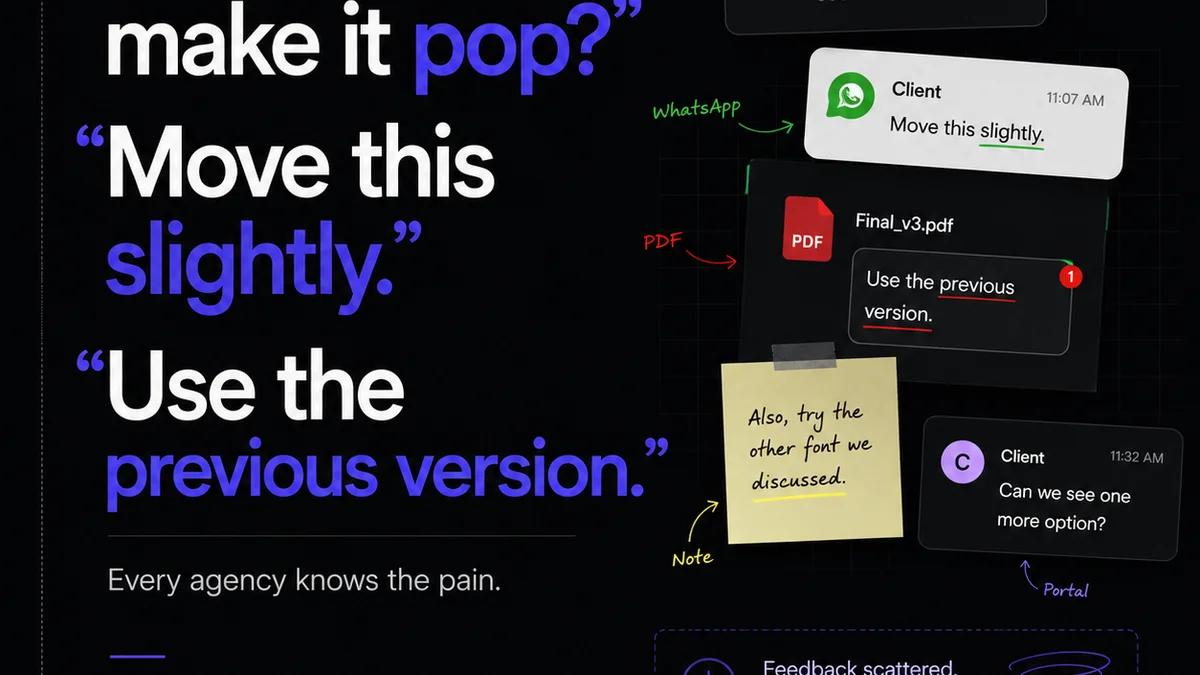
We’ve all been there. A client sends a sprawling email with feedback like “make it pop more” or “can we try something else here?” It’s vague. It’s subjective. And it’s a black hole for time and money.
This isn’t a client problem. It’s a process problem. The assumption is that feedback, however delivered, is actionable. The reality is that unstructured feedback is a direct path to scope creep and endless revision cycles.
The Cost of Ambiguity
When feedback lacks clarity, designers are forced to guess. This leads to:
- Wasted hours on revisions that miss the mark.
- Frustration for both the client and the creative team.
- A creeping sense of dread every time a new email lands.
- The potential for misinterpretation that damages client relationships.
This isn't just about bad communication. It's about the fundamental lack of a structured system to capture, organize, and act on feedback effectively.
2. Beyond the 'Final' Review: Continuous Quality Control
Many agencies think QA happens at the very end. One last check before delivery. This is a dangerous gamble.
The assumption is that mistakes only happen in the final moments. The truth is, quality issues can creep in at any stage. A misplaced asset, a forgotten brand guideline, a broken link in a prototype – these can surface anywhere.
Effective QA isn’t a single gate; it’s a series of checkpoints woven into the workflow. It’s about building quality in, not bolting it on at the last second.
Building Quality In
Think of it this way:
- Early Stage Checks: Are the foundational elements correct? (e.g., wireframes, content structure, basic layout).
- Mid-Stage Reviews: Is the design direction consistent? Are brand guidelines being applied? (e.g., mood boards, style guides, early mockups).
- Pre-Delivery Assurance: Does the final output meet all technical specifications and functional requirements? (e.g., file formats, resolution, interactive elements, accessibility).
This continuous approach prevents major rework later. It catches small issues before they become big problems.
3. The Hidden Drain: Revision Cycles Without Visibility
The most common complaint? “We’re stuck in revisions.” Clients feel like they’re paying for the same work over and over. Agencies feel like they’re losing money on every project.
The assumption is that revisions are just part of the job. The deeper truth is that *unmanaged* revisions are a profitability killer. Without clear visibility into what’s been asked for, what’s been done, and what still needs doing, you’re operating blind.
The Revision Black Hole
What does this look like in practice?
- Clients asking for changes that have already been made (or rejected).
- Disagreements over whether a requested change was in scope.
- Difficulty tracking who approved what and when.
- Endless back-and-forth emails and scattered file versions.
- A demoralized team that feels their work is never truly done.
This chaos isn't just inefficient; it erodes profit margins. Every hour spent clarifying, re-doing, or debating revisions is an hour not spent on billable work or business development.
4. Why Generic Tools Fail Creative Workflows
You might be tempted to use project management tools, email, or even spreadsheets for QA. They seem like a quick fix.
The assumption is that any system is better than no system. The reality is that generic tools create more friction for creative work. They aren't built for visual feedback, version control, or the nuances of client collaboration on creative assets.
The Mismatch
Generic tools often lack:
- Visual Annotation: The ability to click directly on an image or video and leave a comment.
- Version Control: Clear tracking of different design iterations and who made what changes.
- Approval Workflows: A defined process for client sign-off, not just a
Frequently asked questions
What is design QA software?
Design QA (Quality Assurance) software is a tool designed to streamline the process of reviewing, providing feedback on, and approving creative work. It helps teams catch errors, manage revisions, and ensure final deliverables meet all project requirements before client sign-off.
How does design QA software improve client communication?
It centralizes all feedback and revisions in one place, often with visual annotation tools. This eliminates scattered emails and confusing spreadsheets, leading to clearer, more actionable communication and reducing misunderstandings between the agency and the client.
Can design QA software help prevent scope creep?
Yes. By providing a clear, trackable record of feedback, revisions, and approvals, design QA software makes it easier to identify when requests fall outside the original project scope. This allows agencies to have informed conversations with clients about additional costs or timelines.
What are the key features to look for in design QA software?
Key features include visual annotation (commenting directly on designs), version control, clear approval workflows, task management for revisions, and integration with other creative tools. Centralized communication and reporting are also crucial.