Everyone agrees that quality assurance (QA) is crucial. You can’t ship messy work and expect clients to be happy. You need a process for catching errors before they go live.
Many teams think this means adding more steps. More reviews, more checklists, more waiting. More overhead. It feels like QA is just another drag on an already tight schedule.
None of that is wrong. But it’s incomplete.
The hard truth is that QA isn't a separate phase. It’s a continuous activity woven into every stage of your creative process. When done right, it doesn’t slow you down; it speeds you up by preventing rework.
1. Rethink What QA Actually Is
Most creative teams treat QA as a final gate. Something that happens only when the creative is “done.” This is a mistake.
True QA is about preventing problems, not just finding them at the end. It’s about building quality in from the start.
Think about it:
- Is the brief clear? That’s early QA.
- Are the design concepts aligned with the brief? That’s mid-stage QA.
- Is the copy grammatically correct and on-brand? That’s ongoing QA.
- Does the final asset meet technical specs? That’s late-stage QA.
When you see QA as a spectrum, not a single event, it becomes manageable. It also becomes effective.
2. Embed QA Into Your Workflow, Not On Top Of It
The biggest mistake is treating QA as an add-on. It’s like trying to polish a car after it’s already been driven through a mud pit.
Instead, build quality checks into your daily routines. Make them part of the deliverable at each stage.
Briefing and Discovery
Before anyone designs a pixel, the brief must be watertight. Does it clearly define objectives, target audience, key messages, and technical requirements? Is everyone who needs to sign off on it, signed off?
A weak brief is the root of most rework. Don't skip this.
Concepting and Design
As concepts take shape, review them against the brief. Not just aesthetically, but strategically. Does this concept actually solve the client’s problem?
Peer reviews here are invaluable. A fresh set of eyes can spot misinterpretations or missed requirements early.
Content Creation
Copywriters and designers should work in tandem. Content needs to be reviewed for accuracy, tone, and grammar as it’s being written, not after the design is finalized.
This prevents the dreaded situation where beautiful design has to be scrapped because the copy is wrong.
Technical Checks
This is where many teams struggle. What are the exact file specs? Color profiles? Resolution? File formats? Are they being adhered to?
These checks shouldn't wait until the very last minute. They should be a consideration from the moment assets are being prepared for export.
3. Empower Your Team to Own Quality
QA shouldn’t be the sole responsibility of one person or department. It’s a shared ownership.
Train your team to identify potential issues. Give them the tools and the confidence to flag things early.
This means:
- Clear internal guidelines for common deliverables.
- Training on brand standards and technical specifications.
- A culture where asking clarifying questions is encouraged, not penalized.
When designers, copywriters, and project managers all feel responsible for quality, fewer issues slip through the cracks.
4. Standardize Your Checks
Ad-hoc QA is a recipe for disaster. You’ll miss things. You’ll be inconsistent.
Develop standardized checklists for different types of projects or deliverables.
These aren't meant to be rigid, soulless documents. They are guides.
For a website launch, a checklist might include:
- Functional testing across browsers and devices.
- Link verification.
- Form submission tests.
- Content accuracy and spelling.
- Image optimization and alt text.
- Accessibility checks (WCAG compliance).
- SEO meta data and heading structure.
For a social media campaign, it might be:
- Correct aspect ratios and file types.
- Adherence to platform guidelines.
- Clear calls to action.
- Tracking parameters verification.
The key is to have a consistent framework that ensures the critical elements are always checked.
5. Leverage Technology for Efficiency
Manual checks are time-consuming and prone to human error. Technology can automate many of these tedious tasks.
For example:
- Automated grammar and spell checkers.
- Browser testing tools.
- Accessibility checkers.
- File validation scripts.
These tools don't replace human judgment, but they handle the grunt work, freeing up your team to focus on the more nuanced aspects of quality.
Where Revue Fits In
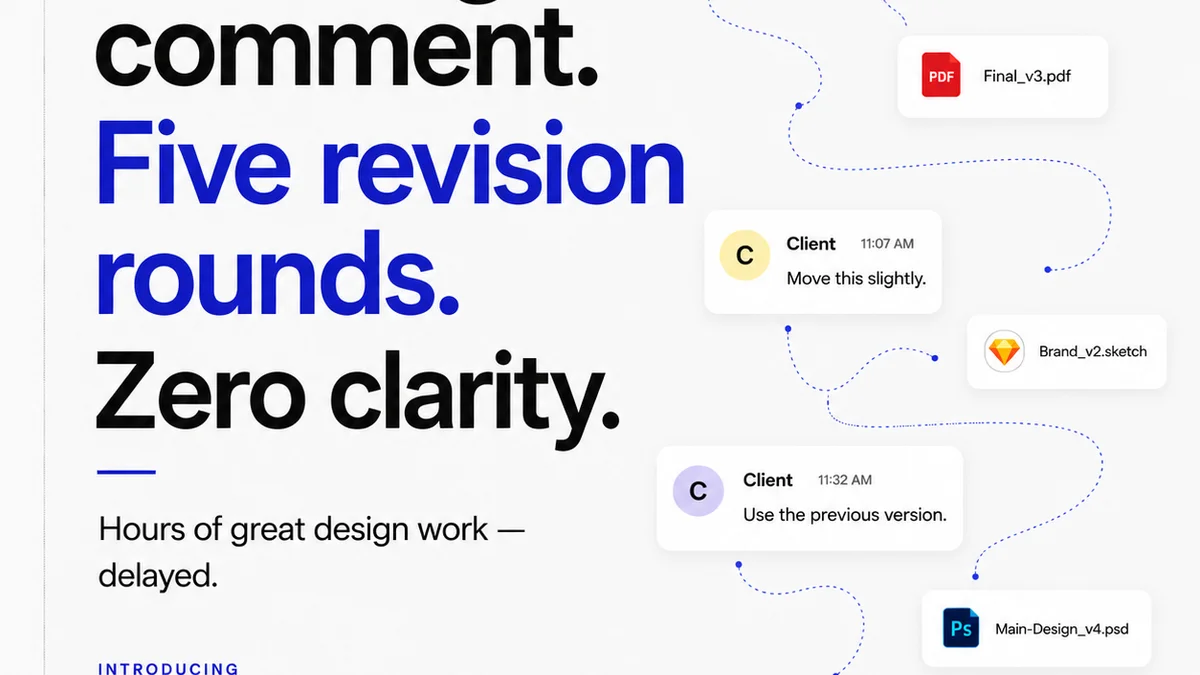
Managing feedback and revisions can quickly become chaotic. This chaos is the enemy of quality assurance.
Revue acts as a central hub for all your creative feedback and approvals.
- Centralized Feedback: Instead of scattered emails and Slack messages, all client comments live on the asset itself, within Revue. This clarity prevents misinterpretations and ensures nothing gets lost.
- Version Control & Revision Tracking: See every iteration of a design. Understand the history of changes and who approved what. This transparency is crucial for accountability and for tracing the root of any potential quality issues.
- Streamlined Approvals: Formalize the approval process. Clients can clearly mark assets as approved, rejected, or request revisions. This structured workflow reduces ambiguity and ensures sign-offs are documented.
- Quality Checklists: Integrate your standardized checklists directly into the review process within Revue. Team members can tick off items as they are verified, ensuring a consistent and thorough QA process for every project.
By bringing order to the feedback and approval process, Revue helps you maintain high standards without adding friction.
Final Thought
Is your current QA process a necessary evil, or a missed opportunity? The difference lies in how you integrate it. Stop treating quality assurance as a final hurdle. Start building it into the very fabric of your creative operations. What small change can you make today to embed quality deeper into your team’s daily work?
Frequently asked questions
What is the biggest mistake teams make with QA?
The biggest mistake is treating QA as a final gate or separate phase. It should be an ongoing activity integrated into every stage of the creative process, from briefing to final delivery, to prevent issues rather than just find them at the end.
How can I make QA a continuous process?
Embed quality checks into each stage: ensure the brief is clear, concepts align with strategy, copy is accurate as it's written, and technical specs are considered early. Encourage peer reviews and make quality a shared responsibility.
What role does technology play in efficient QA?
Technology can automate many tedious checks, such as grammar, spelling, browser compatibility, and accessibility. Tools like automated checkers and scripts handle the grunt work, allowing your team to focus on more complex quality aspects.
How does Revue help with design QA?
Revue centralizes all feedback and approvals, providing clarity and preventing miscommunication. Its version control and structured approval process ensure accountability and traceability, while integrated checklists help maintain consistent quality standards.