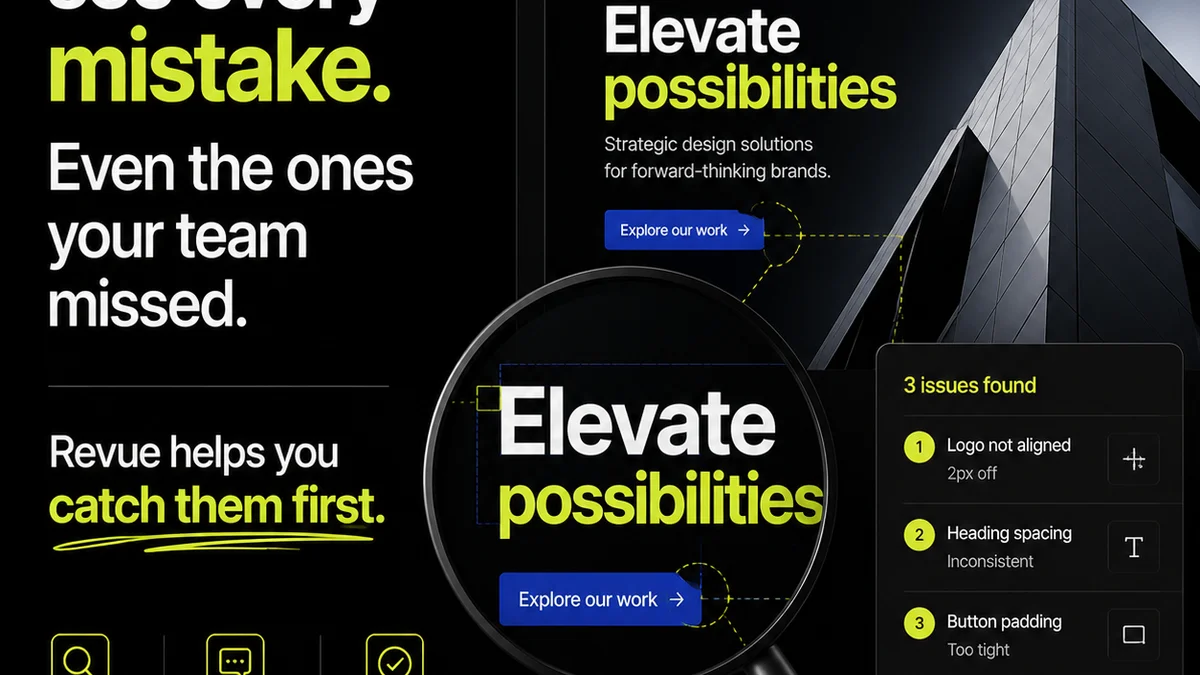
Everyone talks about Design QA. They think it’s about catching typos, broken links, and the occasional stray pixel. That’s not wrong. But it’s incomplete. Massively incomplete.
The hard truth? A robust Design QA workflow is less about a checklist and more about a fundamental operational discipline. It’s the difference between a reactive scramble and a proactive engine for delivering consistently excellent creative work. It’s how you build trust with clients and protect your agency’s reputation.
1. The Assumption: QA is Just the Last Step
This is where most teams get it wrong. They see QA as the final gate before client delivery. A quick once-over by a junior designer or a project manager.
This approach is reactive. It’s expensive. And it’s a recipe for missed errors and client frustration.
Quality assurance needs to be baked into the entire design process, not tacked on at the end.
The Reality: QA is Continuous
True Design Quality Assurance starts the moment a project brief is received. It’s an ongoing conversation and a series of checks at critical junctures. Not just a final inspection.
- Brief Review: Does the brief itself contain clear objectives? Are there ambiguities that need clarifying *before* design starts?
- Concept Validation: Do the initial concepts align with the brief and client goals? Is there a clear rationale for the direction?
- Mid-point Check-ins: Are we on track with the client's expectations? Is the design system being applied consistently?
- Pre-production Review: A more formal check, yes, but it’s built on the foundation of earlier, integrated QA.
This continuous approach prevents costly rework and ensures alignment at every stage. It’s about building quality in, not inspecting it out.
2. The Assumption: Anyone Can Do QA
Assigning QA to whoever has a spare 15 minutes is a common, and dangerous, practice.
This leads to inconsistent checks and overlooked issues. People who aren't trained in QA methodology or don't have the full project context will miss things. Or worse, they’ll introduce new errors.
The Reality: QA Requires Defined Roles and Training
Effective Design QA needs dedicated attention and a clear understanding of what’s being checked. This doesn't mean a huge, separate QA department, but it does mean:
- Clear Ownership: Who is ultimately responsible for signing off on quality? This person needs the authority and the time.
- Standardized Checklists: Not just for the final output, but for different phases. These checklists should evolve.
- Contextual Understanding: The QA person needs to understand the project goals, the target audience, and the client’s brand.
- Technical Proficiency: Depending on the deliverable, this might mean understanding accessibility standards (WCAG), cross-browser compatibility, or file format requirements.
Think of it like a surgeon performing surgery. You wouldn’t want someone who’s just “good at it” to pick up the scalpel for the first time. You want someone trained, focused, and equipped for the task.
3. The Assumption: QA is About Finding Faults
This is the most negative framing. QA is often seen as the “critic” role. The department of “no.”
This creates friction between design and QA teams. It makes designers defensive and QA feel like an obstacle.
The Reality: QA is About Ensuring Clarity and Effectiveness
The purpose of Design QA is to ensure the final output meets the project objectives and performs as intended. It's about clarity, consistency, and achieving the desired user experience.
- Usability: Is the design intuitive? Can users easily accomplish their goals?
- Accessibility: Can people with disabilities access and use the design? This is non-negotiable for many clients and legally required in some contexts.
- Brand Consistency: Does the design adhere to brand guidelines?
- Technical Accuracy: Are all elements correctly implemented? Are links working? Are images loading properly?
- Alignment with Brief: Does the final product solve the problem defined in the brief?
When framed this way, QA becomes a collaborative partner in delivering successful projects.
4. The Assumption: A Design QA Checklist is Enough
Checklists are essential. They provide a structured way to ensure common issues are addressed. But they are not a silver bullet.
A static checklist can quickly become outdated. It might miss nuances specific to a project or a new technology. Relying solely on a checklist is like using a map from 1950 to navigate modern Tokyo.
The Reality: Checklists are a Starting Point, Not the Destination
Your Design QA process needs to be dynamic and adaptable. This means:
- Regularly Updated Checklists: Review and revise checklists quarterly or after major project types.
- Contextual Application: Train your QA team to apply checklists with judgment, not blind adherence.
- Subjective Review: Include elements that require a subjective assessment of user experience and overall effectiveness.
- Feedback Loops: Use findings from QA to improve the design process itself. What recurring issues can we prevent upstream?
A good checklist ensures you don't forget the basics. A great QA process anticipates and elevates the work.
5. The Assumption: QA is Only for Digital Products
Some assume Design QA is only relevant for websites, apps, or software. This is a narrow view.
Any creative deliverable requires quality assurance. Print collateral, brand guidelines, video assets, presentations – all need a rigorous check.
The Reality: QA Applies to All Creative Outputs
The principles of Design QA are universal:
- Print: Color accuracy (CMYK vs. RGB), bleed, trim, typography legibility, correct file format for printers.
- Brand Guidelines: Consistency in logo usage, color palettes, typography, tone of voice. Are the examples clear and correct?
- Video: Aspect ratios, frame rates, audio levels, correct versions of graphics, text overlays.
- Presentations: Slide consistency, correct data, branding, readability.
Every client-facing deliverable is a reflection of your agency’s quality. Don't let small errors undermine big ideas.
Where Revue Fits In
Managing a comprehensive Design QA workflow across multiple projects and clients can become chaotic. This is where centralized feedback and version control become critical.
Revue helps bring order to the chaos by providing a single source of truth for creative assets and feedback.
- Centralized Feedback: All client comments, stakeholder input, and internal reviews live in one place, tied directly to specific versions of the design. No more hunting through email chains or Slack messages.
- Revision Visibility: Track every iteration. See exactly what changed between versions, making it easier for QA to spot discrepancies or confirm fixes.
- Streamlined Approvals: Formalize the approval process. Ensure all necessary stakeholders have reviewed and signed off before a design moves to the next stage or is delivered.
- Quality Check Integration: Use Revue’s structured feedback tools to build your QA checklists directly into the review process. Flag issues, assign them for correction, and track their resolution.
By centralizing these elements, Revue empowers your team to conduct more thorough, efficient, and documented Design QA, ultimately leading to higher quality deliverables and happier clients.
Final Thought
Is your current Design QA process a cost center or a competitive advantage? Are you merely checking boxes, or are you building a repeatable system for creative excellence? The distinction isn't semantic; it's strategic.
Frequently asked questions
What is the primary goal of a Design QA workflow?
The primary goal is to ensure that creative deliverables meet project objectives, brand standards, and technical requirements, ultimately leading to client satisfaction and a strong reputation for quality. It's about delivering effective and error-free work consistently.
How often should design checklists be updated?
Design checklists should be reviewed and updated regularly, ideally quarterly, or whenever significant changes occur in technology, design trends, client needs, or internal processes. This ensures they remain relevant and effective.
Who should be responsible for Design QA?
Responsibility for Design QA should be clearly defined. While everyone plays a part in quality, a dedicated individual or role, equipped with the right training and context, is often best suited for final sign-off and managing the QA process.
Can a Design QA workflow apply to non-digital projects like print or branding?
Absolutely. The principles of Design QA—ensuring accuracy, consistency, and alignment with objectives—apply to all creative outputs, including print collateral, brand guidelines, video, and presentations.